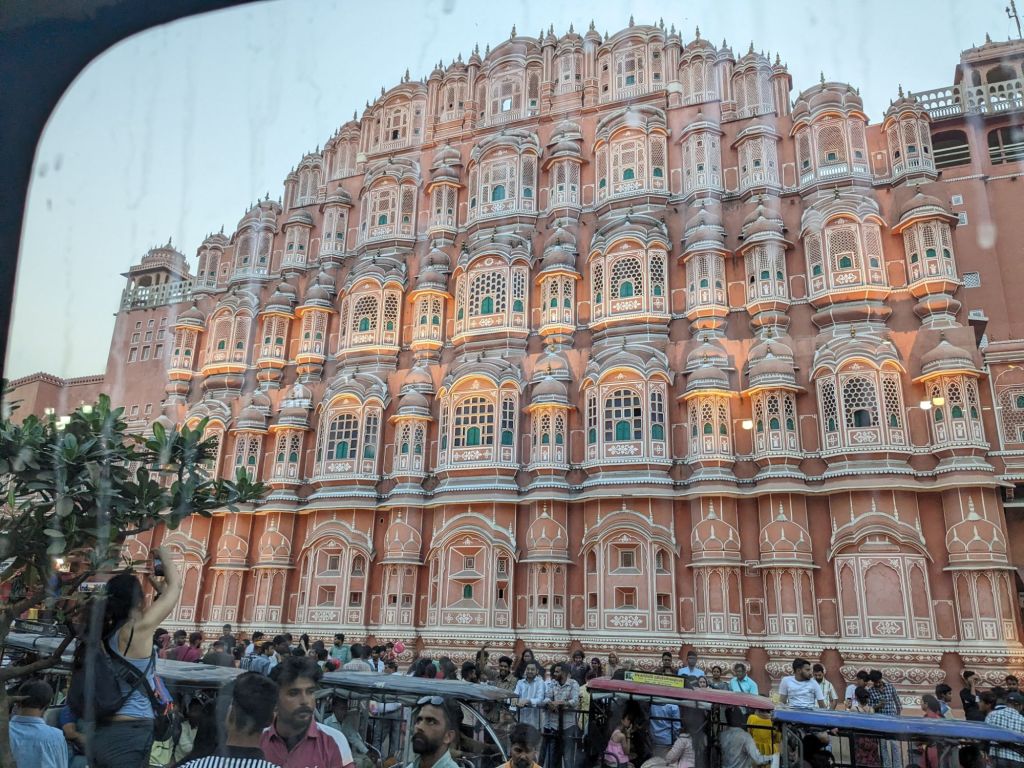
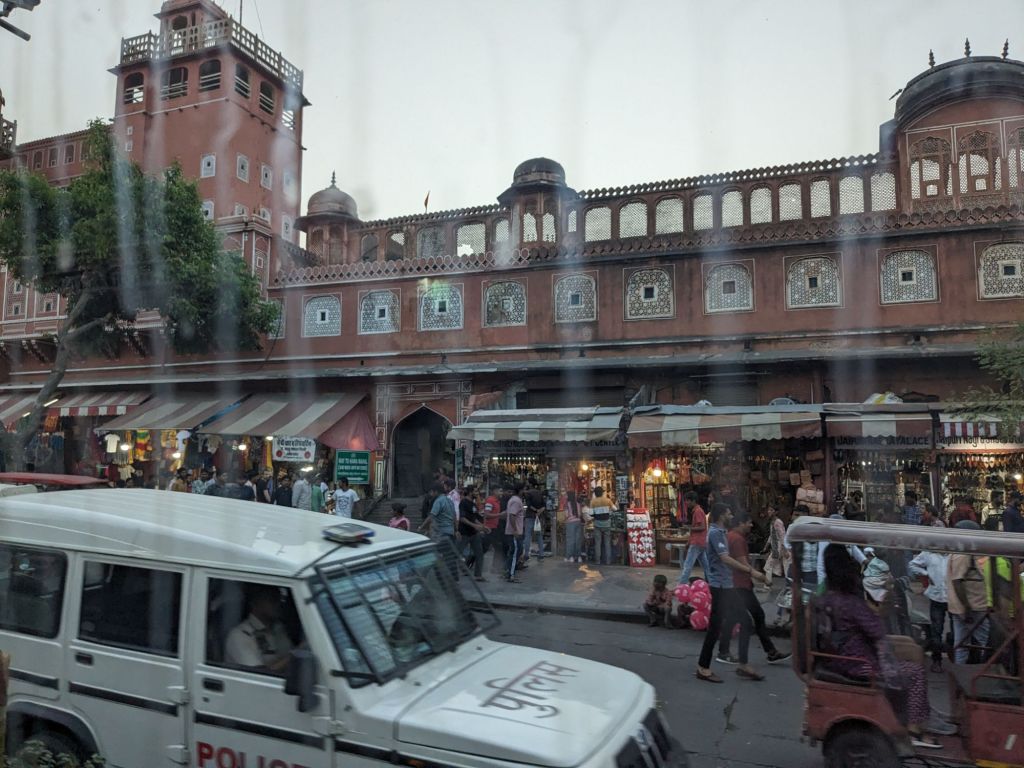
Jaipur, India is known as the “Pink City” because in 1876, Prince of Wales, Lord Albert Edward, painted the city pink to welcome Queen Victoria’s husband, Prince Albert. The city still maintains its pink hue today.
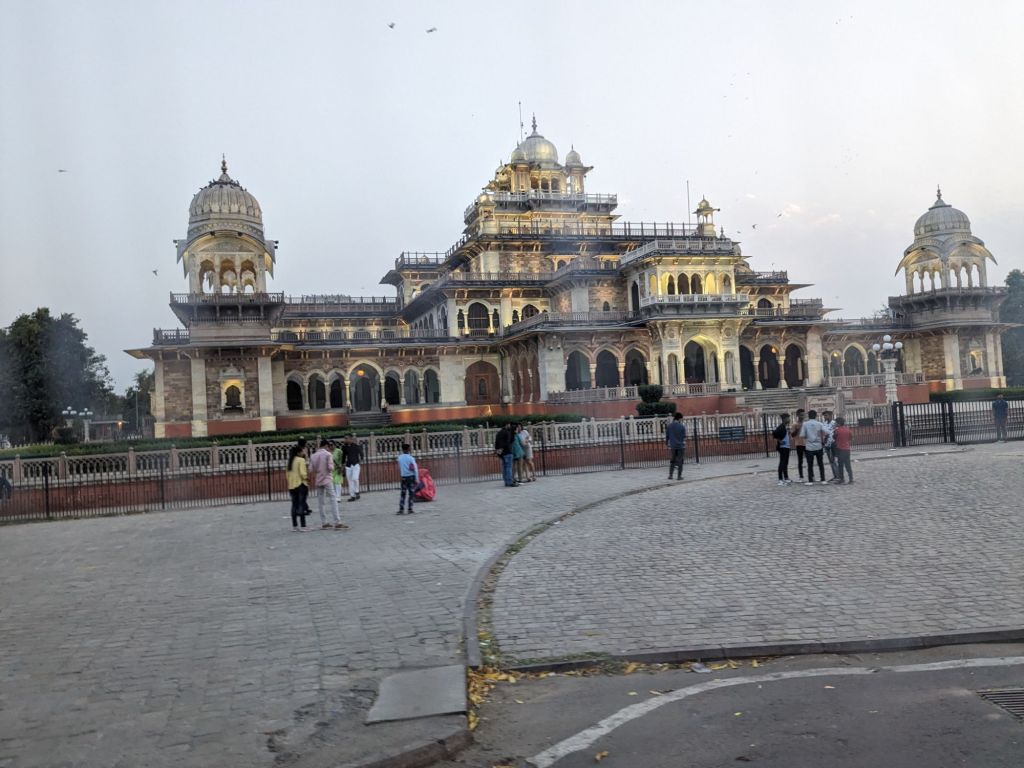
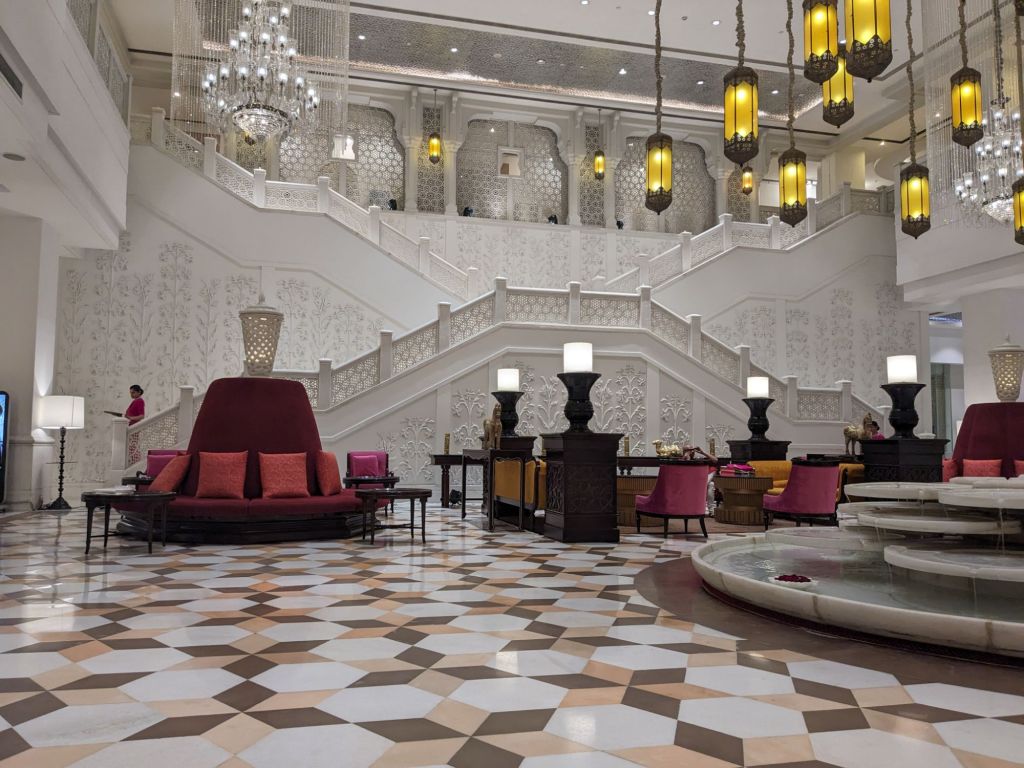
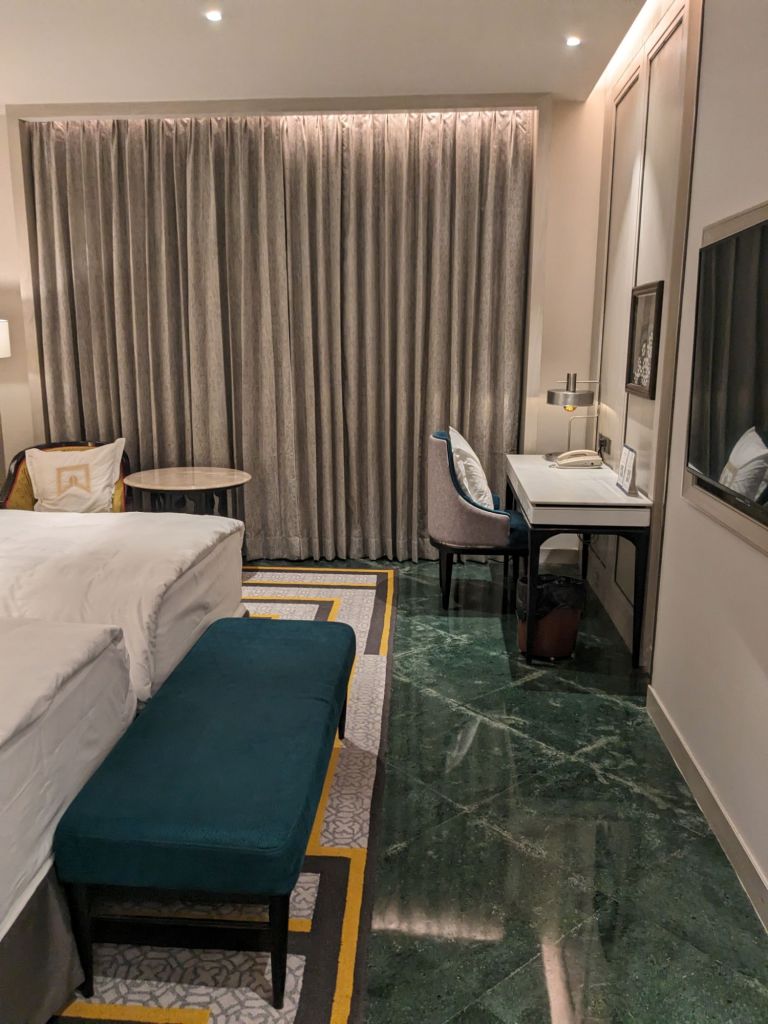
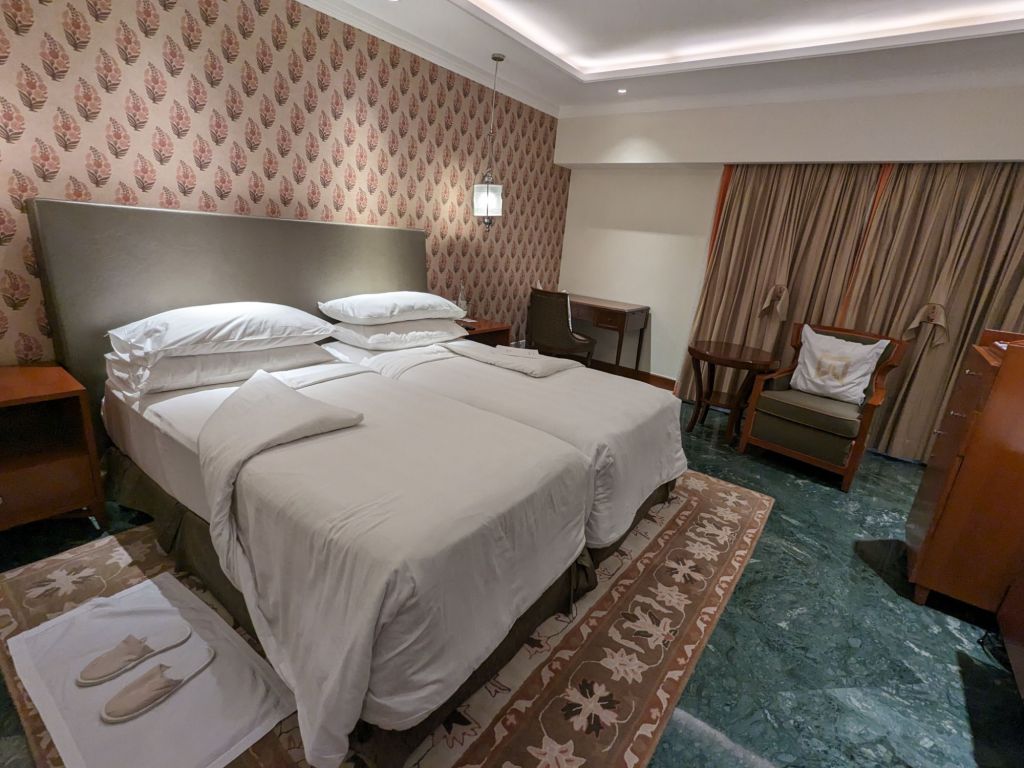
Hawa Mahal Palace More pink buildings (in rain)Albert Hall museumHotel for Jaipur Our room
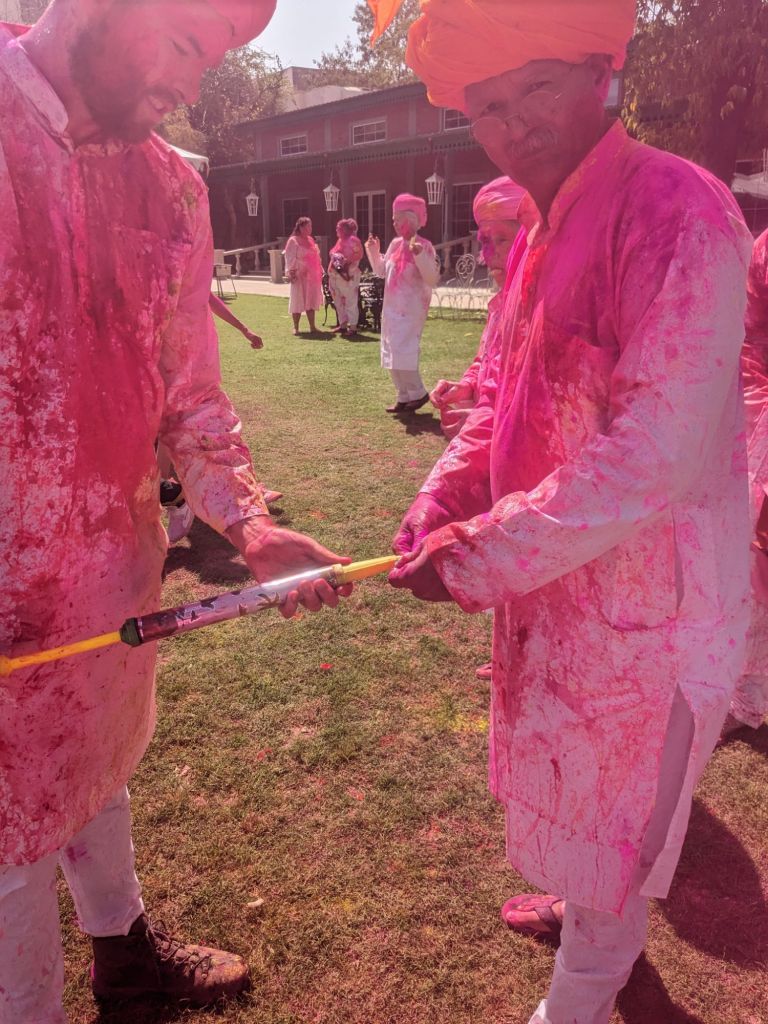
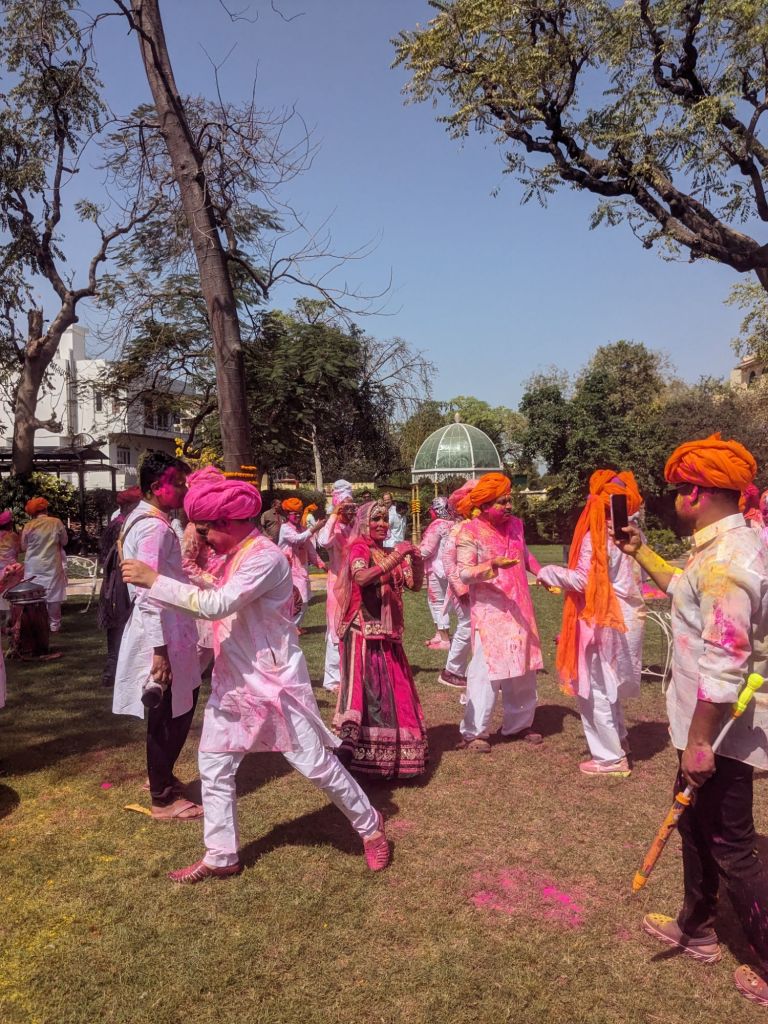
At a Disney version of Holi– tours seem concerned for our safety if we mixed with the street-side celebrations we can see driving through town.
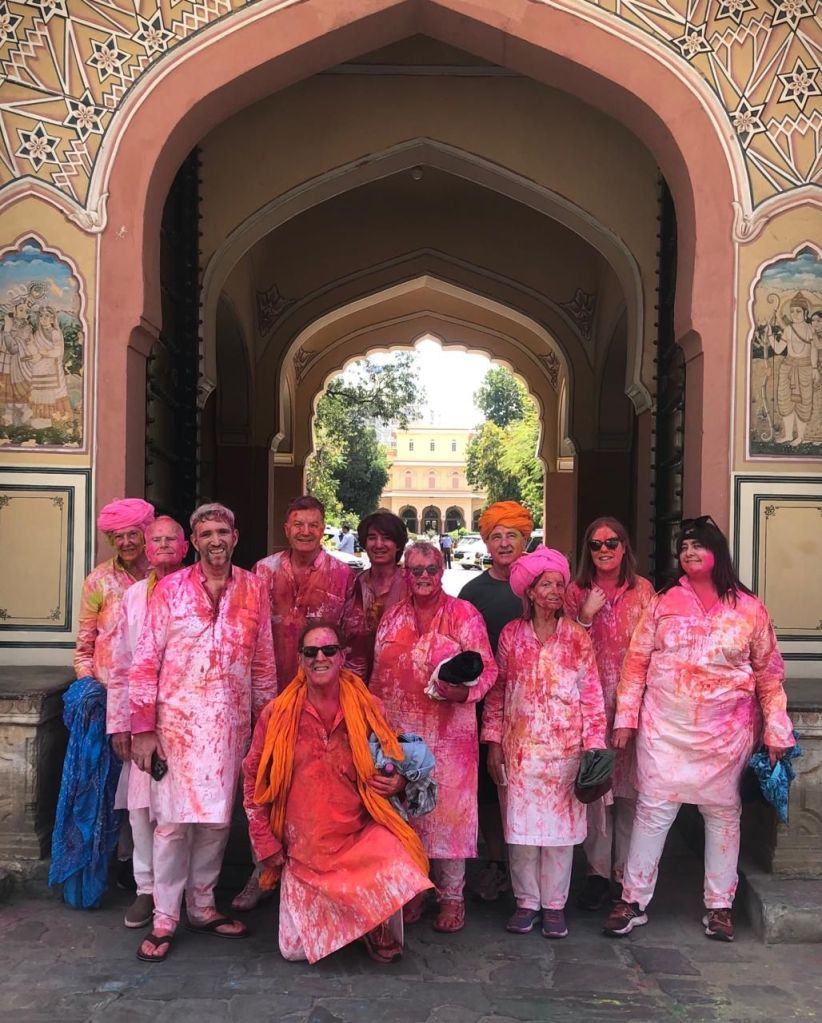
Water guns for making the pigment runEveryone in our silly outfits throwing pigmentOur group looking colorful. Most of us were still wearing some color a couple of weeks later.
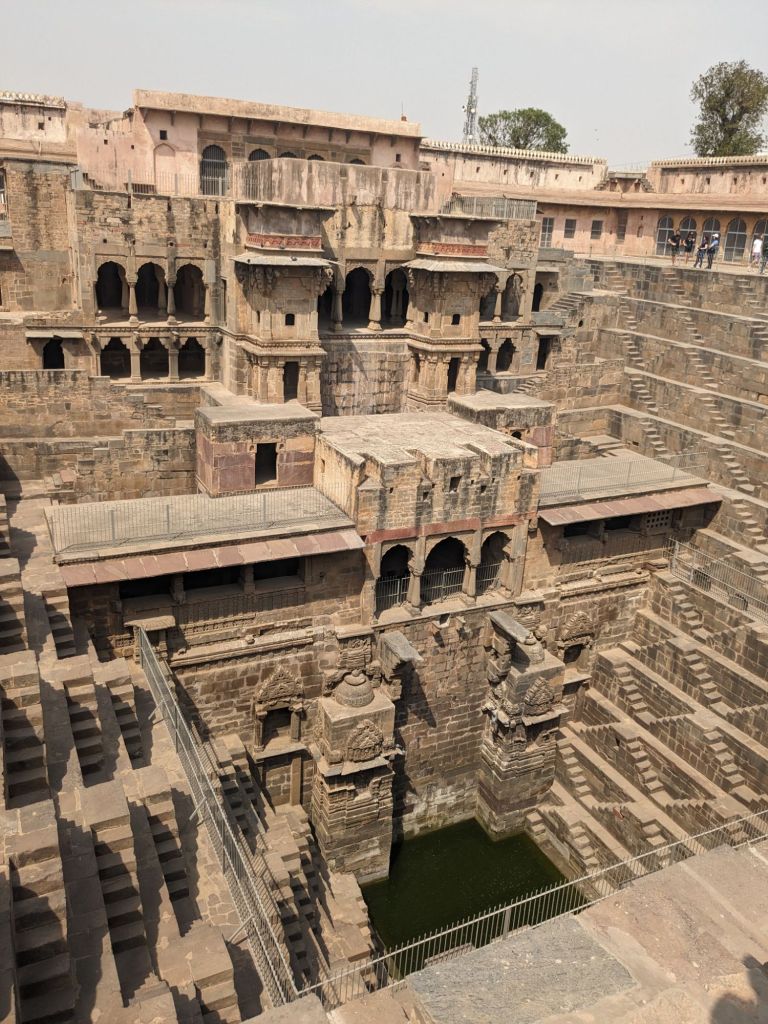
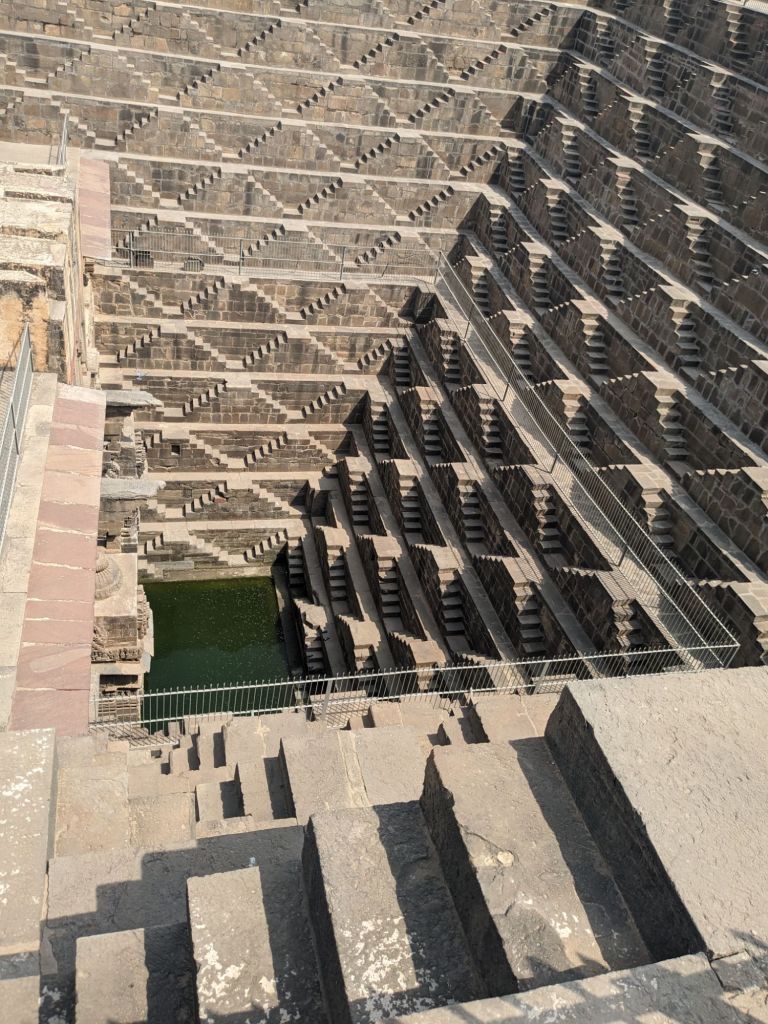
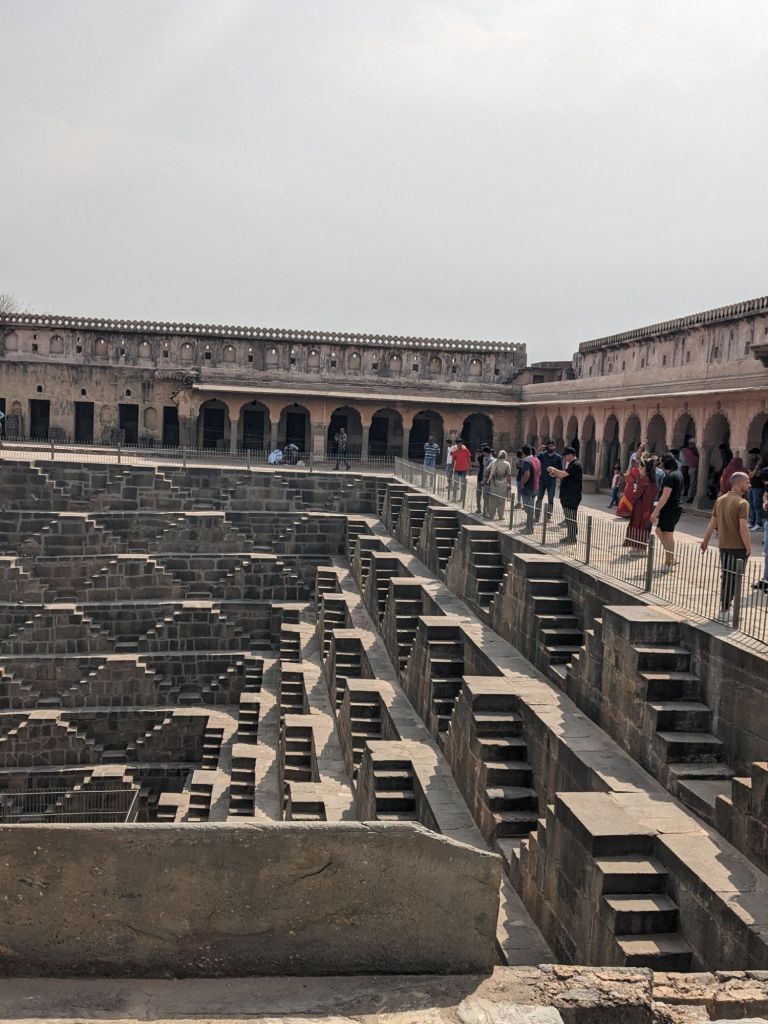
At the bottom of this well, the temperature was as much as 42 f cooler than at the top. A step well works differently than other wells. Instead of drawing the water up from the well, the people go down the steps and reach the water. This is one of the largest and deepest examples in India.
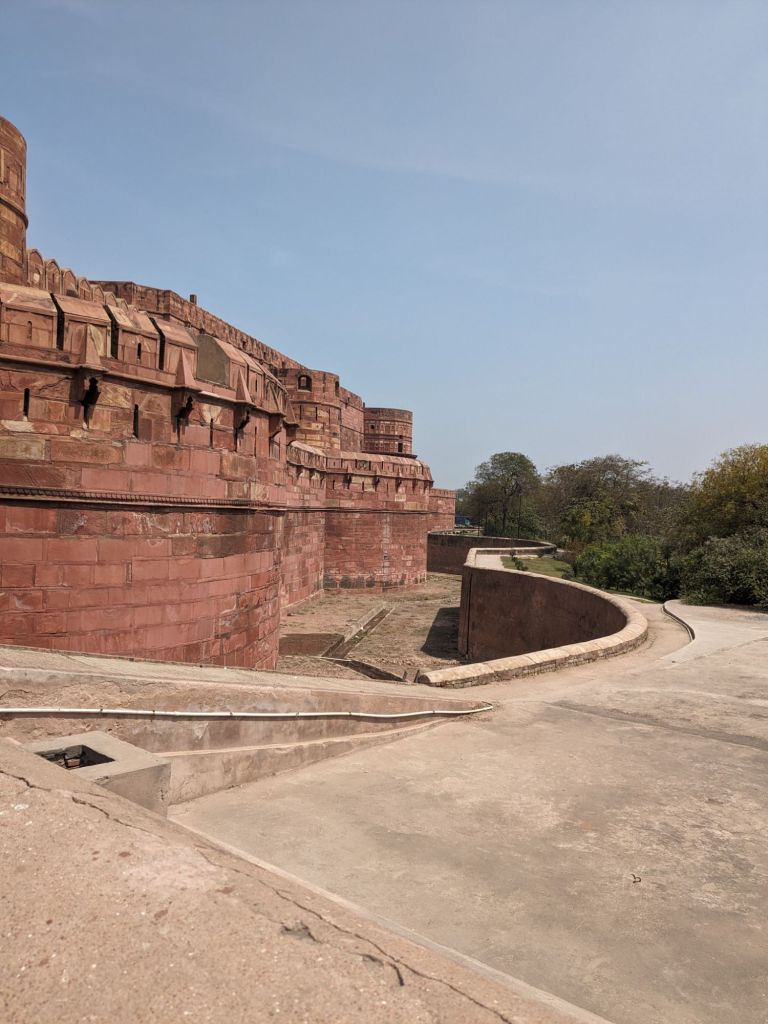
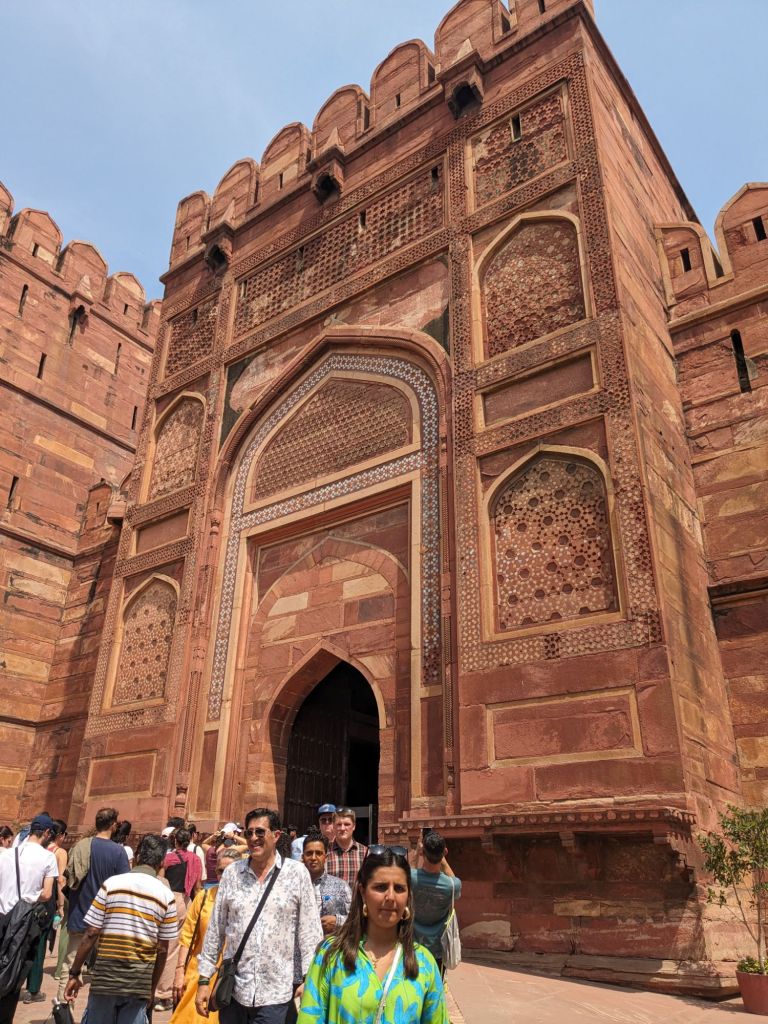
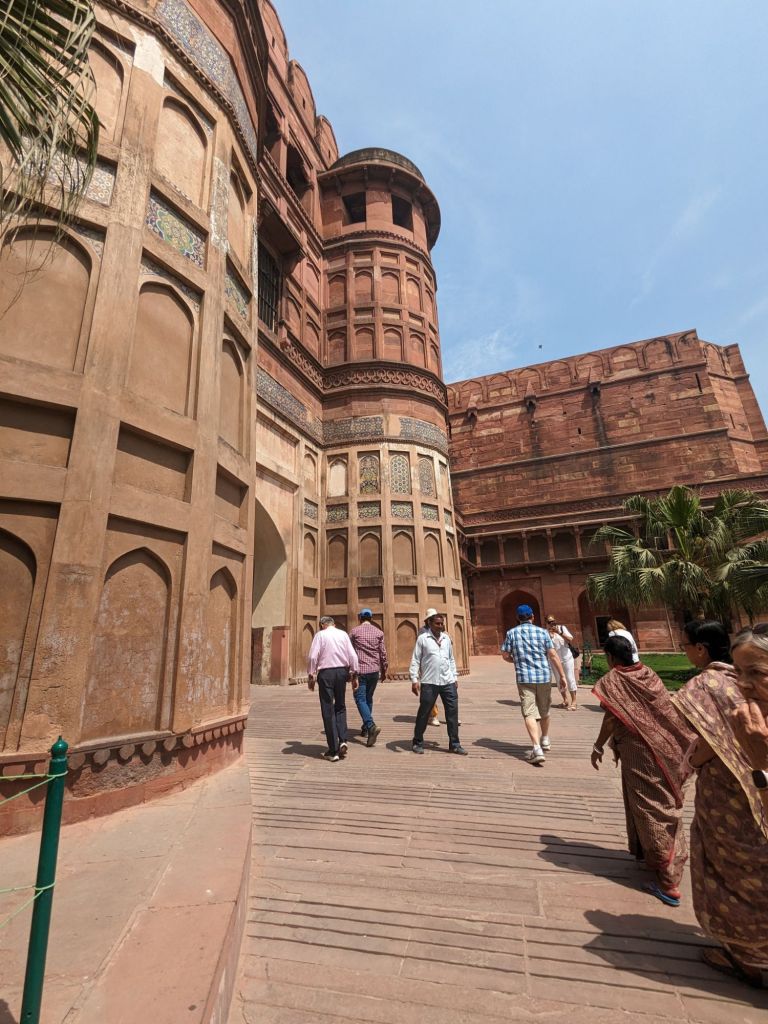
Agra’s Red Fort – UNESCO site
Only a small portion of the fort is open to visitors. It is easy to imagine how impregnable Mughal emperors felt in this massive fort.
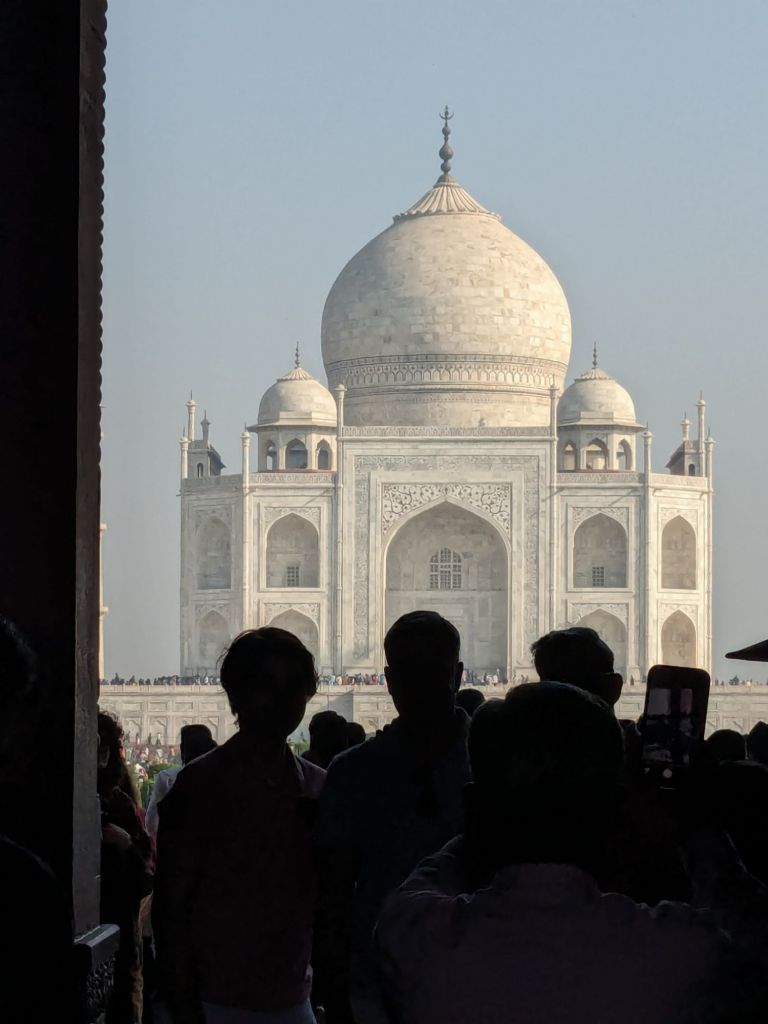
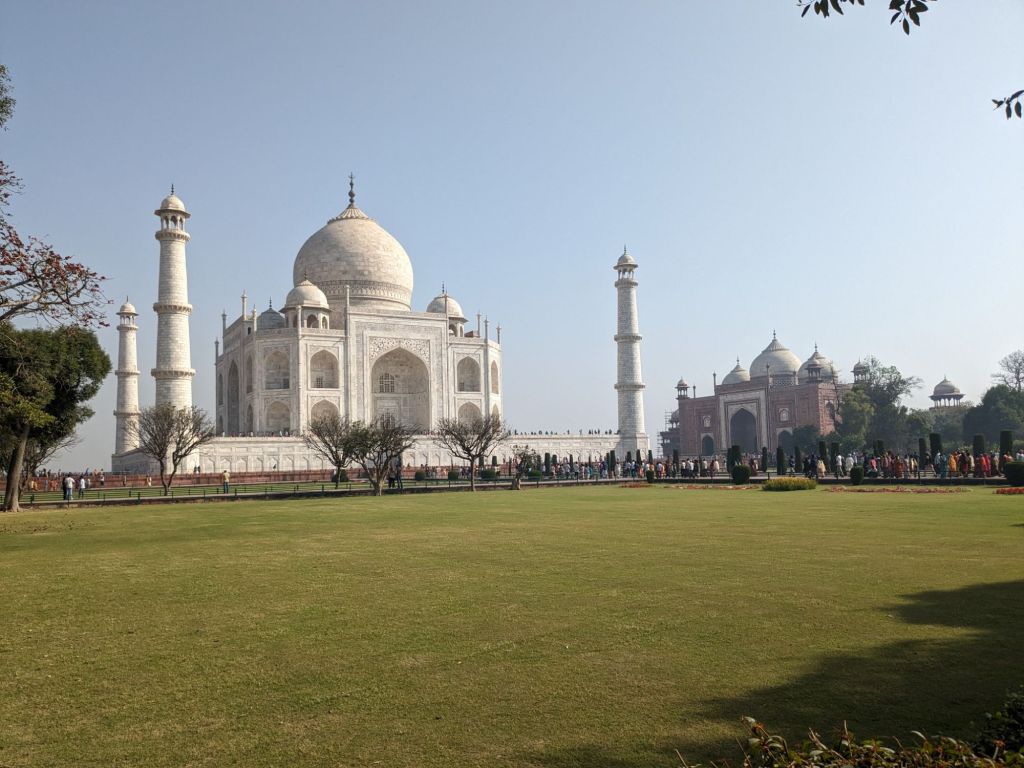
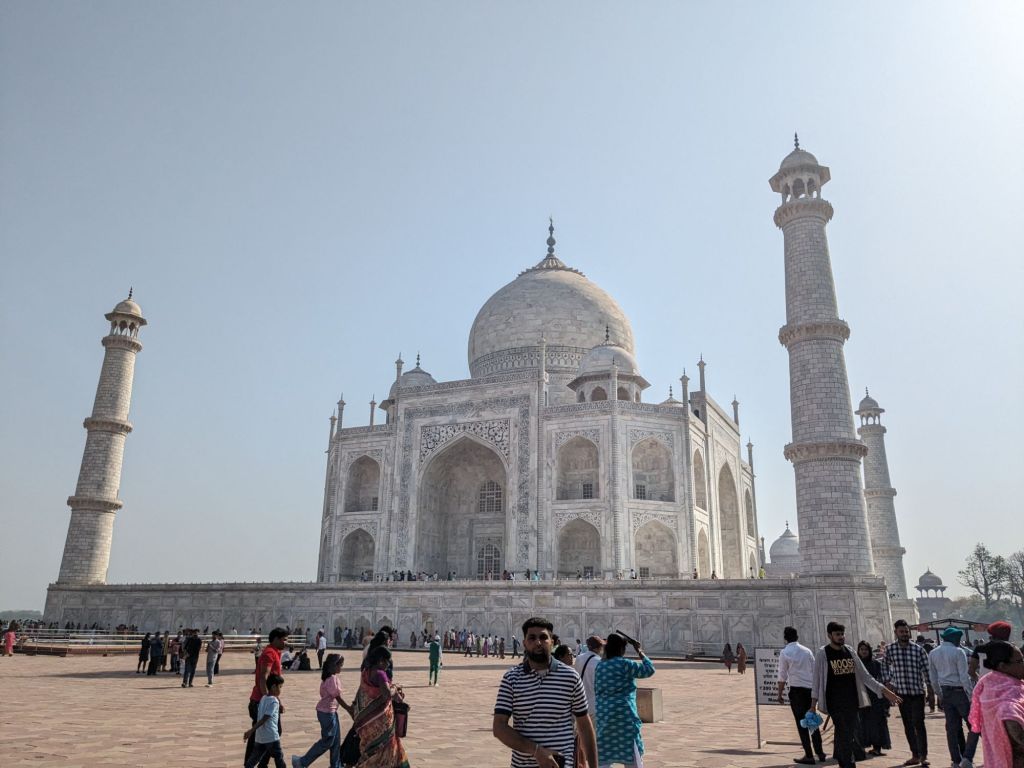
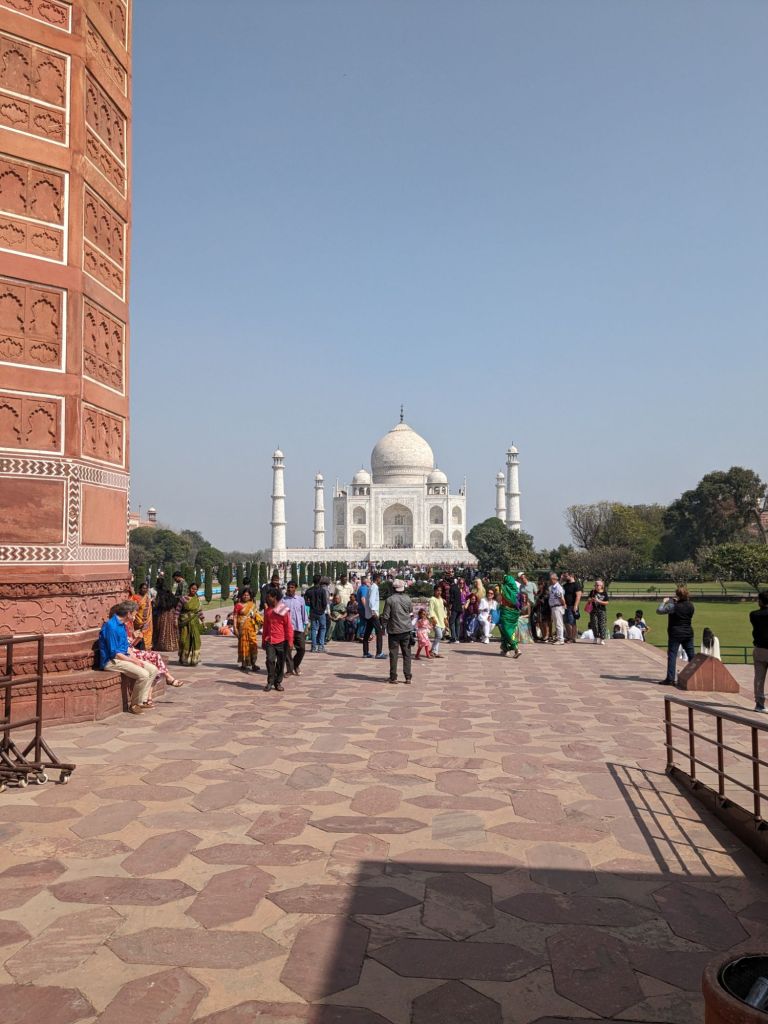
Shah Ja built the Taj Mahal to honor his favourite wife, Mumtaz Mahal. Considered an architectural masterpiece, it was built between 1631 and 1653.
Sadly, according to oral history, the shah got to watch the last phases of construction from his cell, as his son took over the kingdom and imprisoned his father.
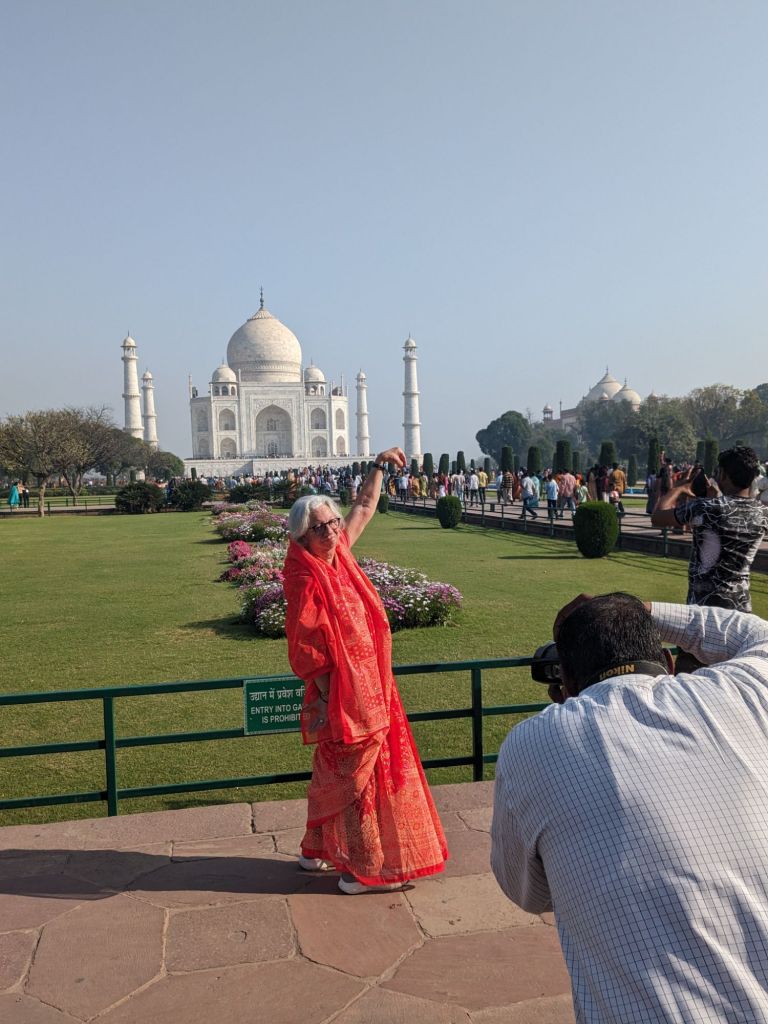
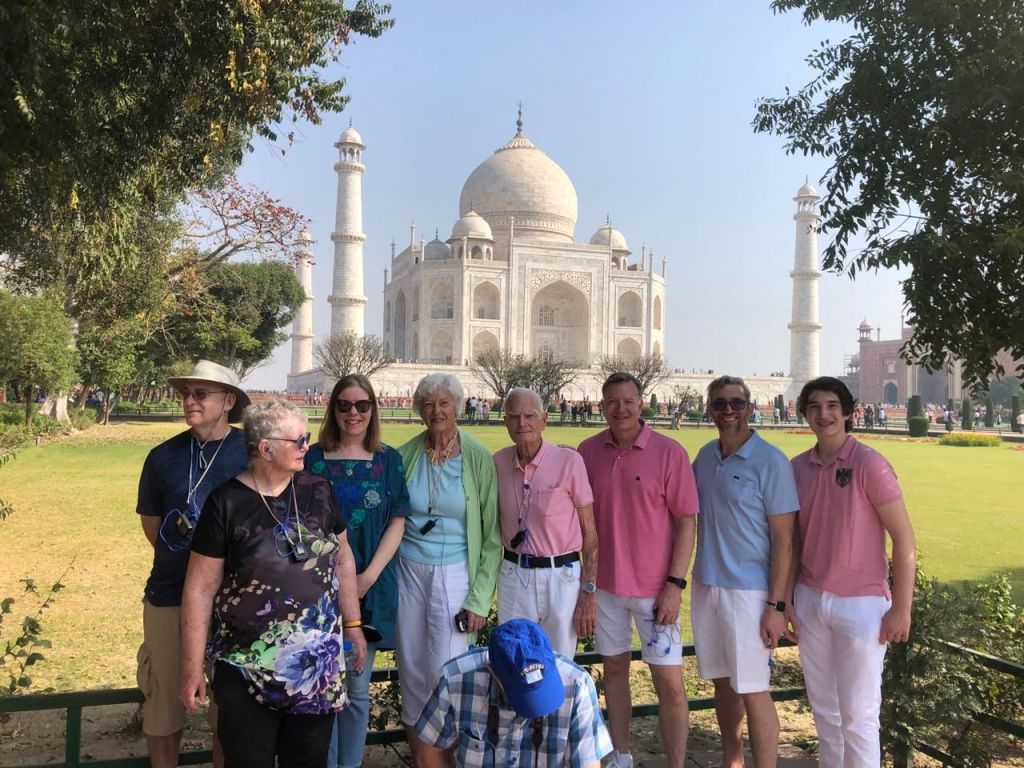
We decided to join the other tourists in front of the Taj
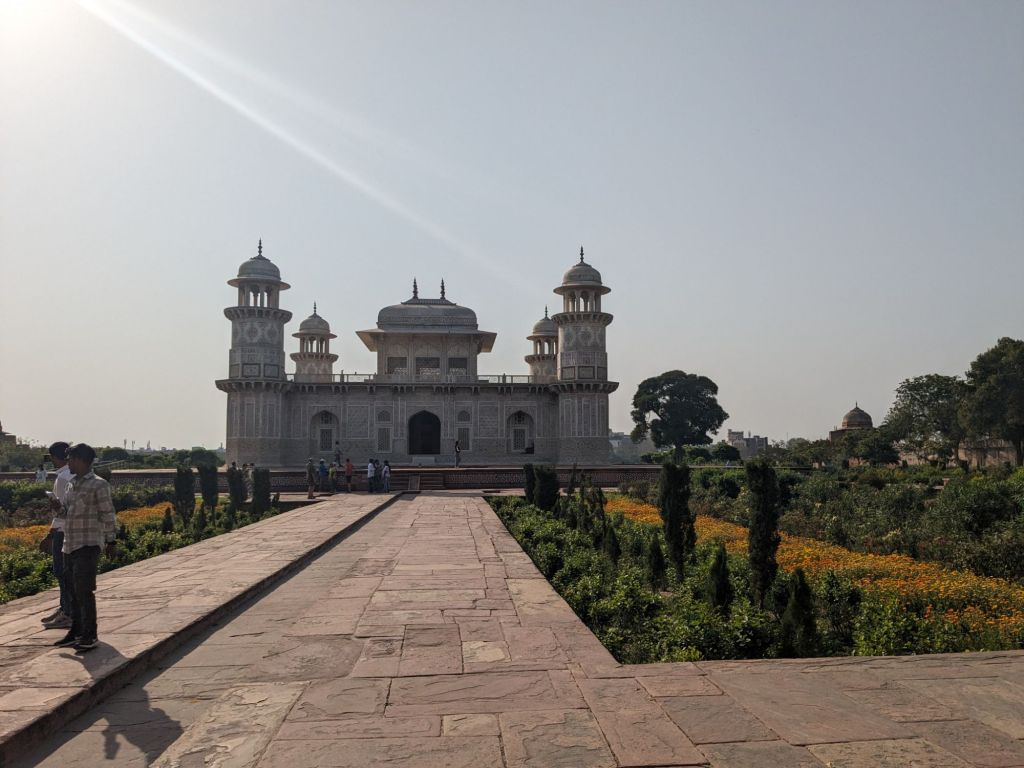
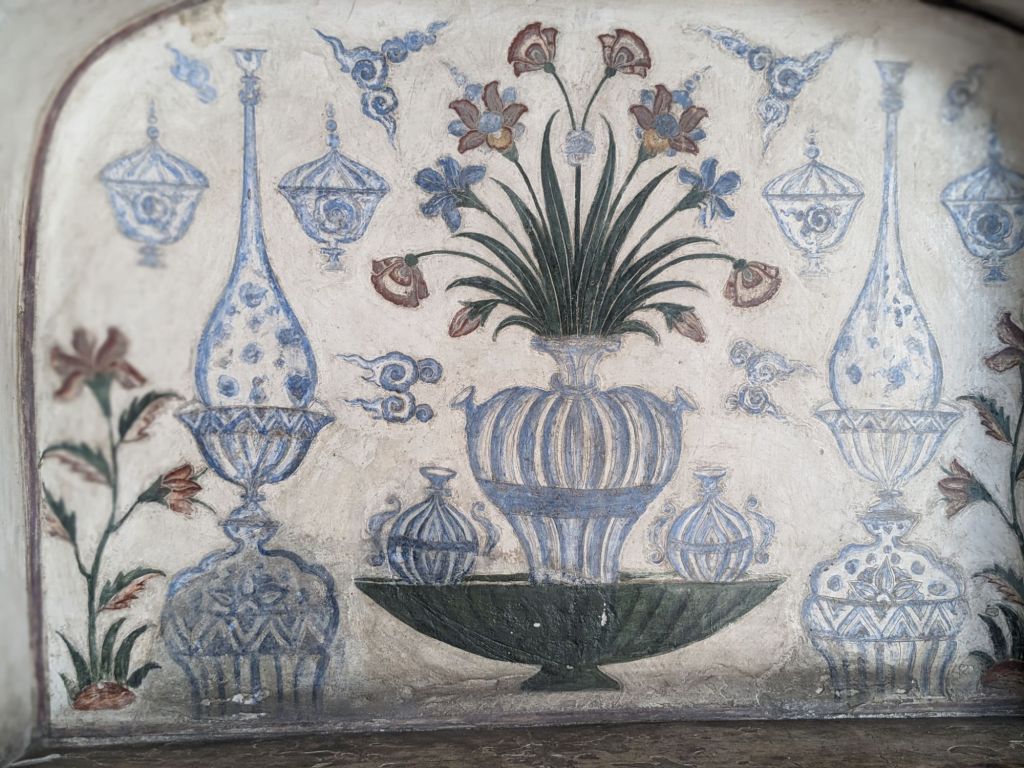
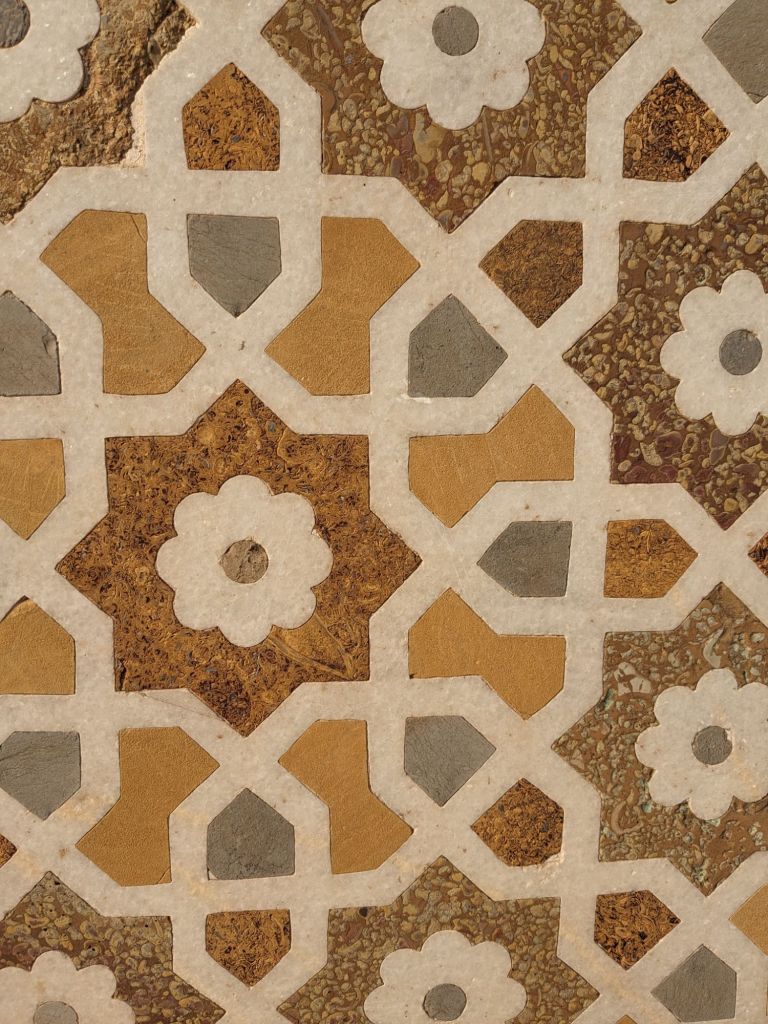
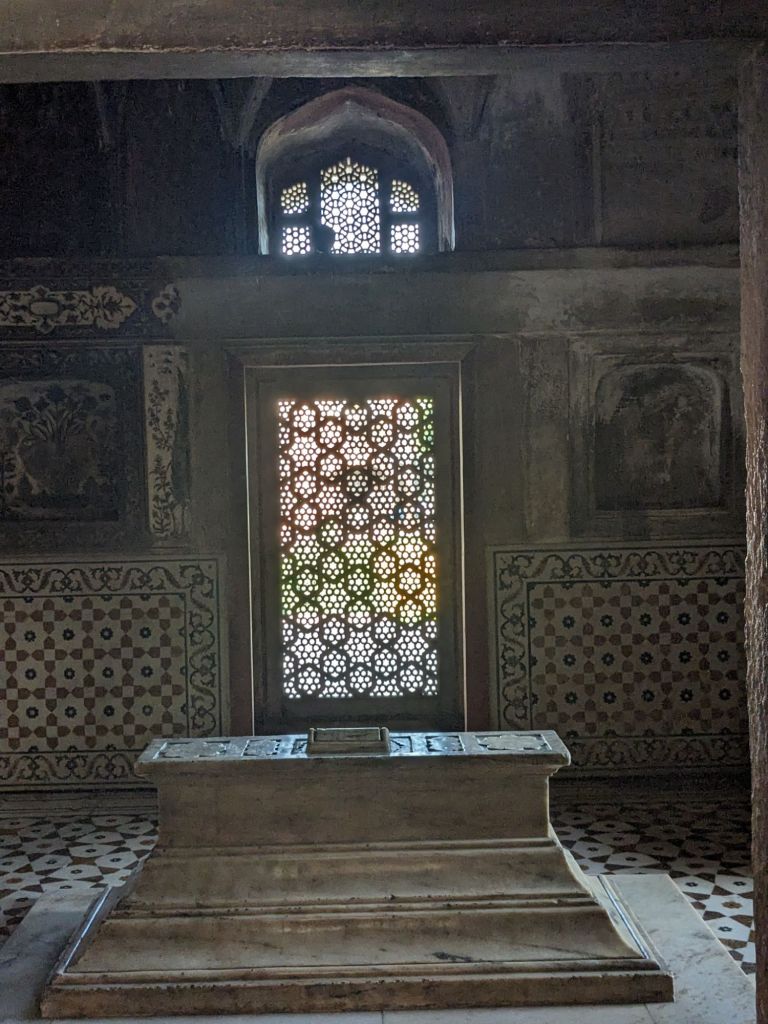
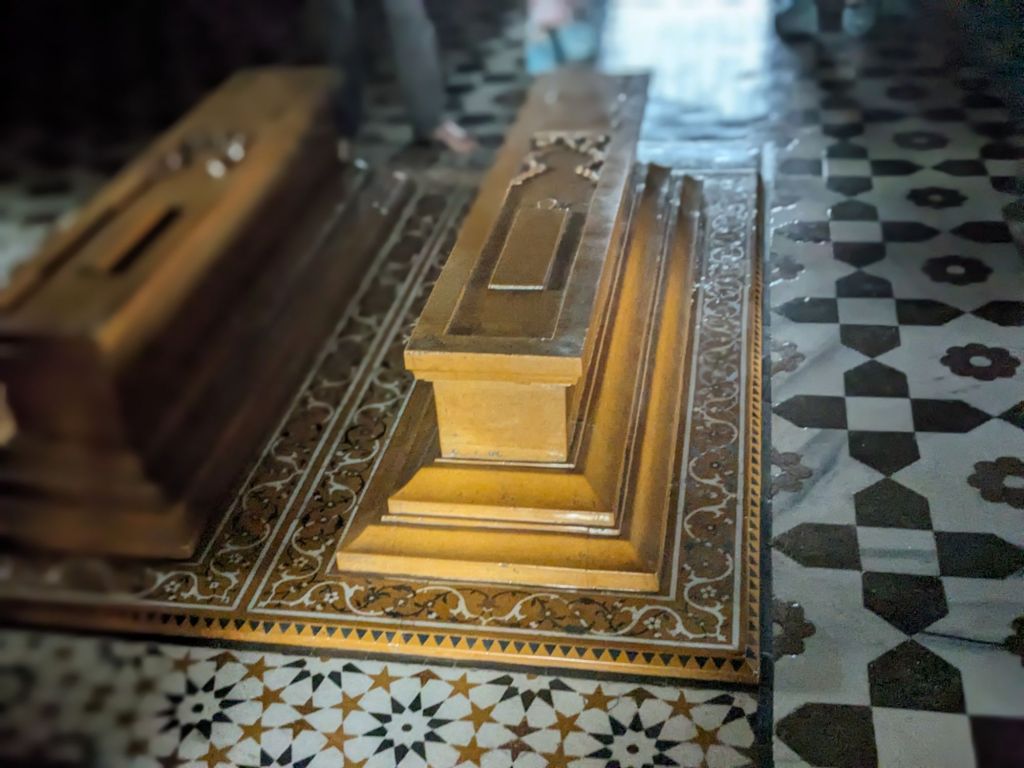
The Tomb of Itmad-ud-Daula’s in Agra, only a short distance from the Taj Mahal, is nicknamed the ‘Baby Taj’ as it is thought to have been the model for the Taj Mahal. It is also called the ‘jewel box’.
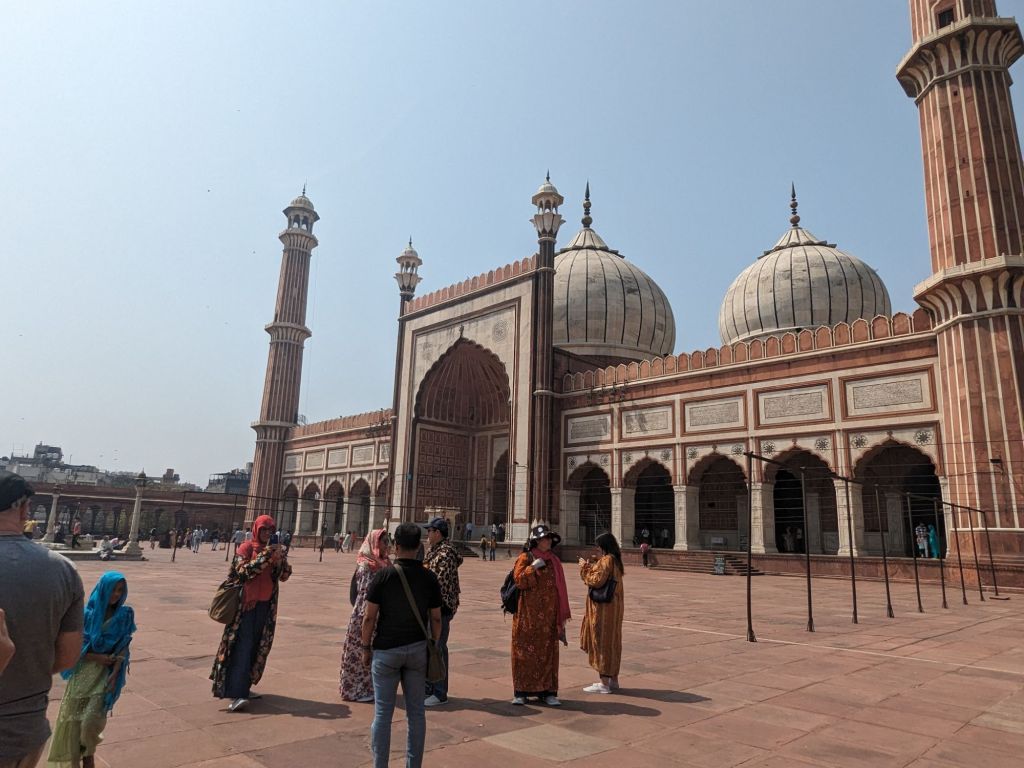
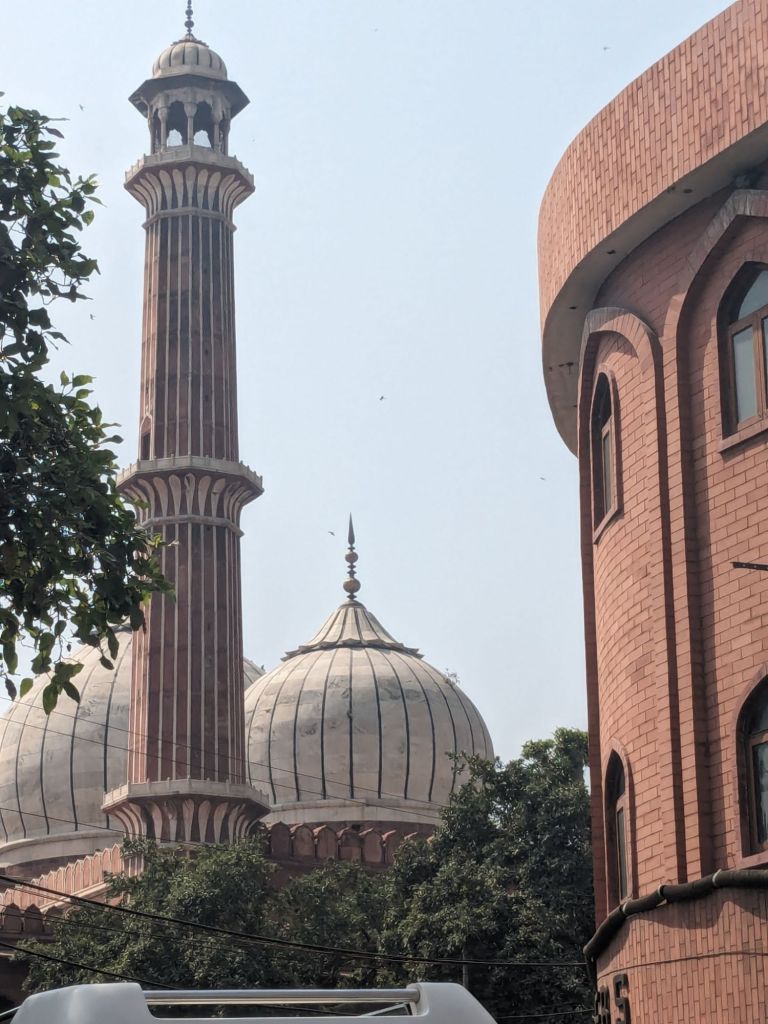
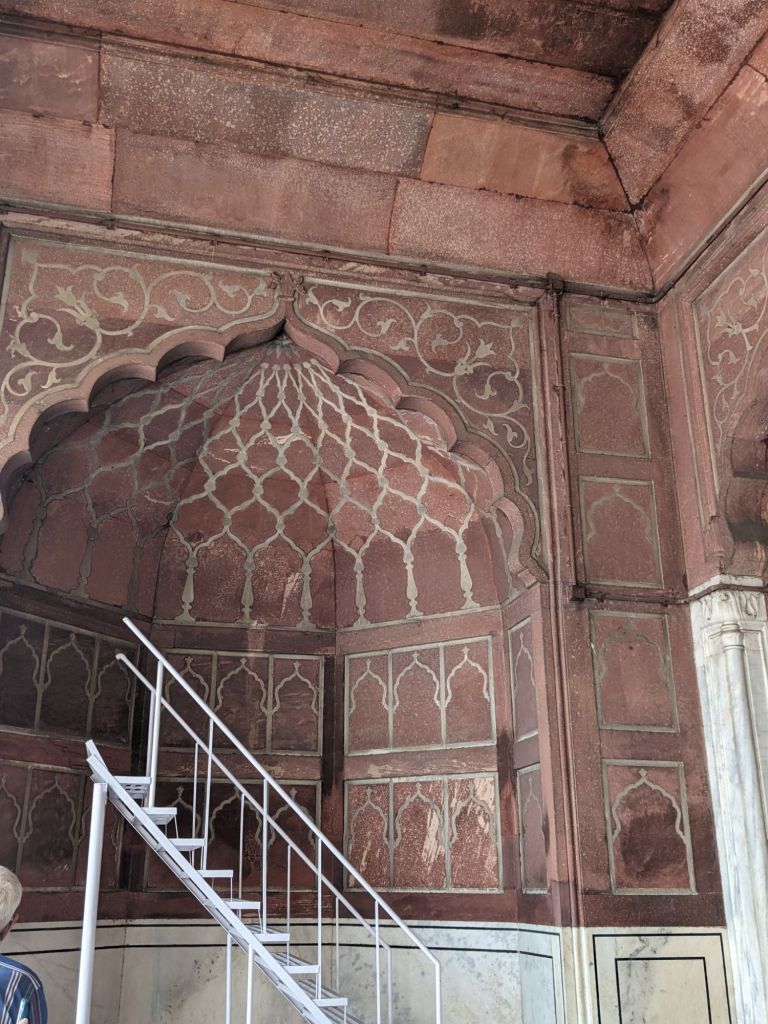
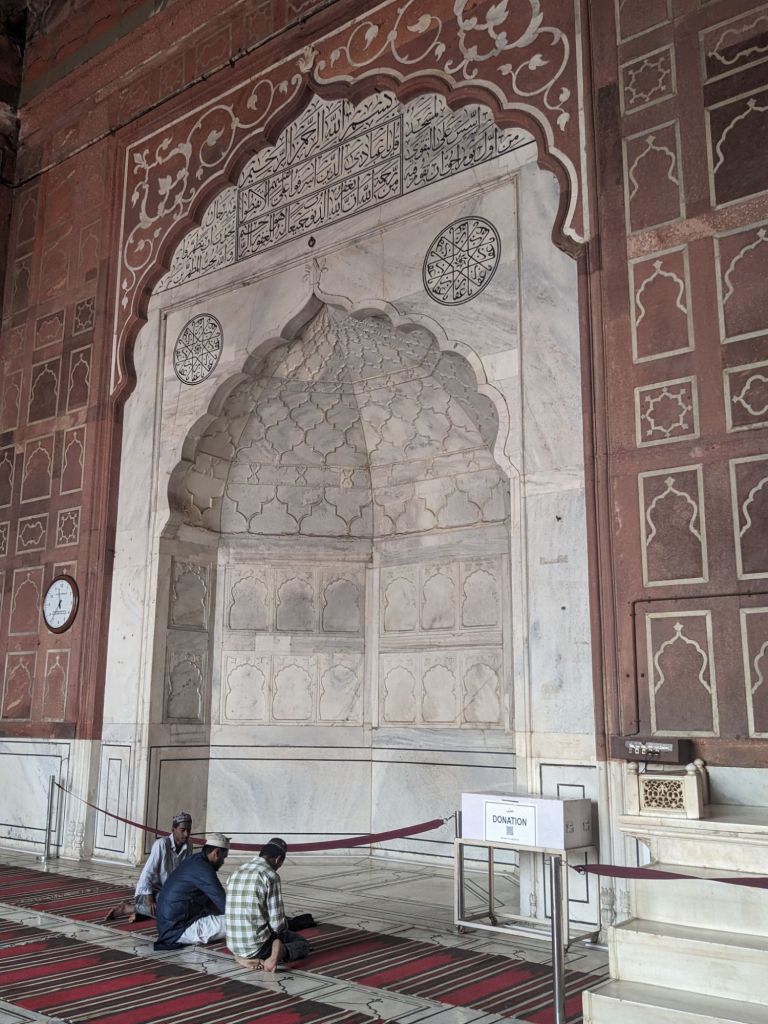
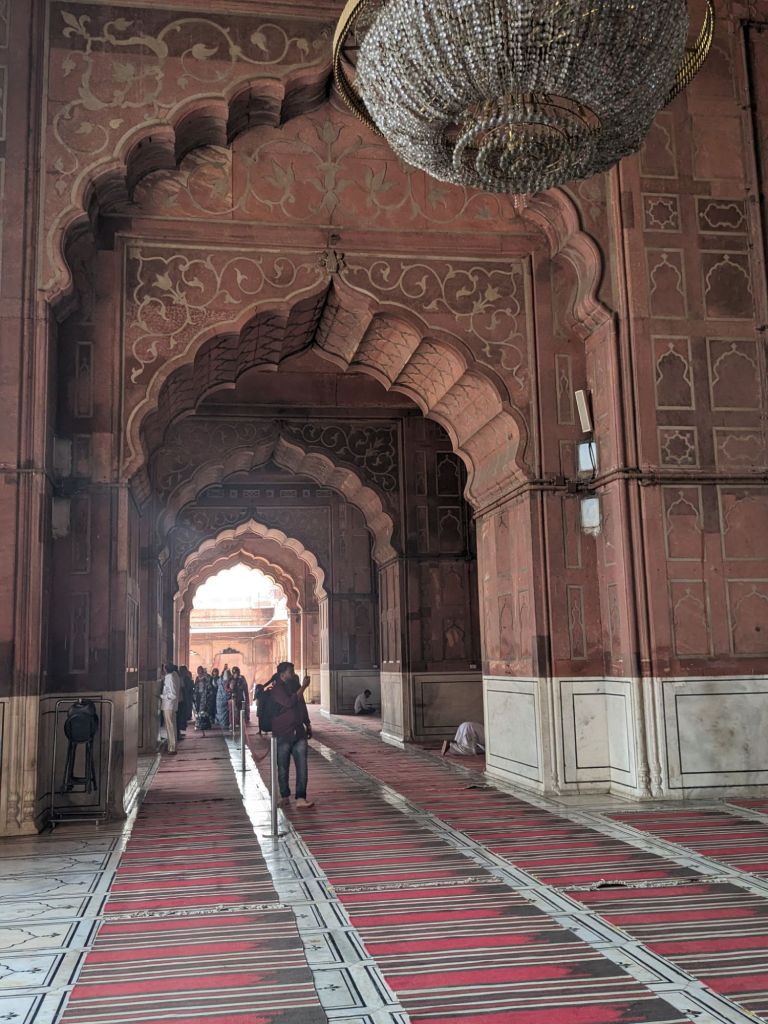
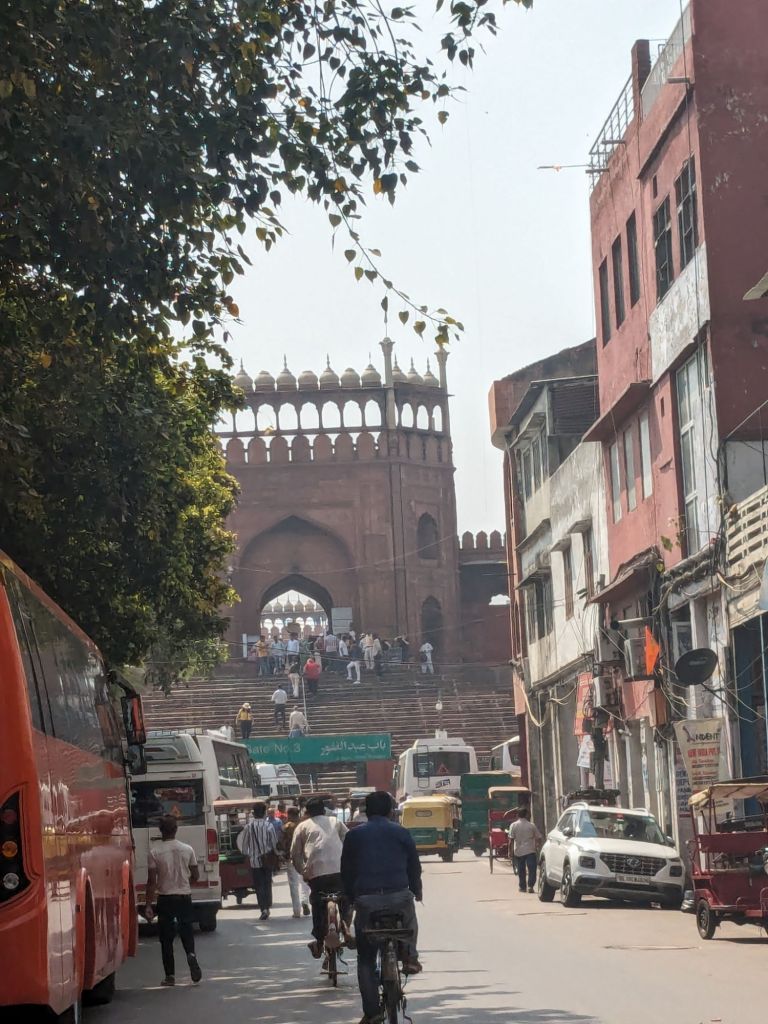
The Jama Masjid served as the imperial mosque of the Mughal emperors until the empire ended in 1857. It was also a site of political meetings and unrest during several key periods of British rule.
The Red Fort, a UNESCO site
This fort/Palace in Old Delhi was the main residence of Mughal emperors.
The fort was plundered of its artwork and jewels in 1739. Most of the fort’s marble structures were subsequently demolished by the British following the Indian Rebellion of 1857.
The remains of the Red Fort
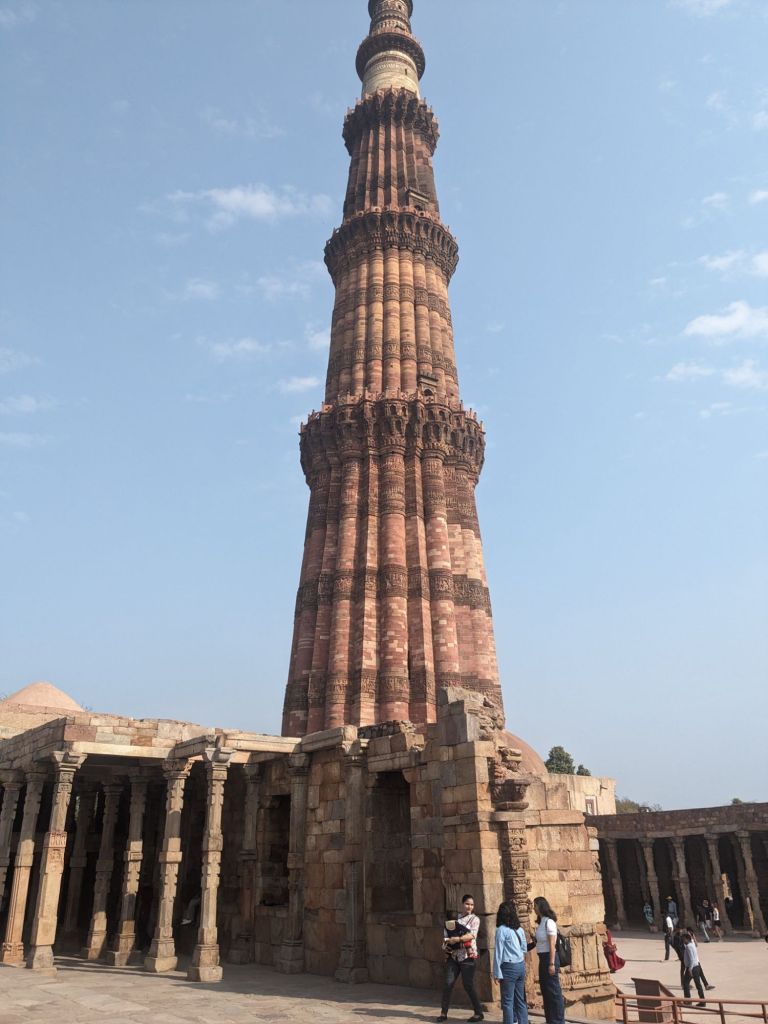
Qutub Minar, a UNESCO site
The Qutub Minar minaret and “victory tower” is at the site of Delhi’s oldest fortified city.
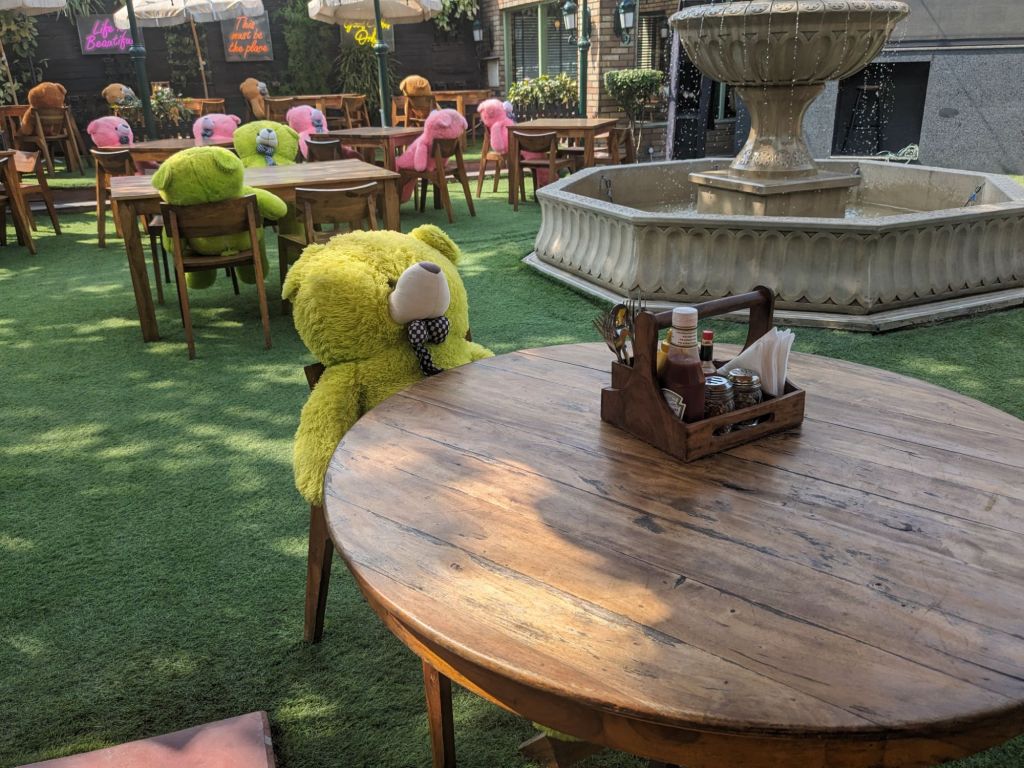
Lunch
Lunch place most notable for these brightly colored bears
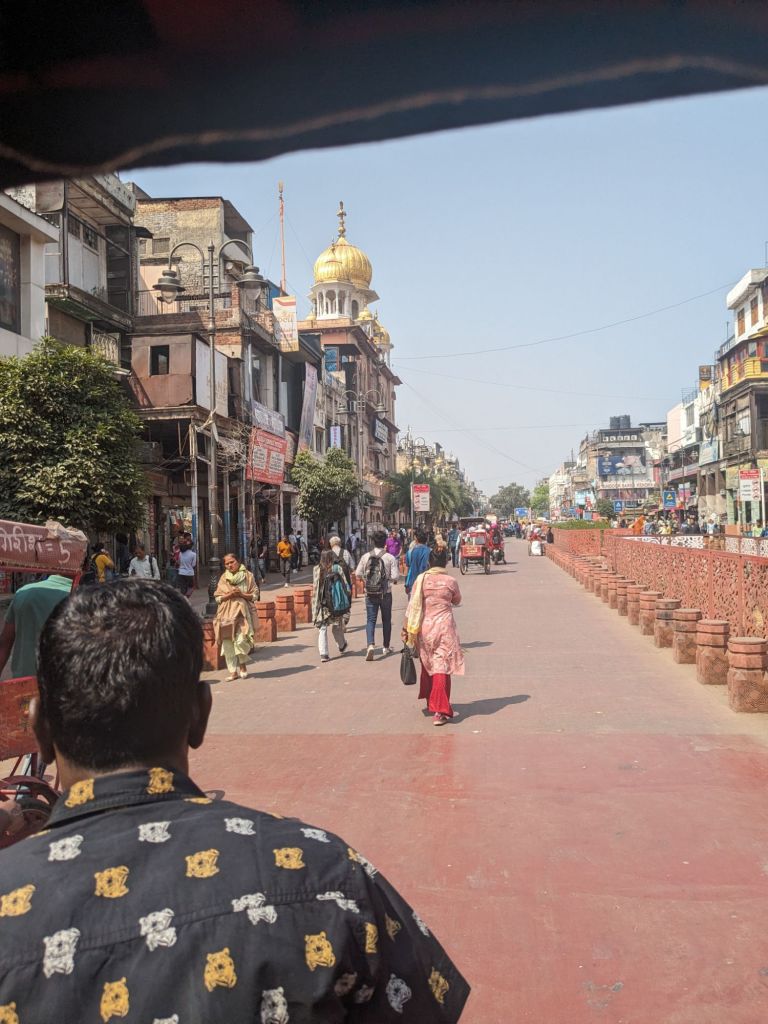
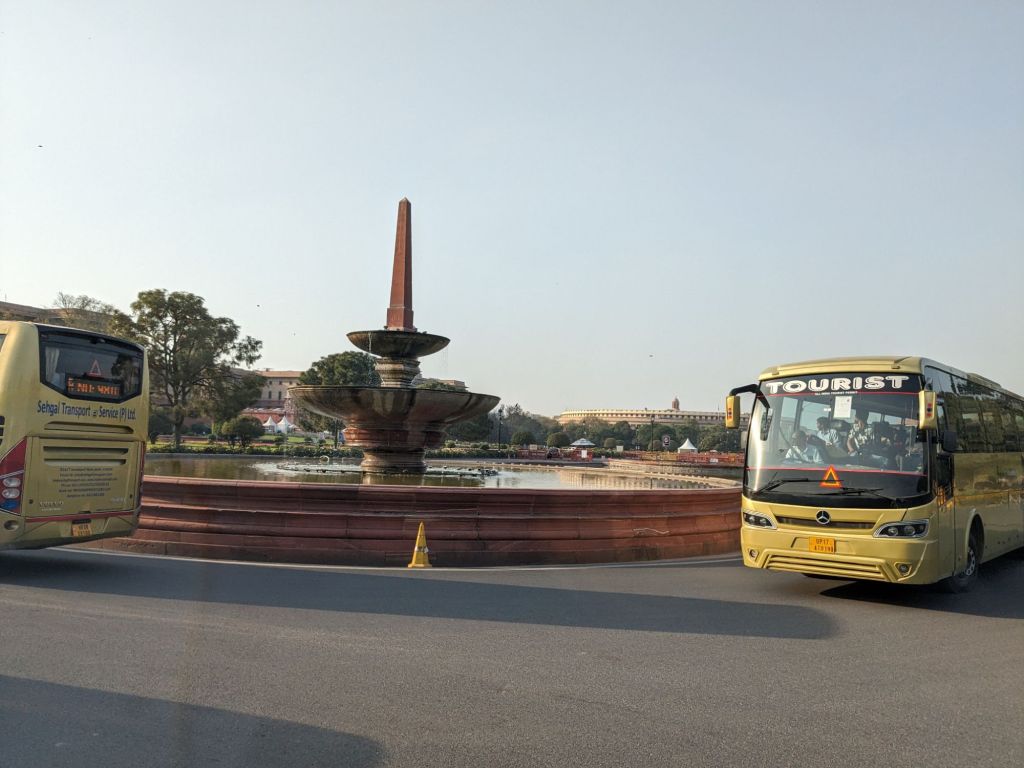
Like many visitors, I was a bit confused as to when one referred to India’s capital city as New Delhi, old Delhi or simply Delhi. The simple answer is that most of the famous monuments from Mughal times are in old Delhi, while New Delhi is the portion of the city built by the British during the British colonial era. New Delhi still contains most government buildings. For a more extensive description of old versus new Delhi, here’s one article. https://timesofindia.indiatimes.com/travel/destinations/what-is-the-difference-between-delhi-and-new-delhi/articleshow/106572882.cms
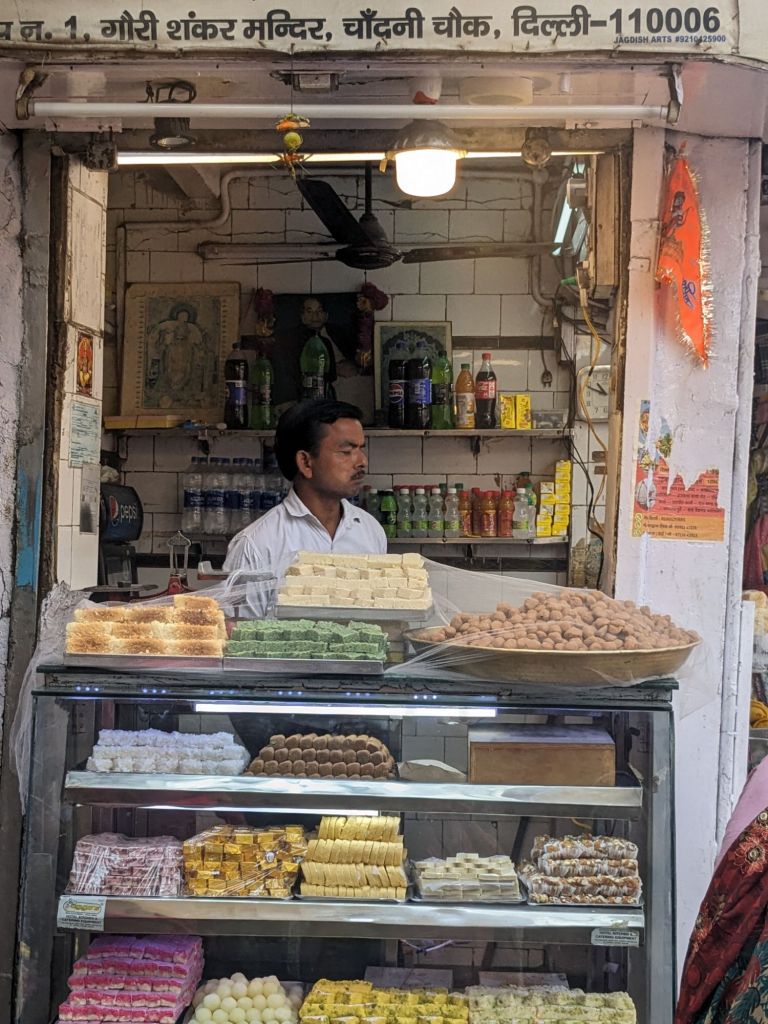
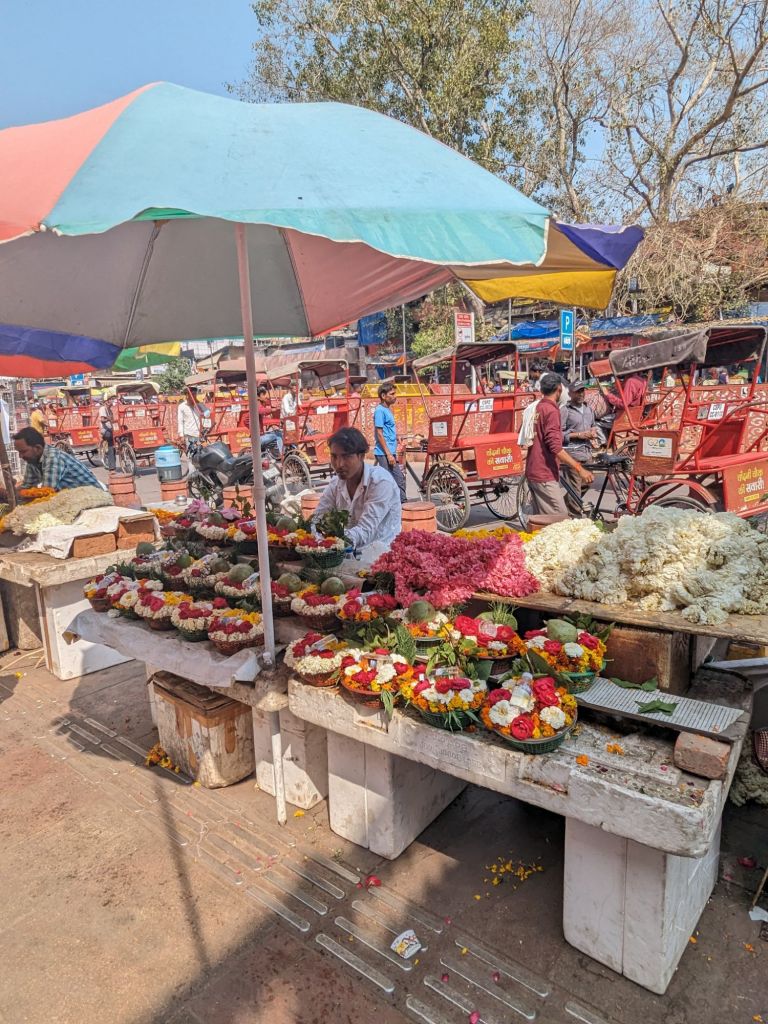
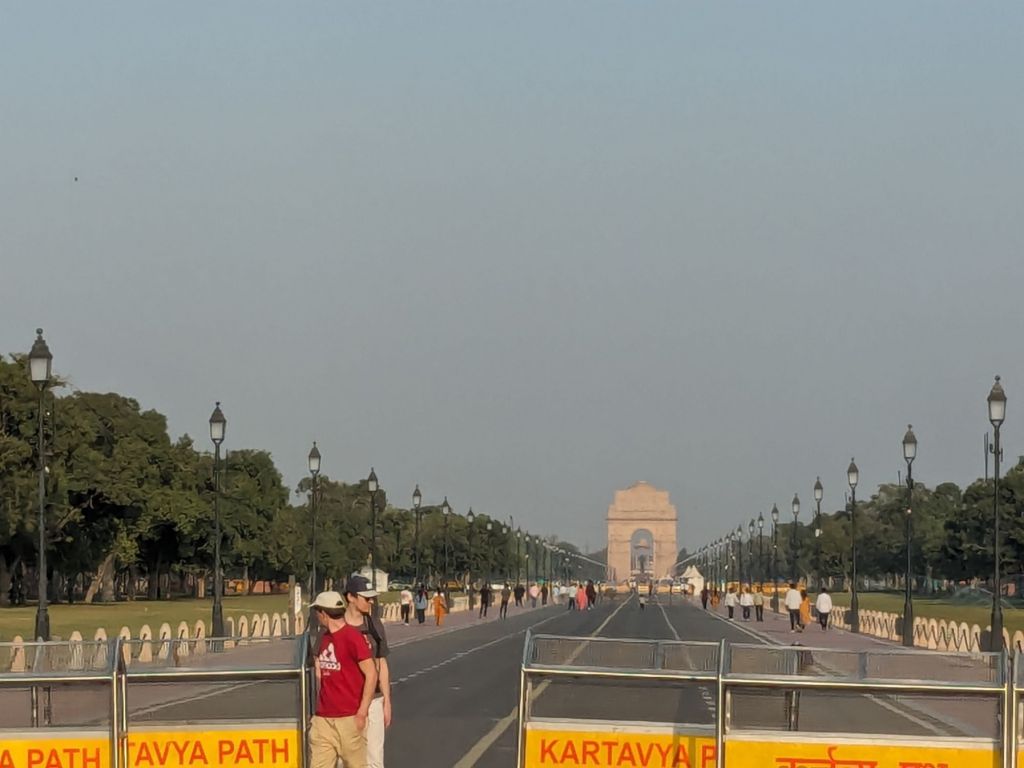
Beautiful colors and wares in Old Delhi India gate (top) and National War Memorial
The India gate commemorates the 70,000 Indian soldiers who lost their lives fighting for the British Army during the World War I.
The national war memorial honors soldiers of the Indian Armed Forces who fought for independent India in conflicts with Pakistan and China, the 1961 War in Goa, Operation Pawan, and Operation Rakshak.
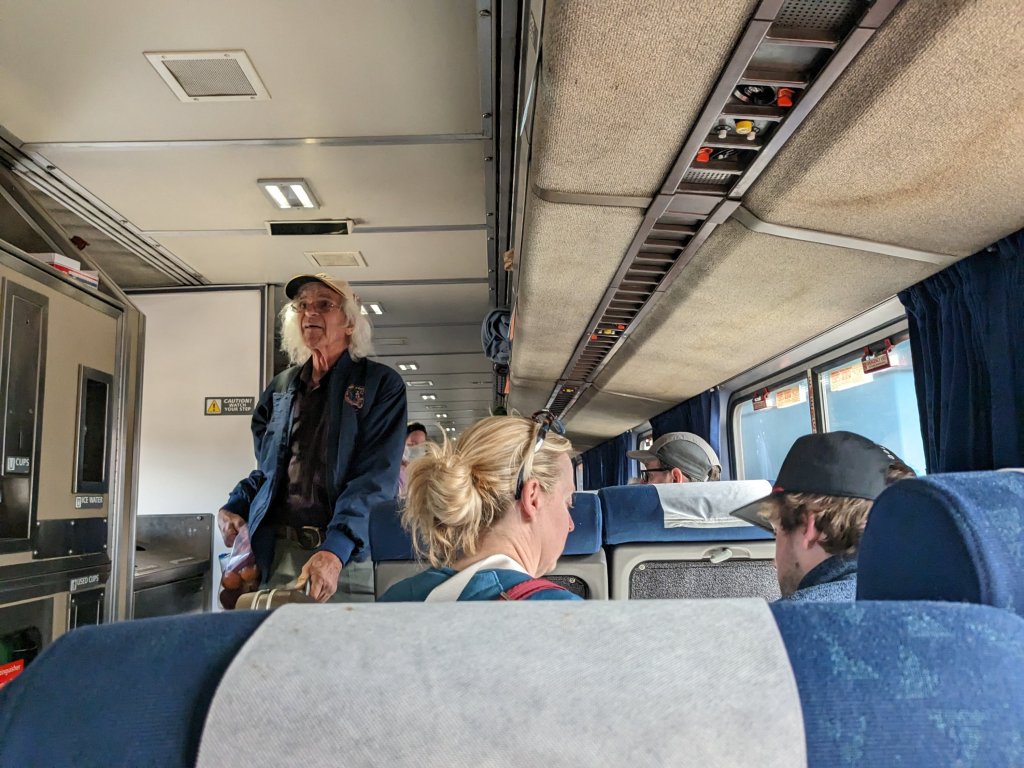
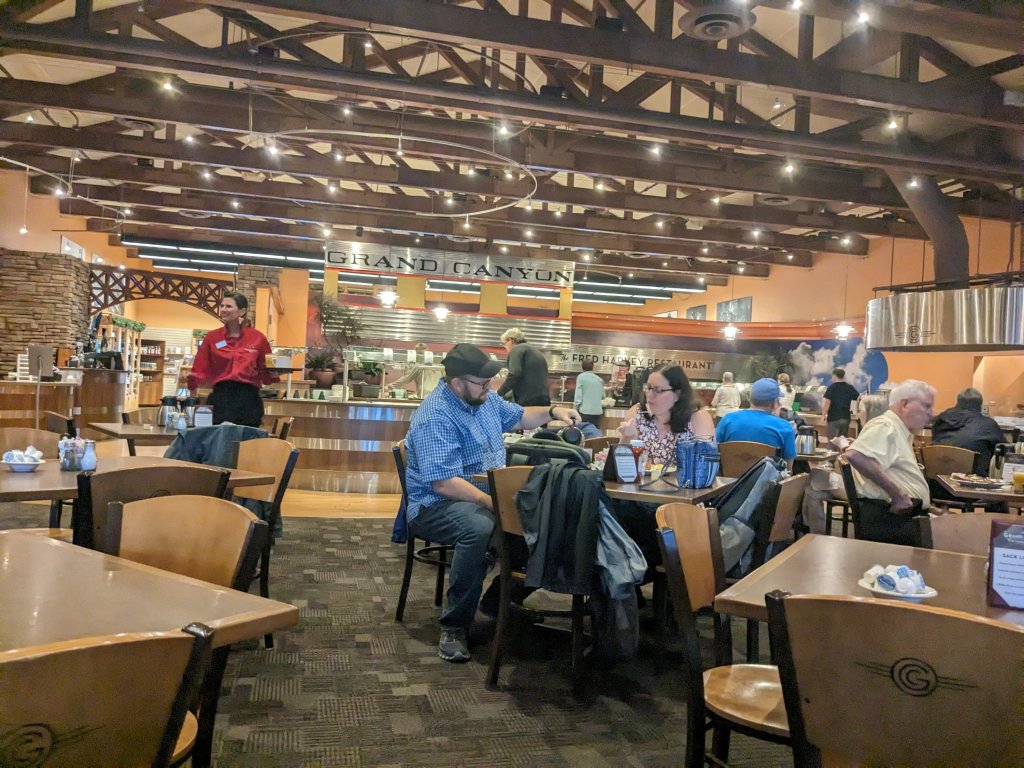
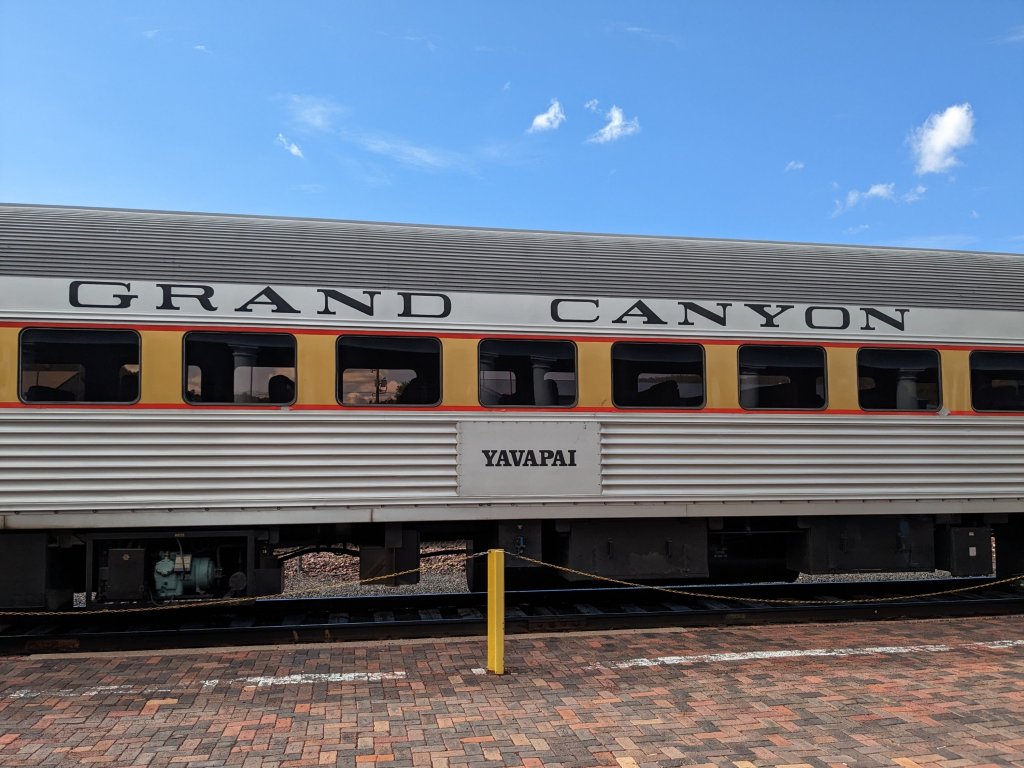
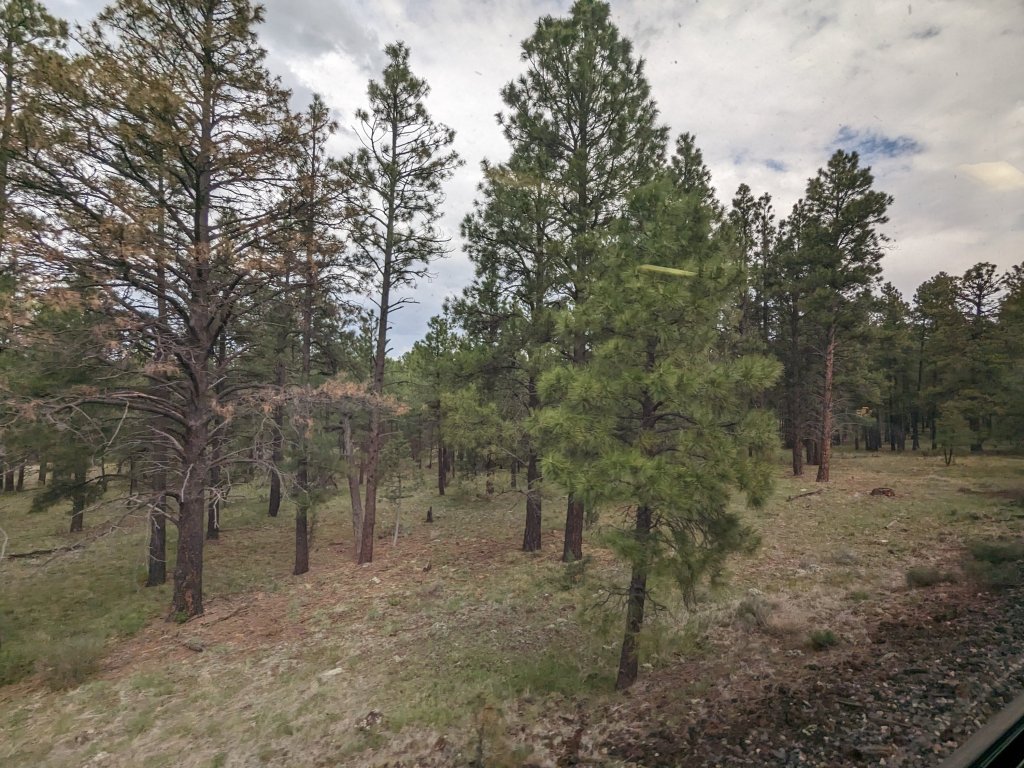
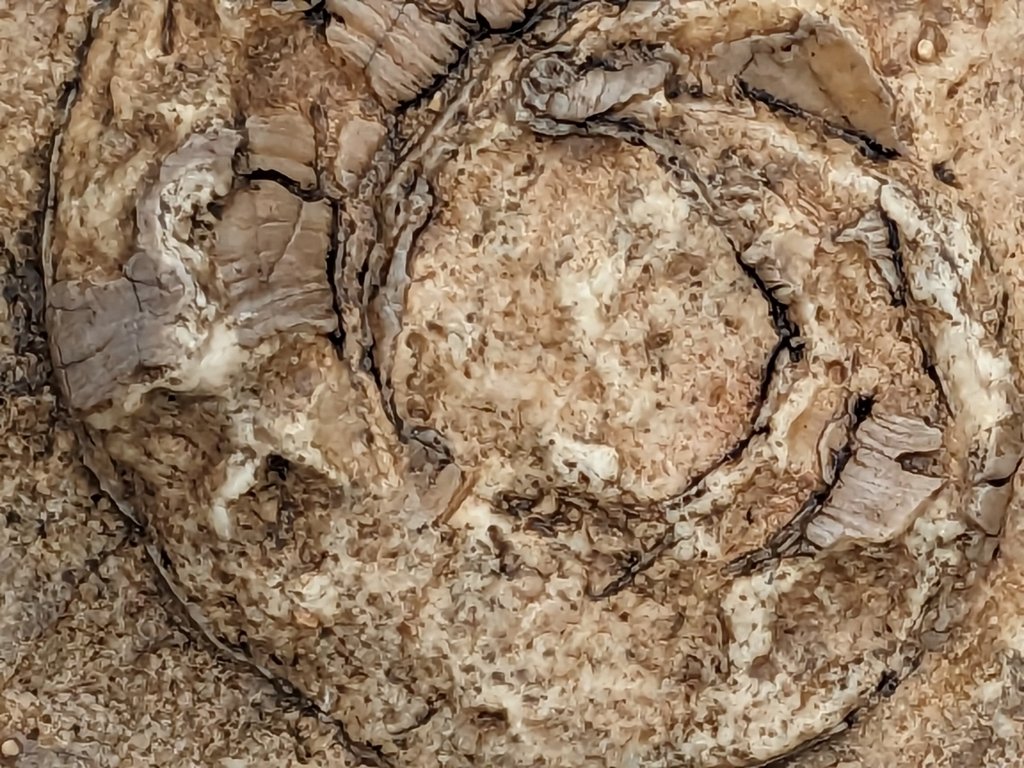
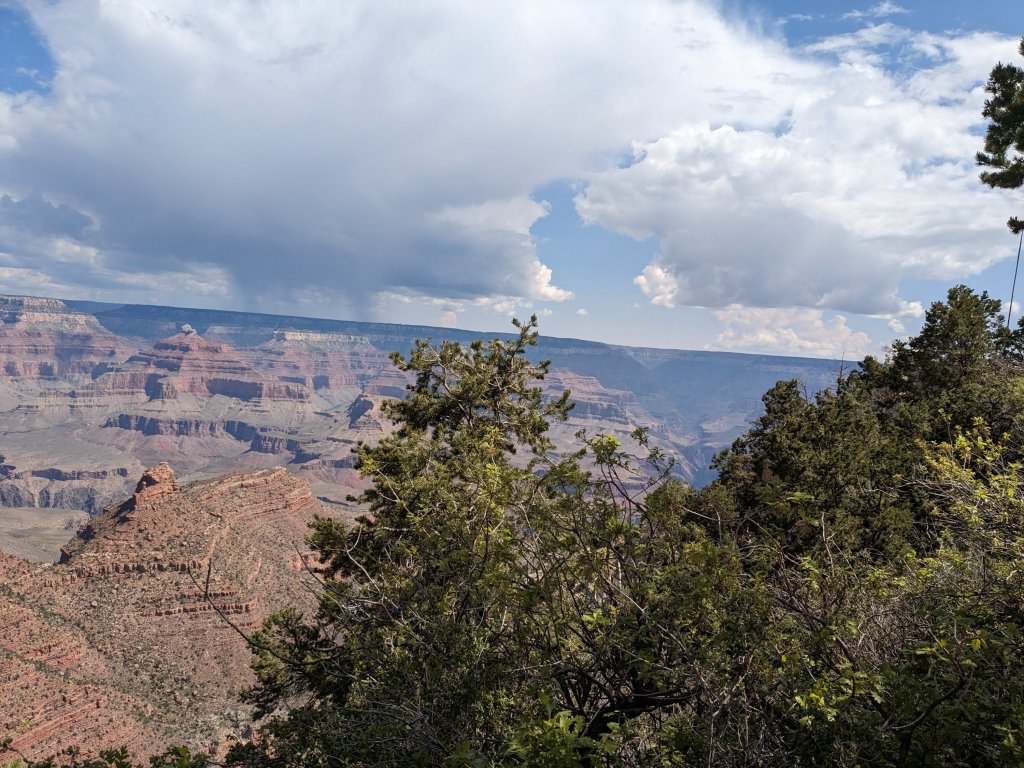
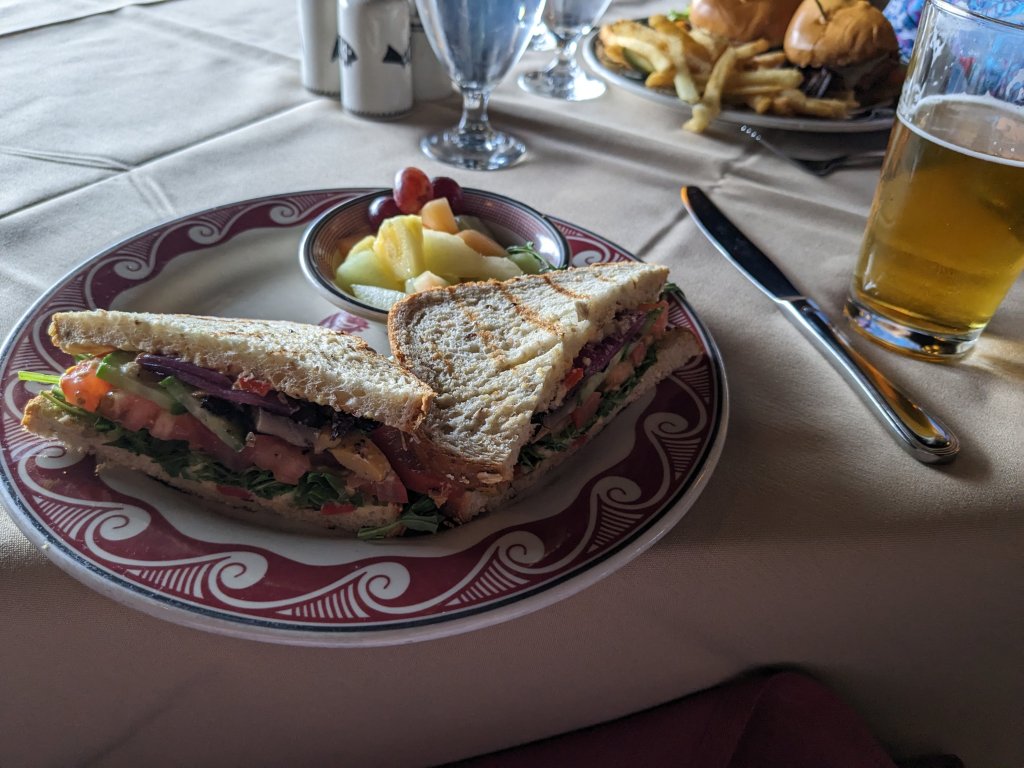
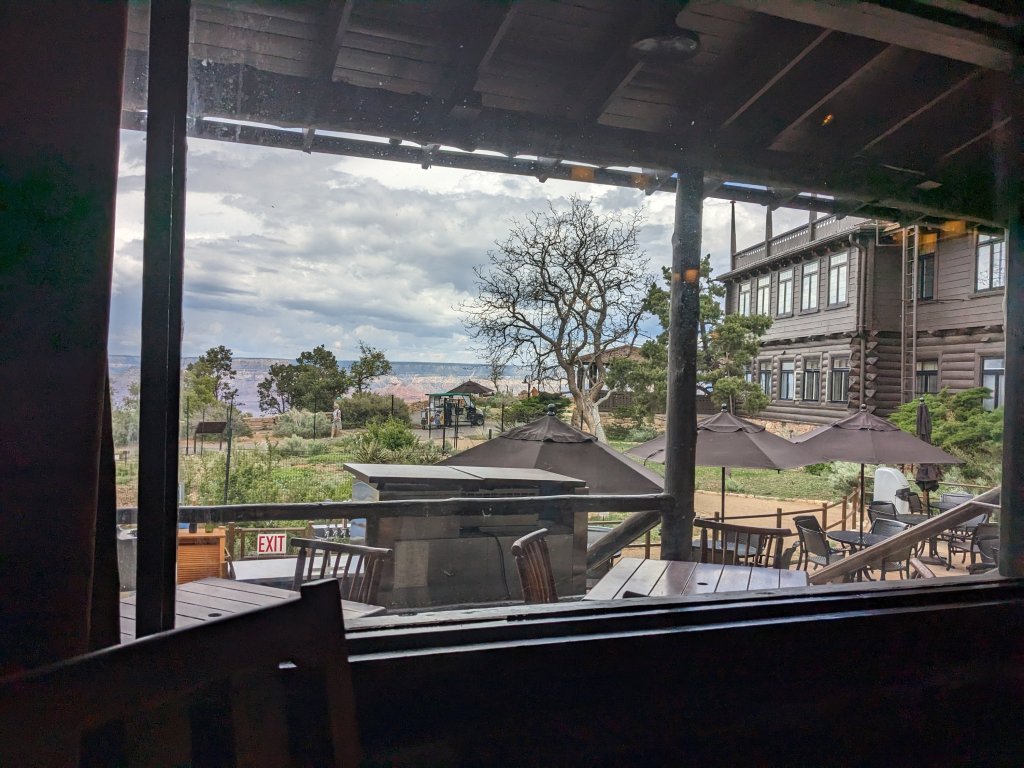
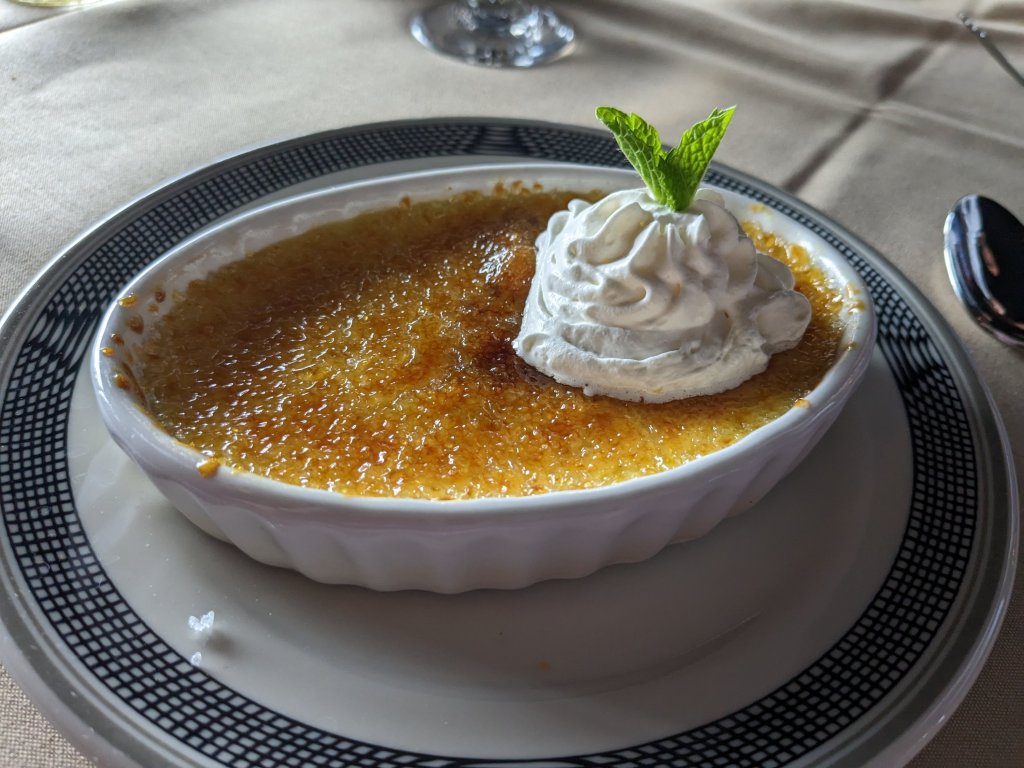
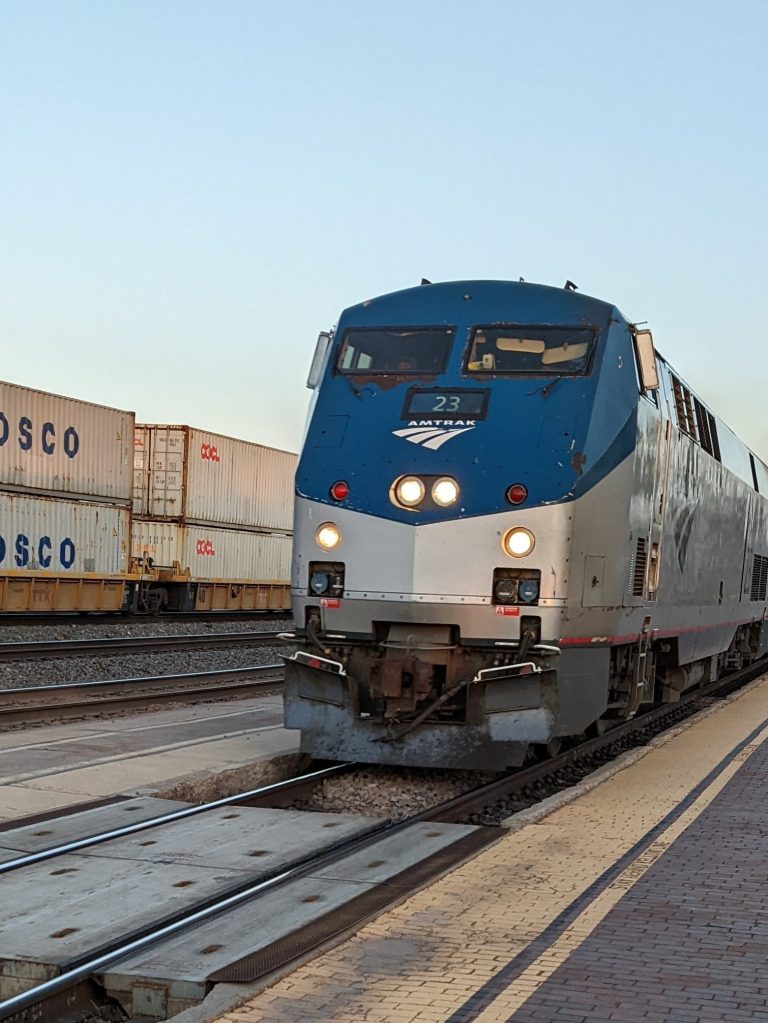
The trip was a fundraiser for Wheels Museum so we met there before hopping on our Amtrak train We’re all settled in on the Amtrak train to Flagstaff. From Flagstaff, we took a shuttle to Williams and the Grand Canyon Railroad hotel. This is the lobby.The rooms were spacious and comfortable and they had a lovely pool We had breakfast at the Fred Harvey restaurant before walking over to the train station across the street.The Grand Canyon rail goes from Williams to the Grand Canyon. On our way, we saw antelopes, javalinas, an elk, a coyote, cows, ranch horses and wild horses.Scenery along the train route.The Grand Canyon is spectacular.Another view of the canyon.We found cephalopods and other fossils in the original grand canyon soil.Another beautiful view of the canyon.A great vegetarian sandwich at El Tovar.The view from our lunch table at El Tovar. To have a chance to snag one of the rare window seats, make the earliest lunch reservation and cross your fingers.My friend’s sandwich Apple caramel creme brulee. Yummy.
A super rich chocolate dessert.
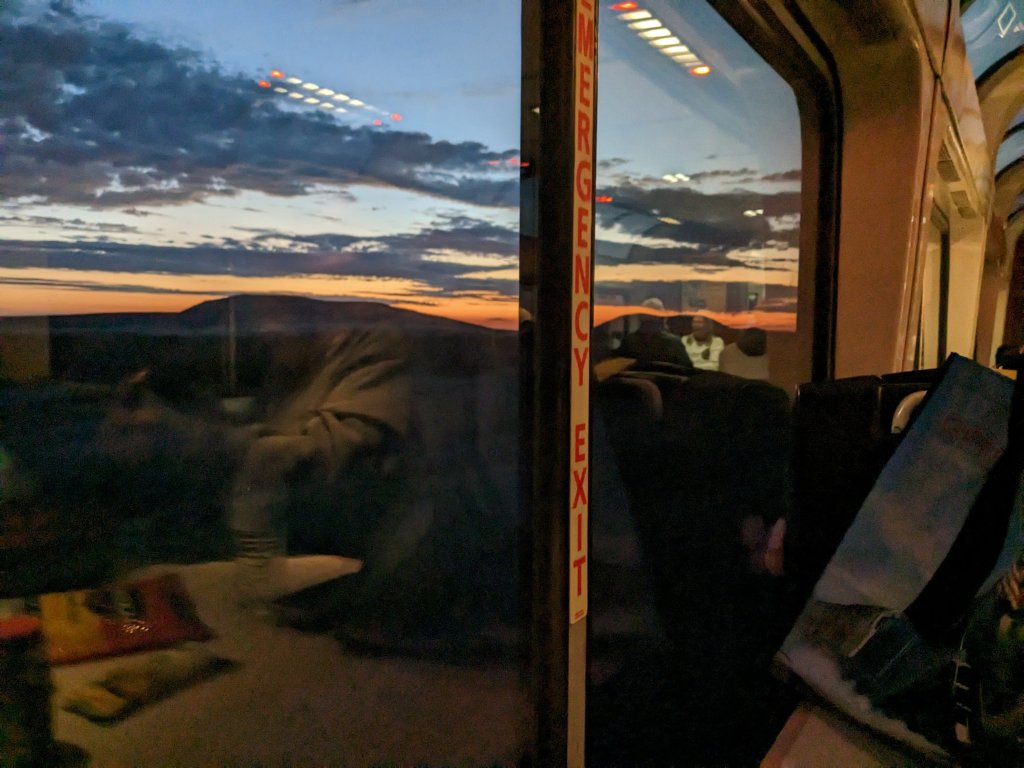
We saw a beautiful sunrise on the way back to Albuquerque on Amtrak.
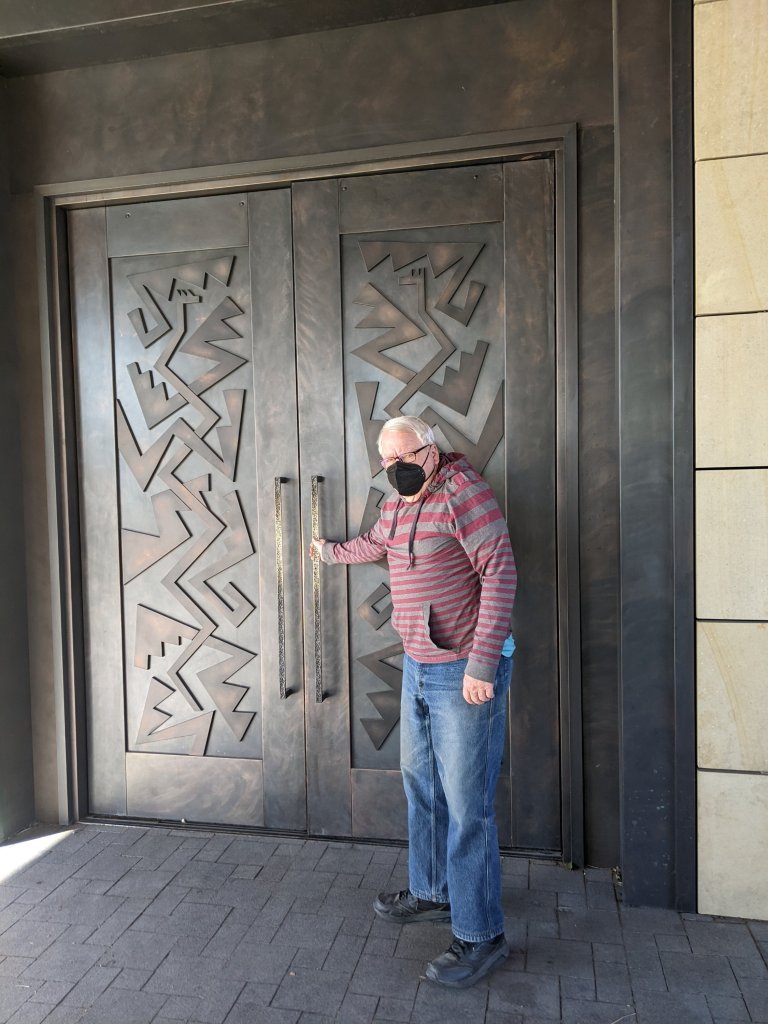
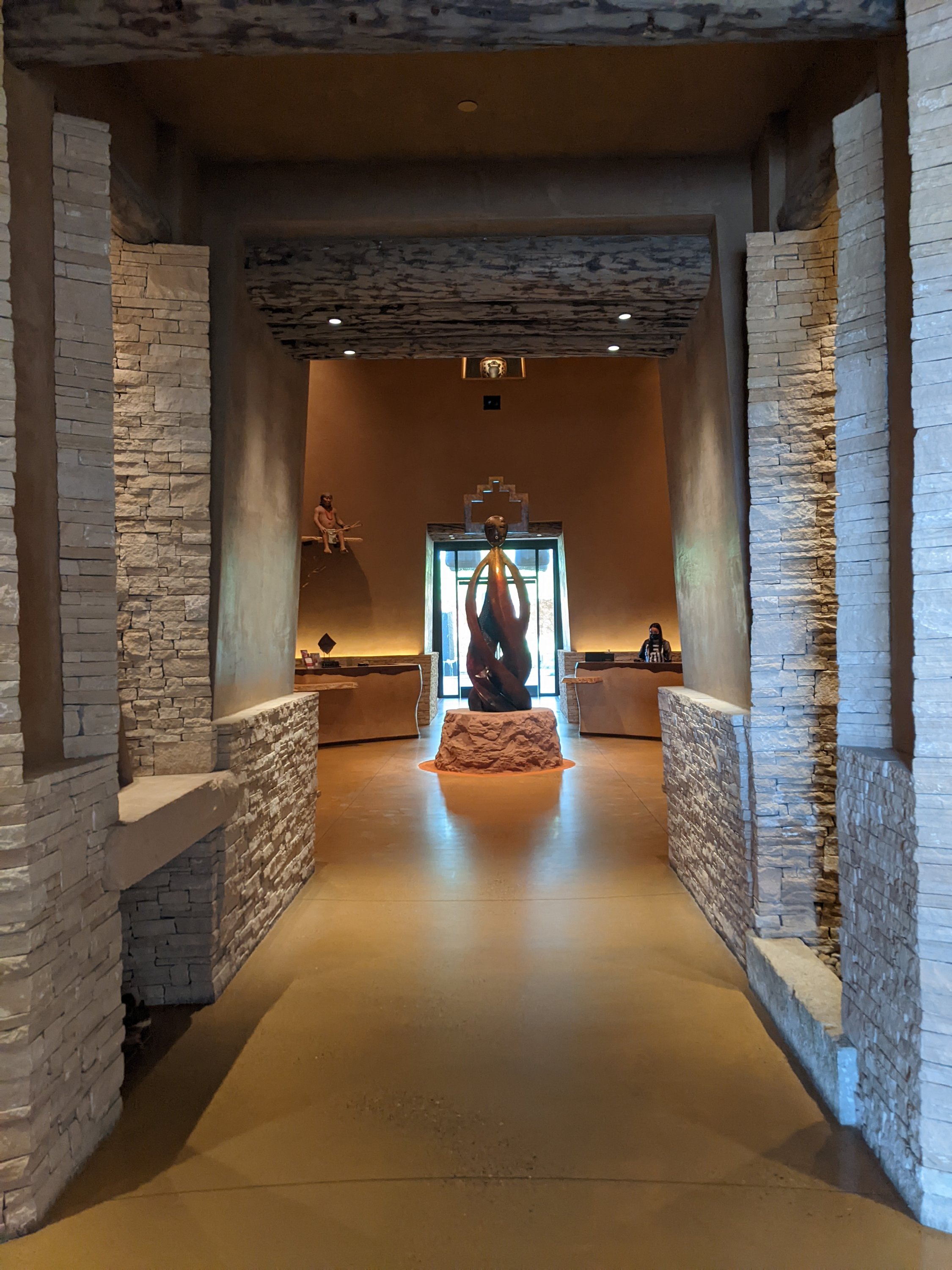
My oldest granddaughter, Ayley, came to visit recently. Back home in Michigan, it was still cold and snowy, so she really enjoyed our warm new Mexico weather. We booked her at the newly built Chaco hotel, which she really loved.
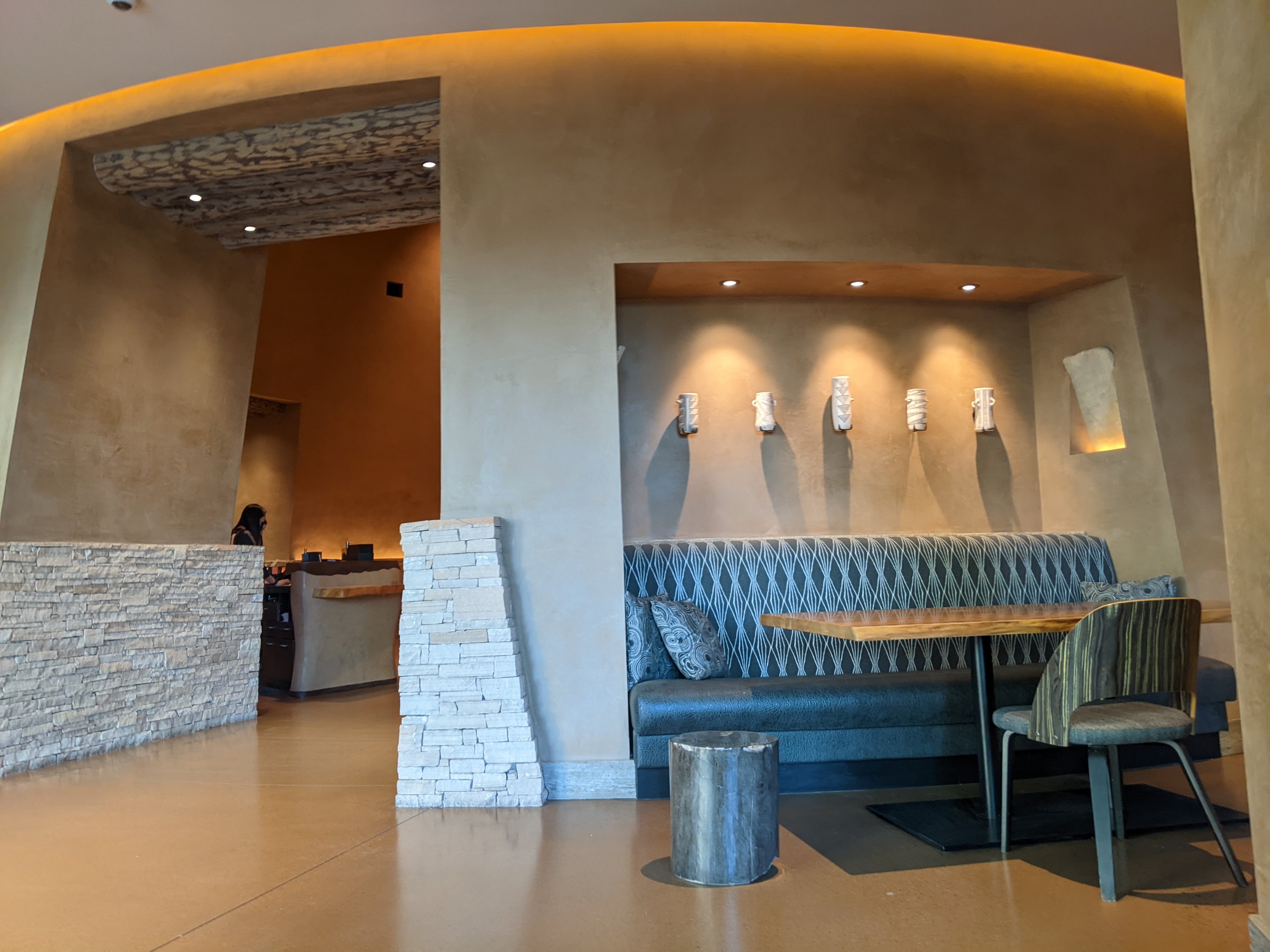
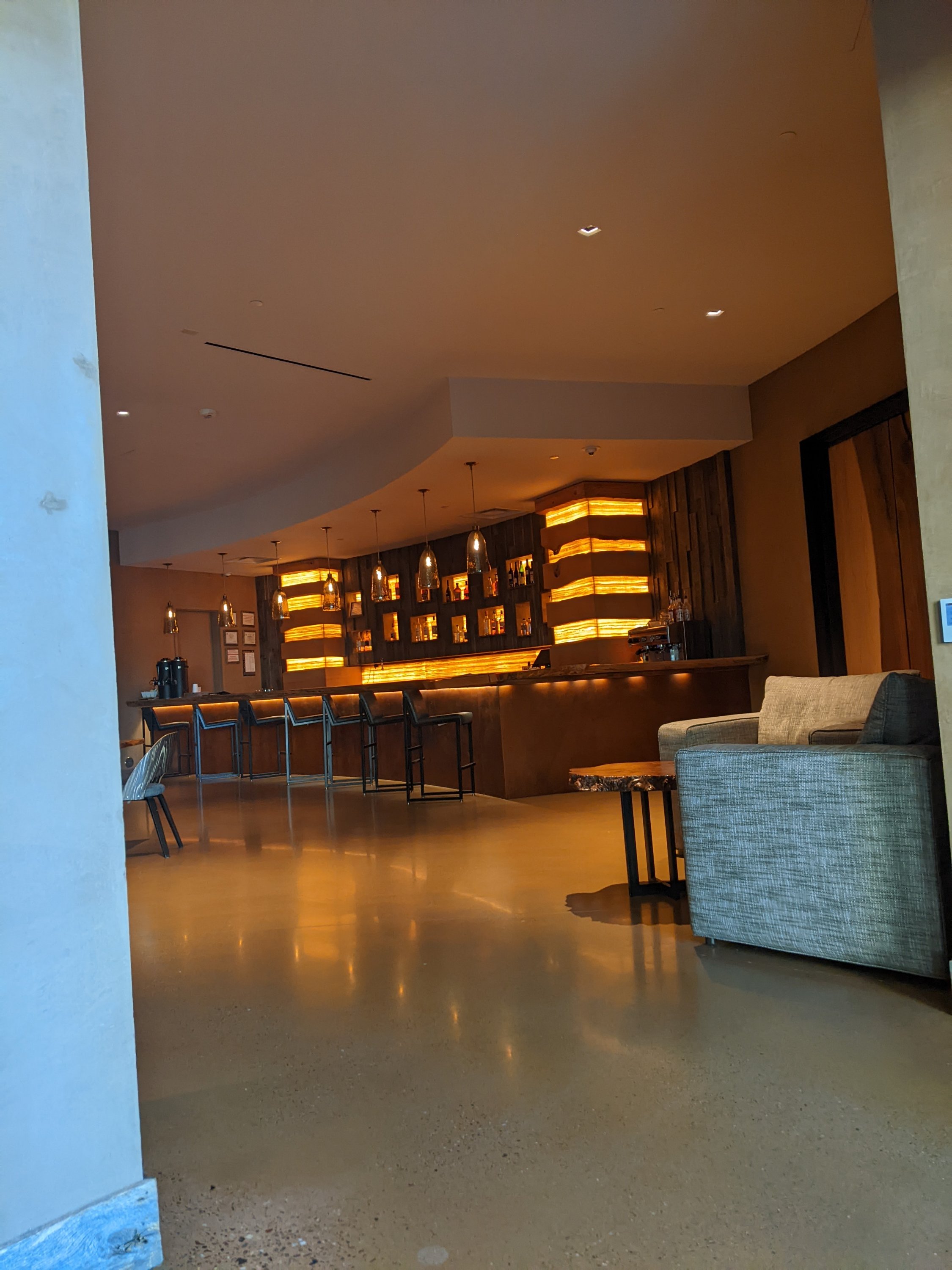
The hotel lobby has the sense of a historic kiva. Ayley also enjoyed our walks through the bosque.
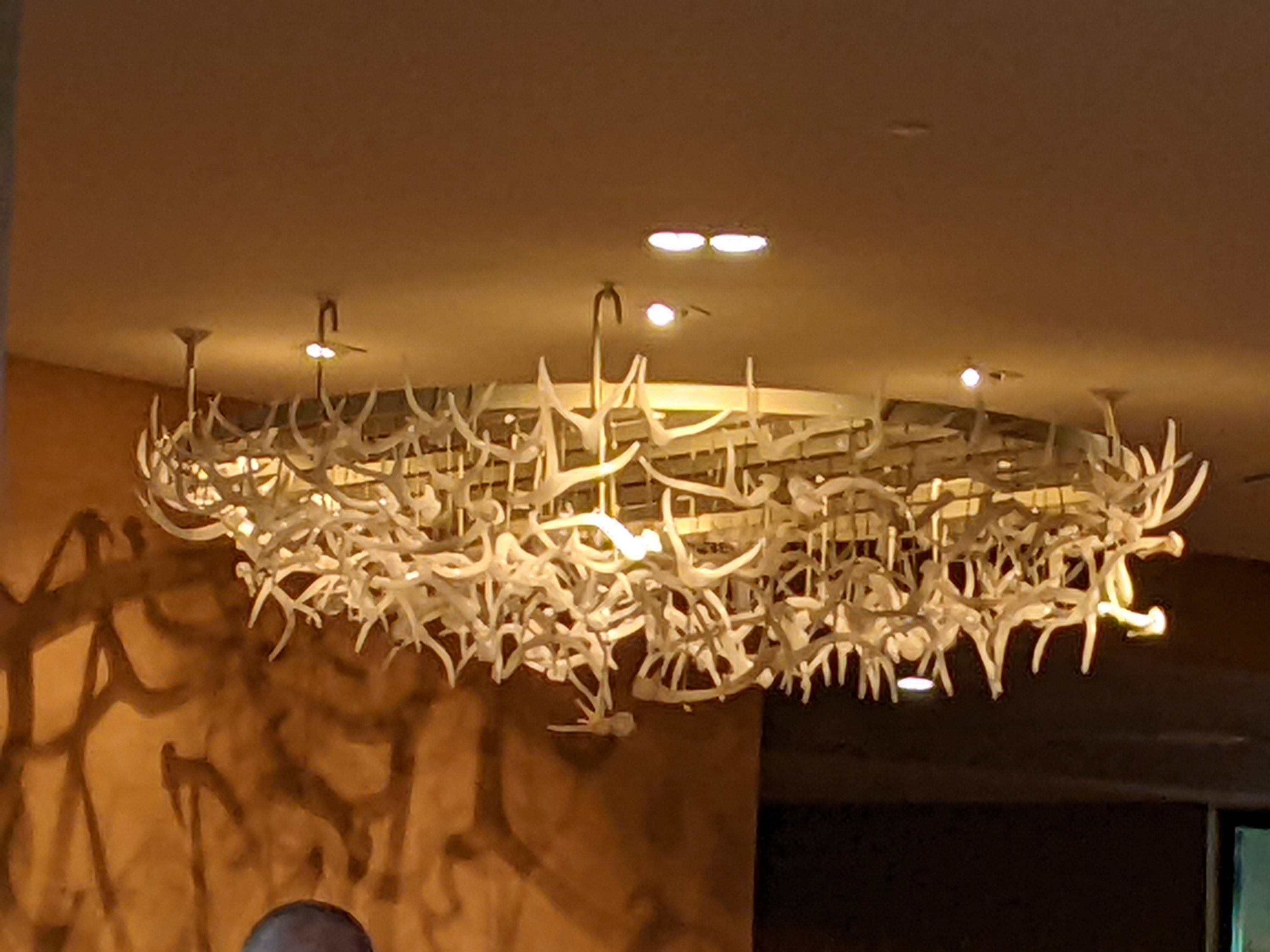
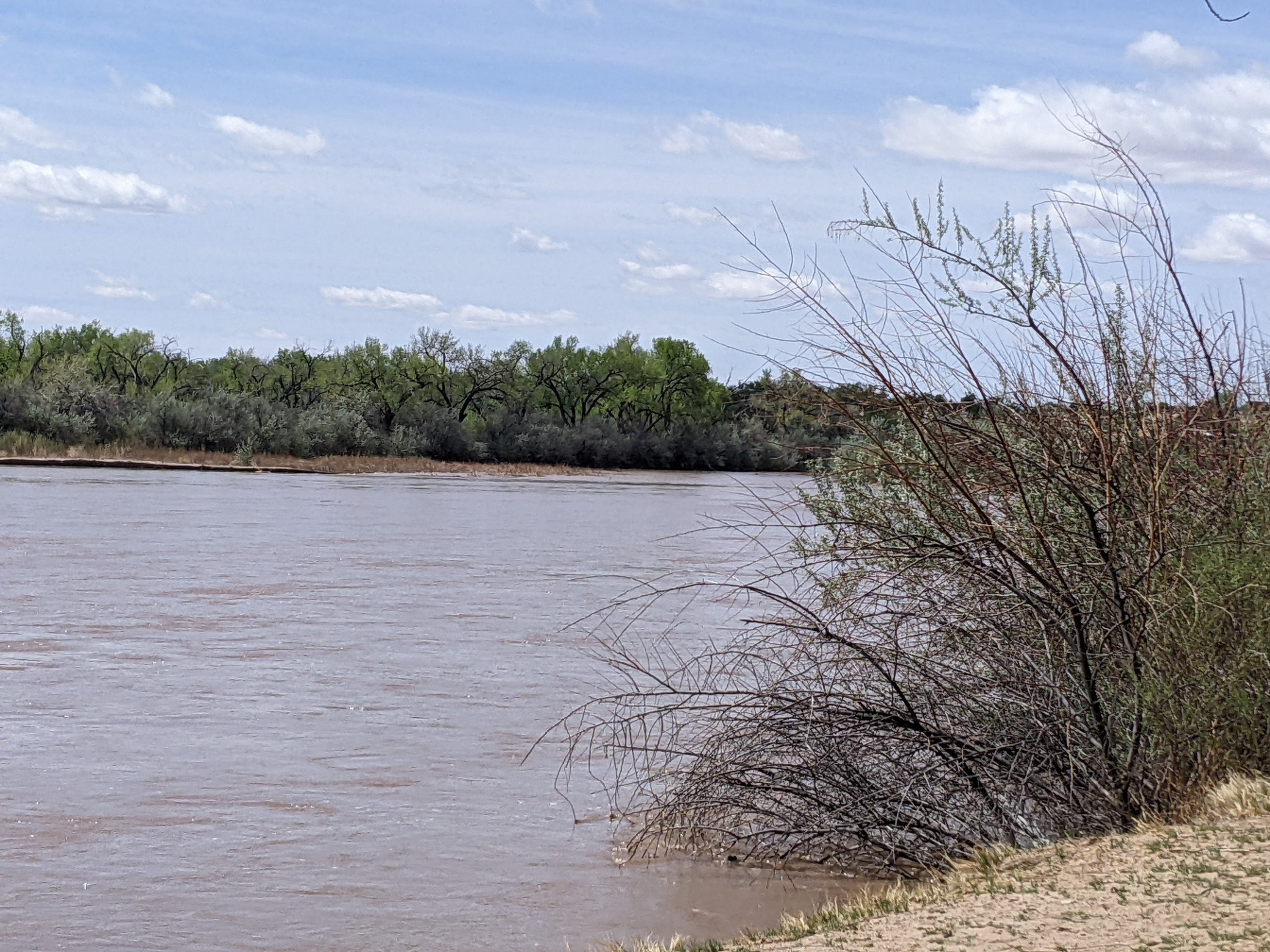
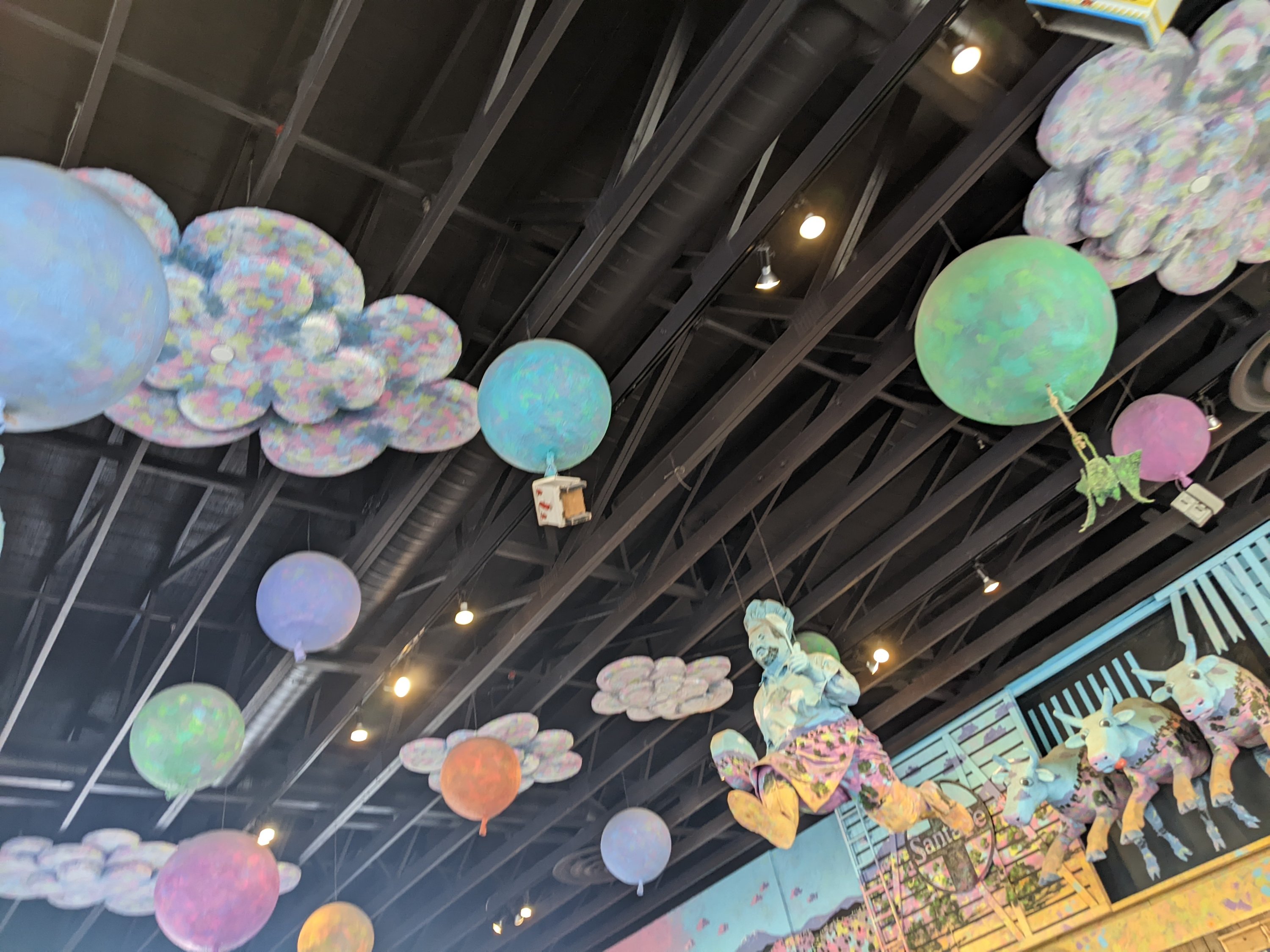
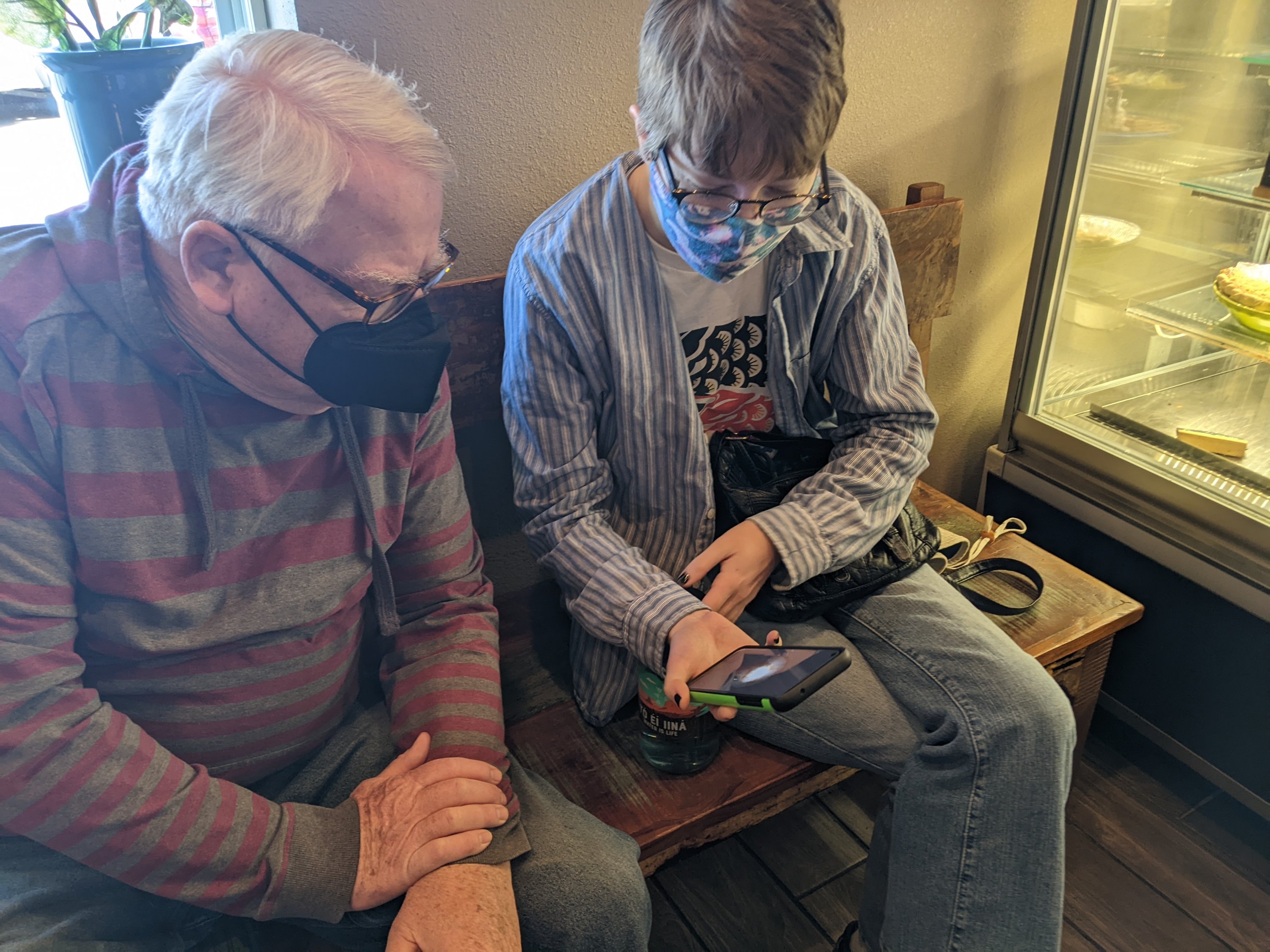
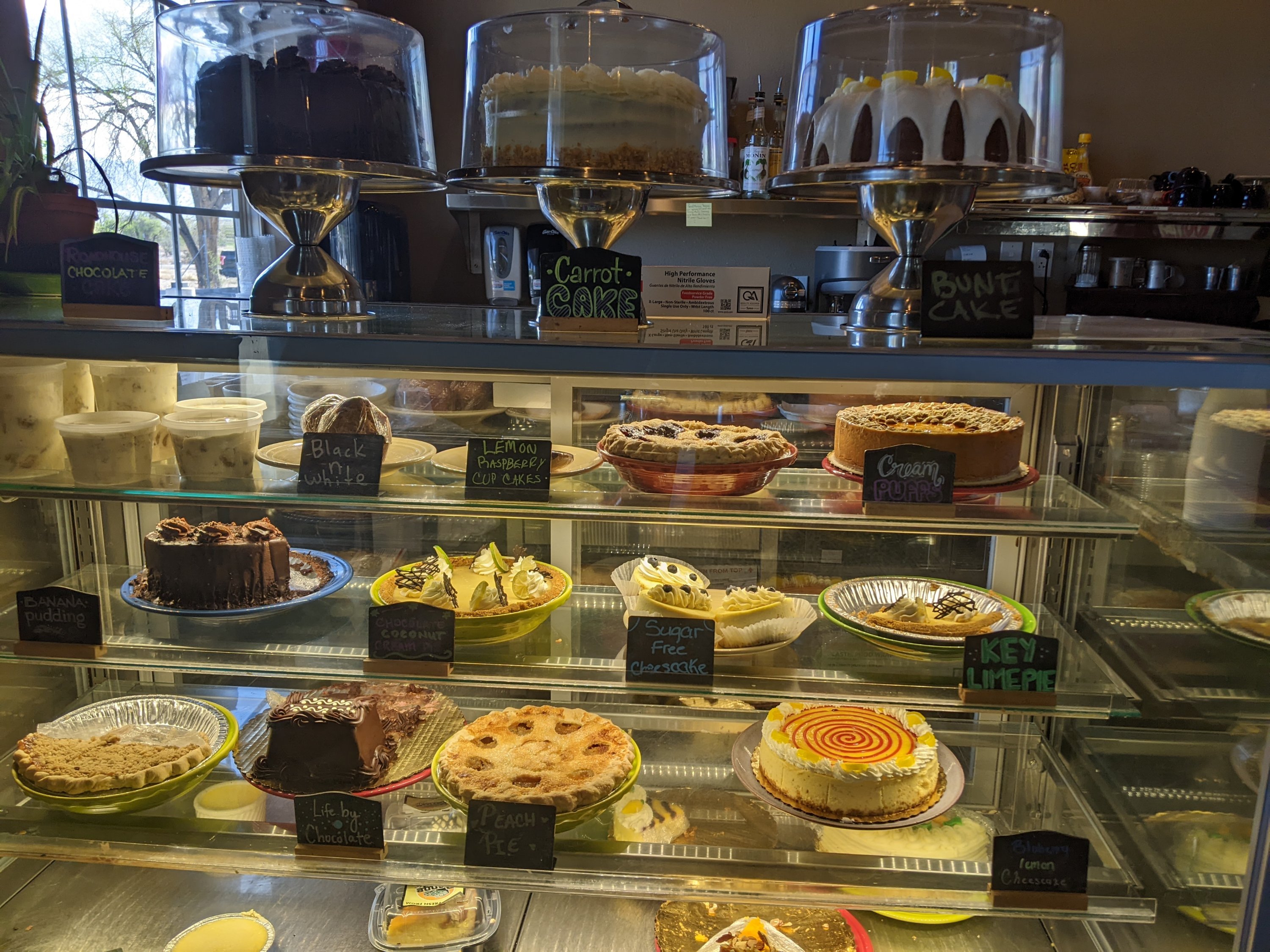
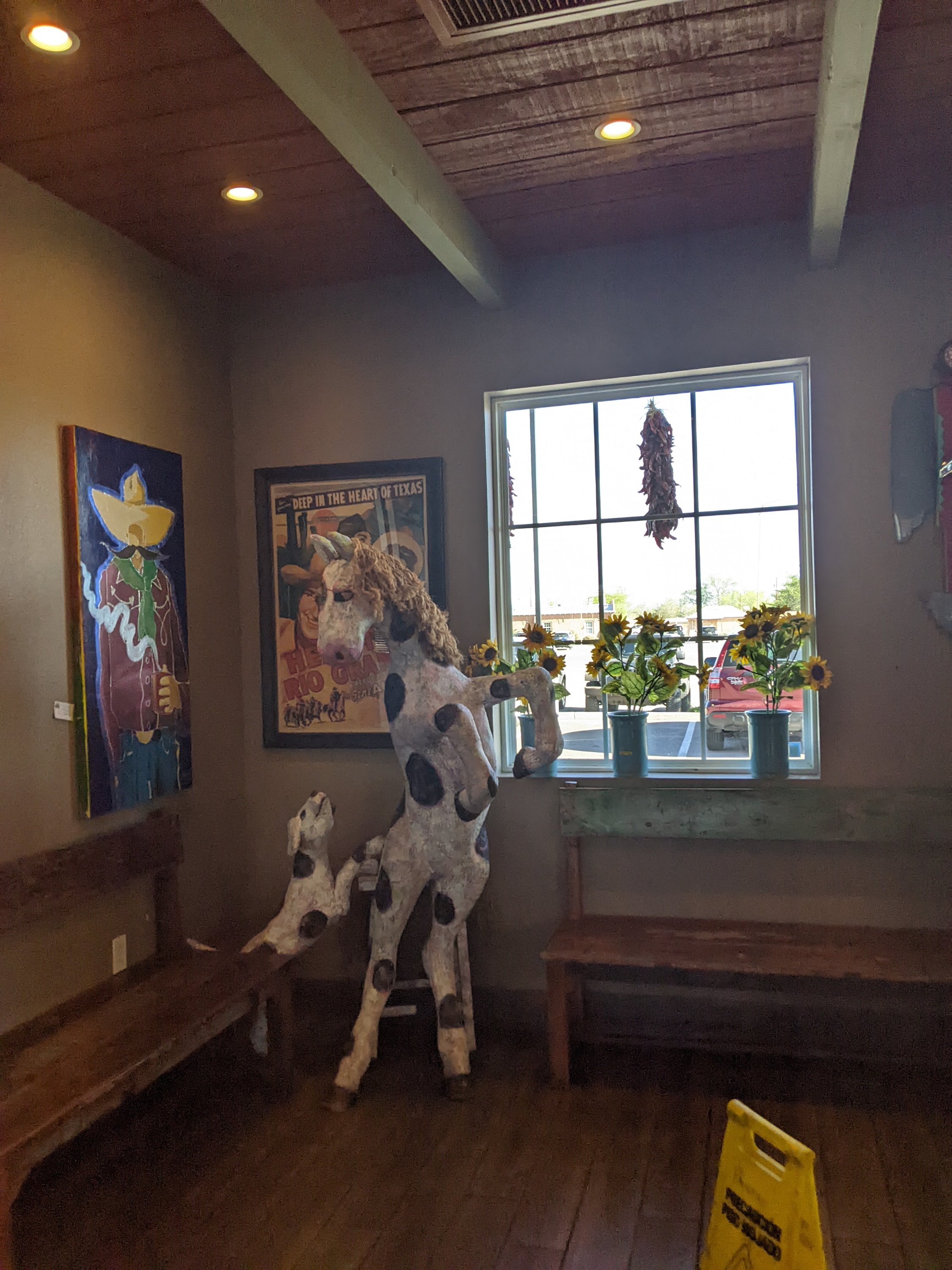
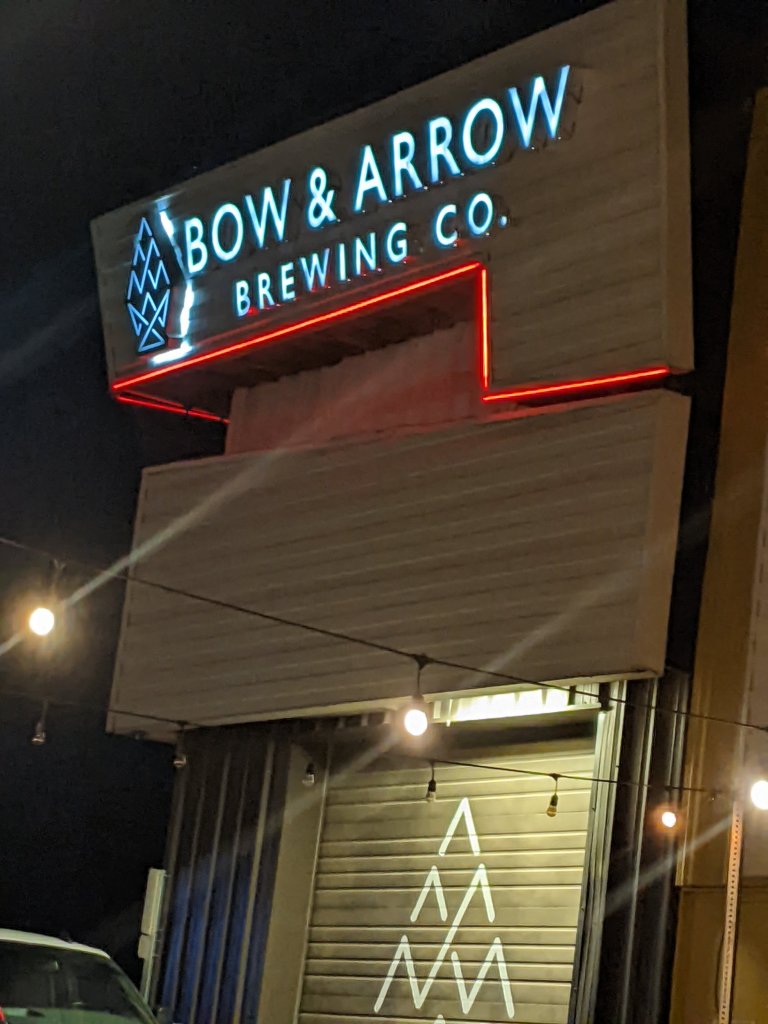
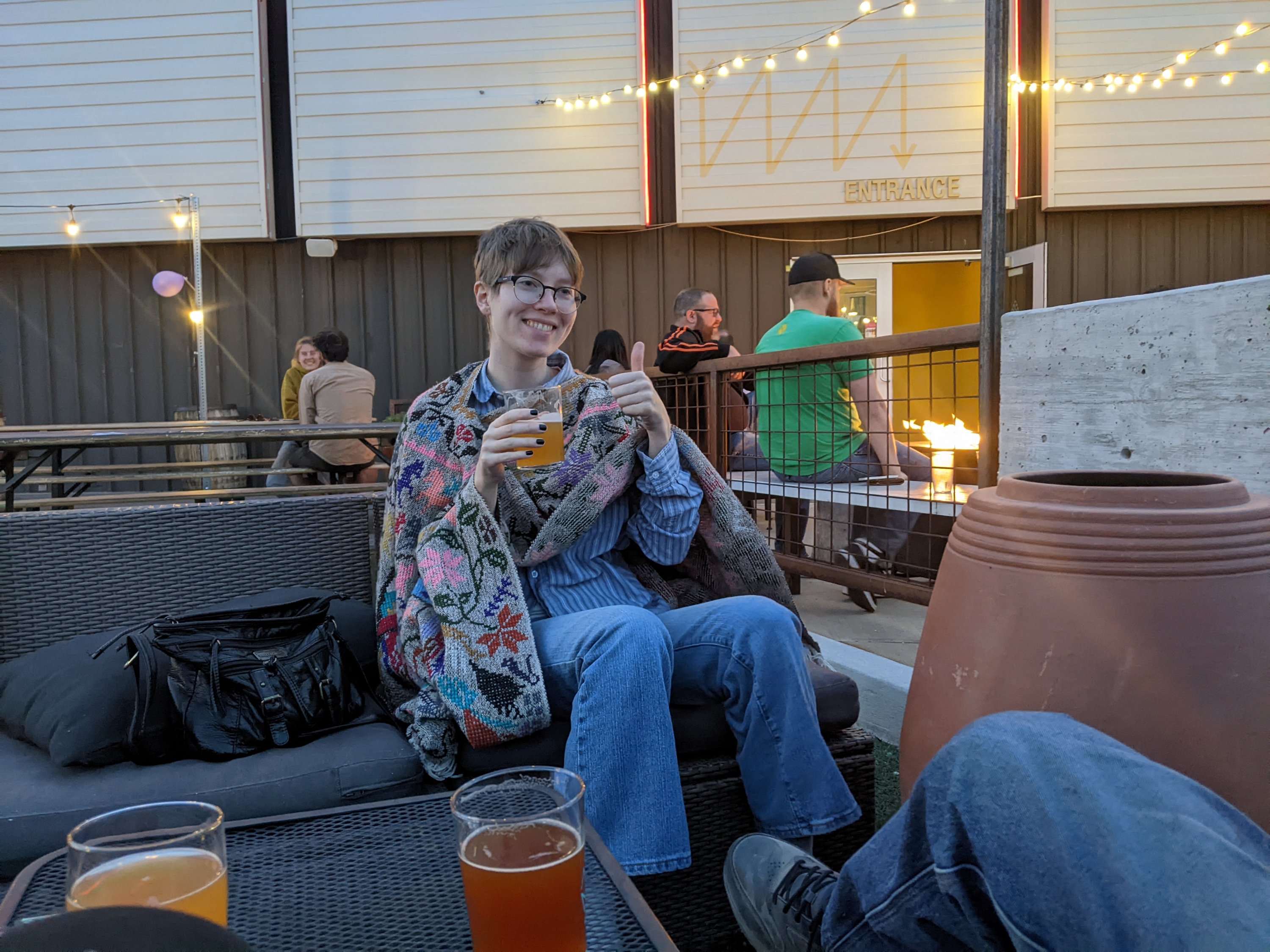
One of the chainsaw sculptures in the bosque.The rio grande, unsually highPinon pancakes at the Range cafe were a hitLots of fun art on the Range cafe ceilingRay and Ayley discussing serious thingsA tempting case of delightsMore fun artWe enjoyed some beers at the native owned Bow and Arrow brewery
We all had a great time and we’re sorry to say goodbye. Till next time.
Taking a train trip via Amtrak (http://Amtrak.com) to Winslow, Arizona from Albuquerque, New Mexico is as close as one can come to time travel to the old wild West without a time machine.
The train ride was smooth enough that one lady wrote and addressed 100 postcards. I jotted down notes in my journal using my fountain pens, and admired the beautiful scenery. The trip was sponsored by the Wheels Museum in Albuquerque. The train was immaculate and comfortable, with lots of leg room. There is a cafe onboard, with light snacks and a wonderful observation deck with huge windows.
For booking cheap travel, I found the wanderu (http://Wanderu.com) website helpful and often easier to use than Amtrak’s beautiful but sometimes overwhelming site. Wanderu also can be used to find deals on buses, trains, cars, and hotels.
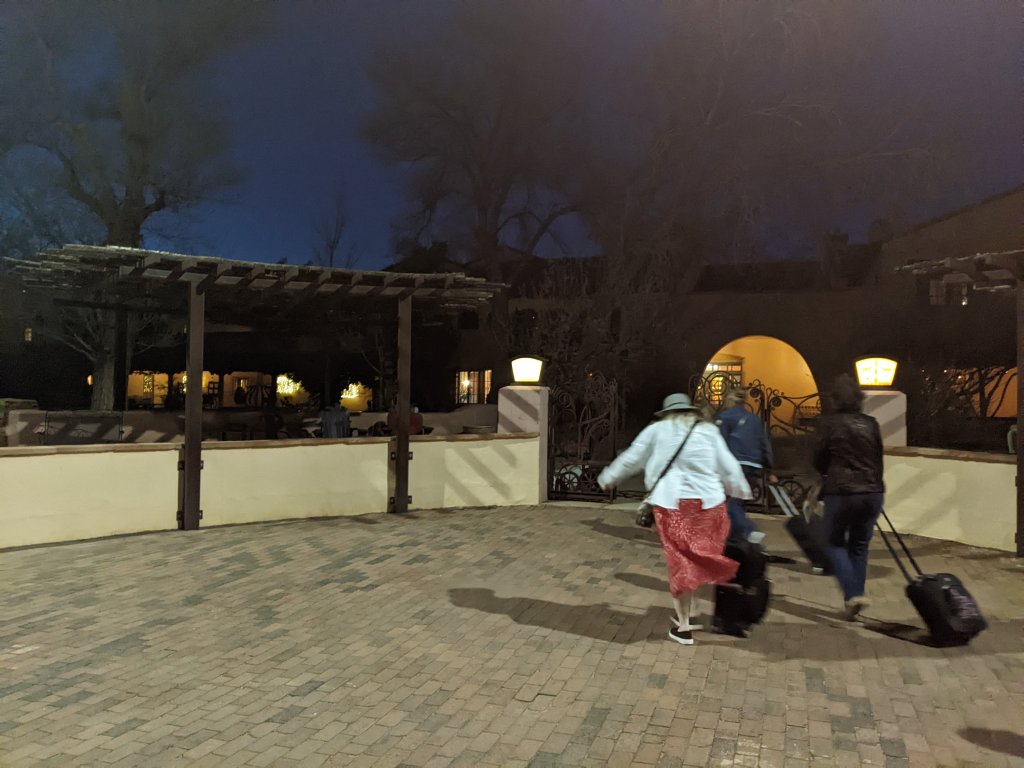
Arriving after dark, guests exited the train to be immediately welcomed by the hotel lights. The train stops at the hotel’s back gate.
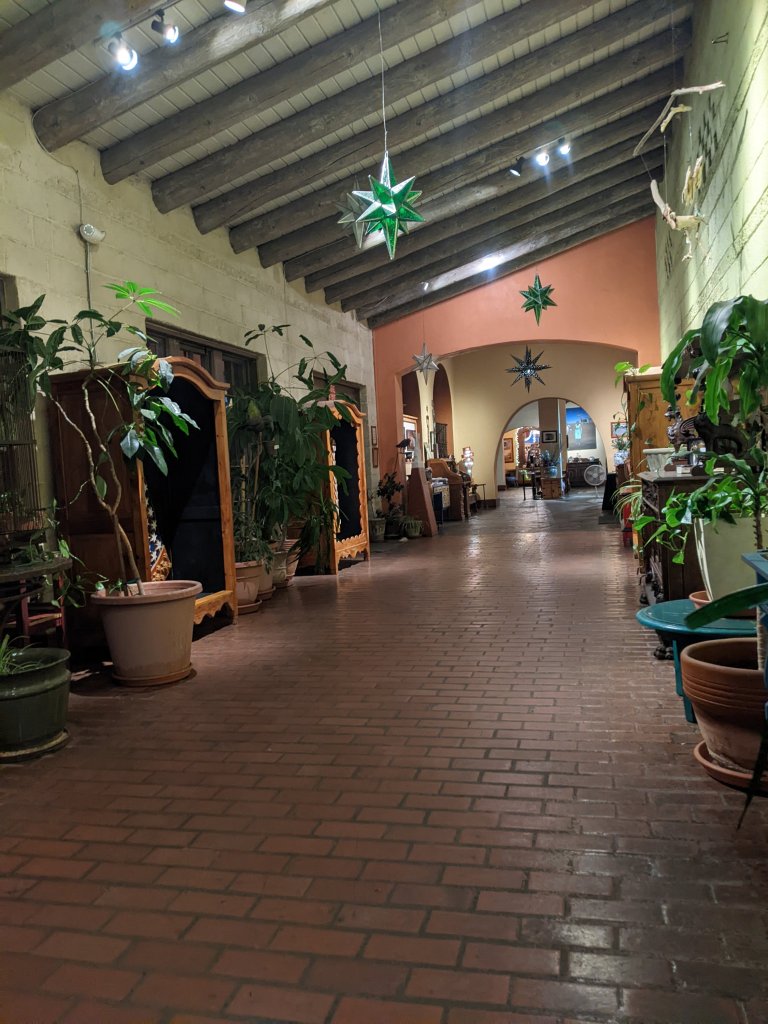
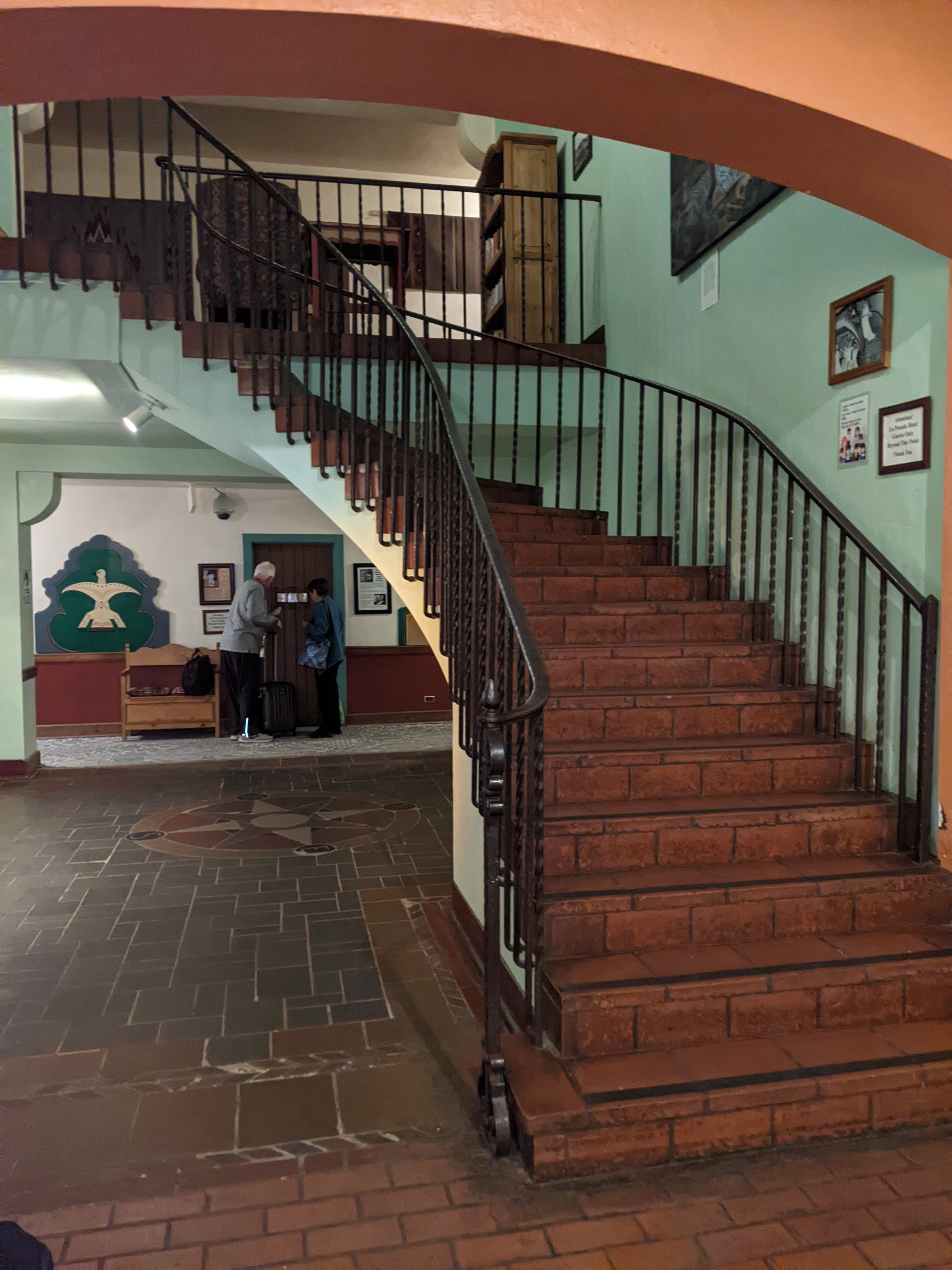
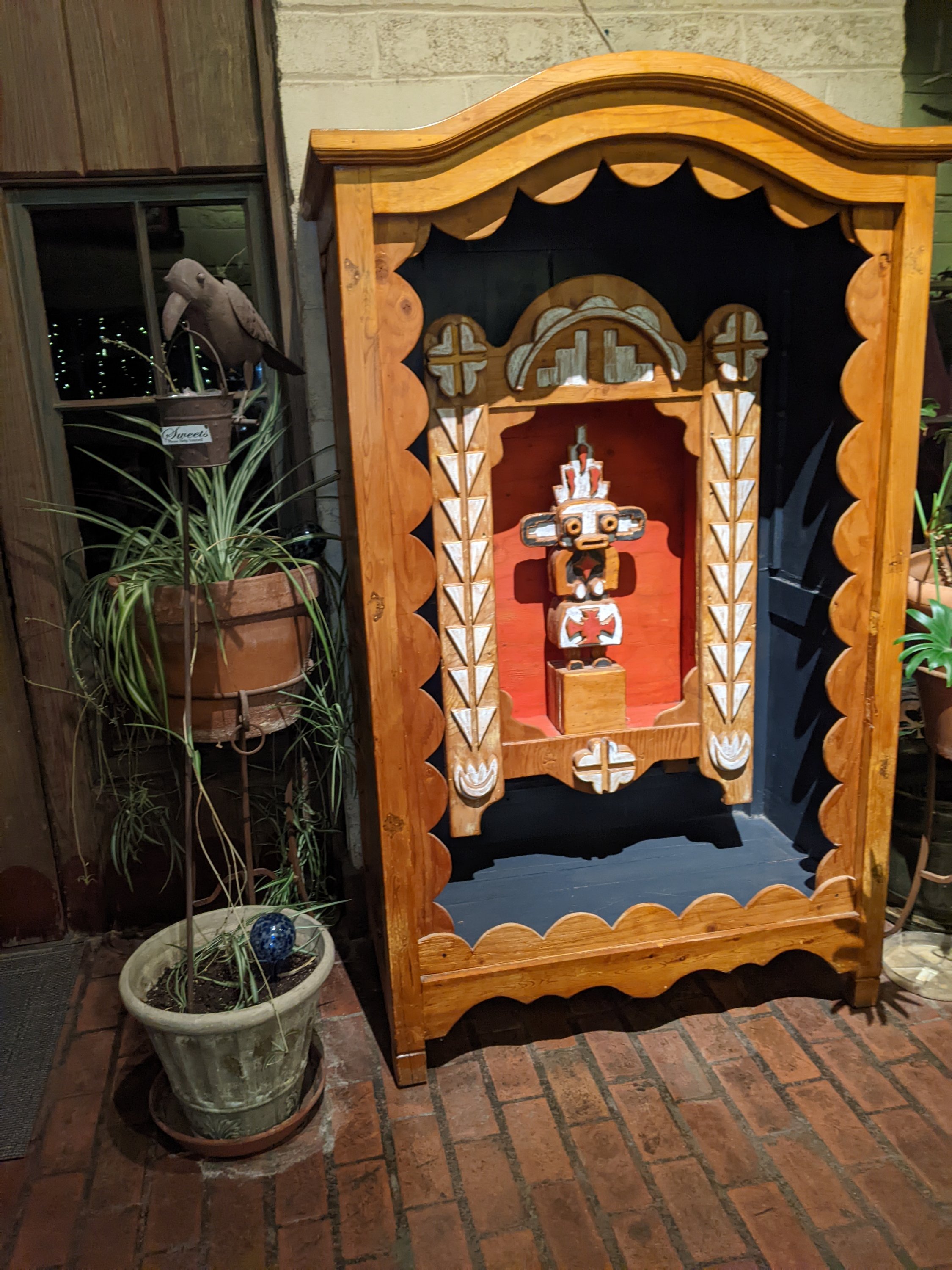
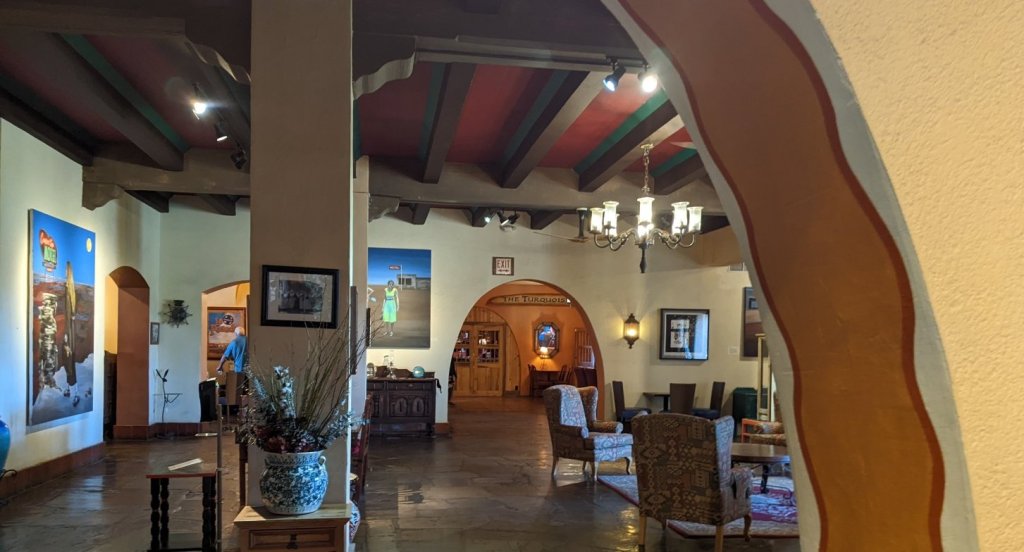
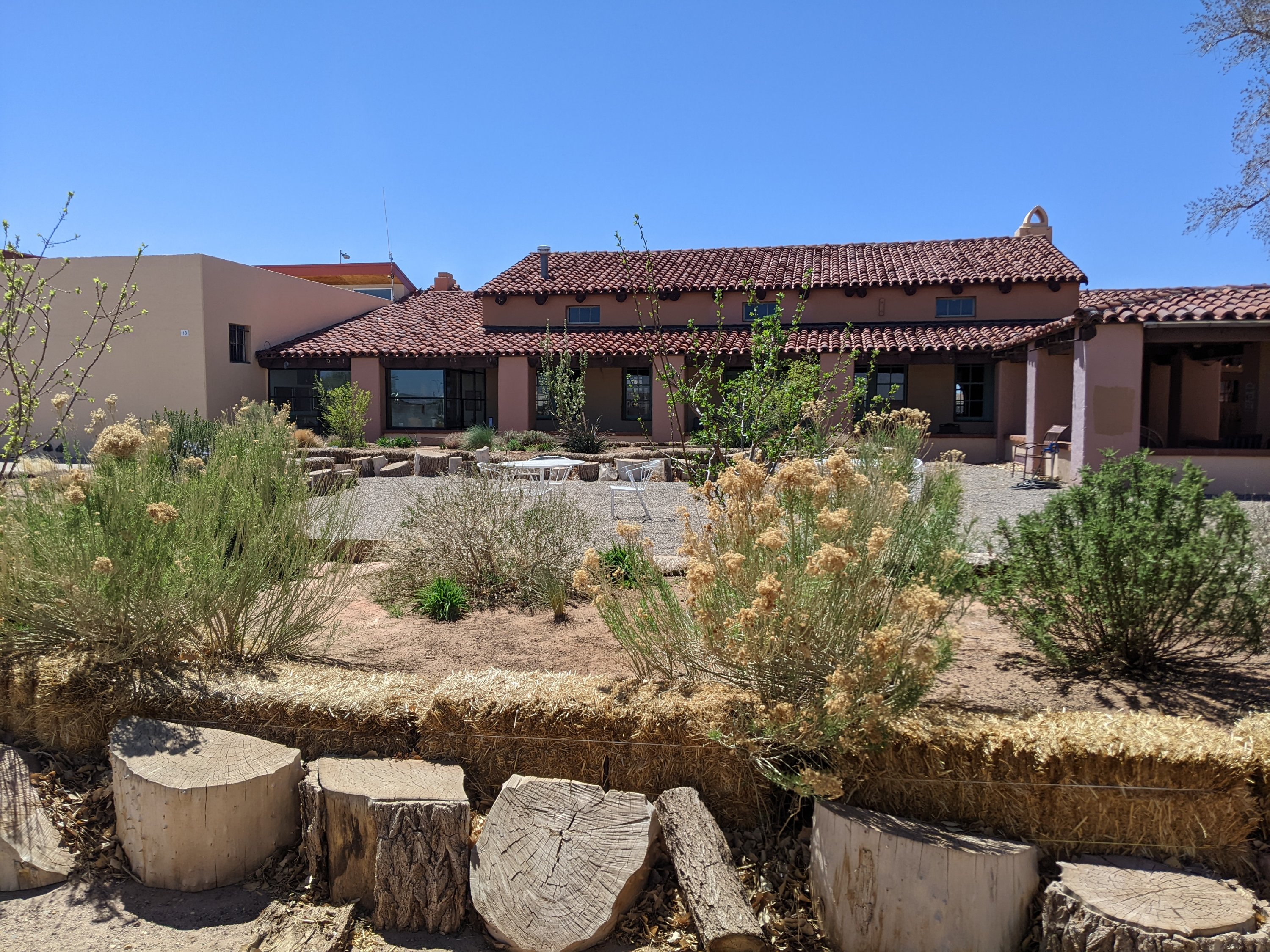
The train stops right at la Posada.Every bit of this hotel is filled with wonderful art, plants, and detailsGuests with mobility issues should request a ground floor room. There is no working elevator in this historic building.One example of the beautiful woodwork art showcased throughout the hotel.A beautiful headboard in one of the roomsThere are lovely seating areas throughout the hotel.
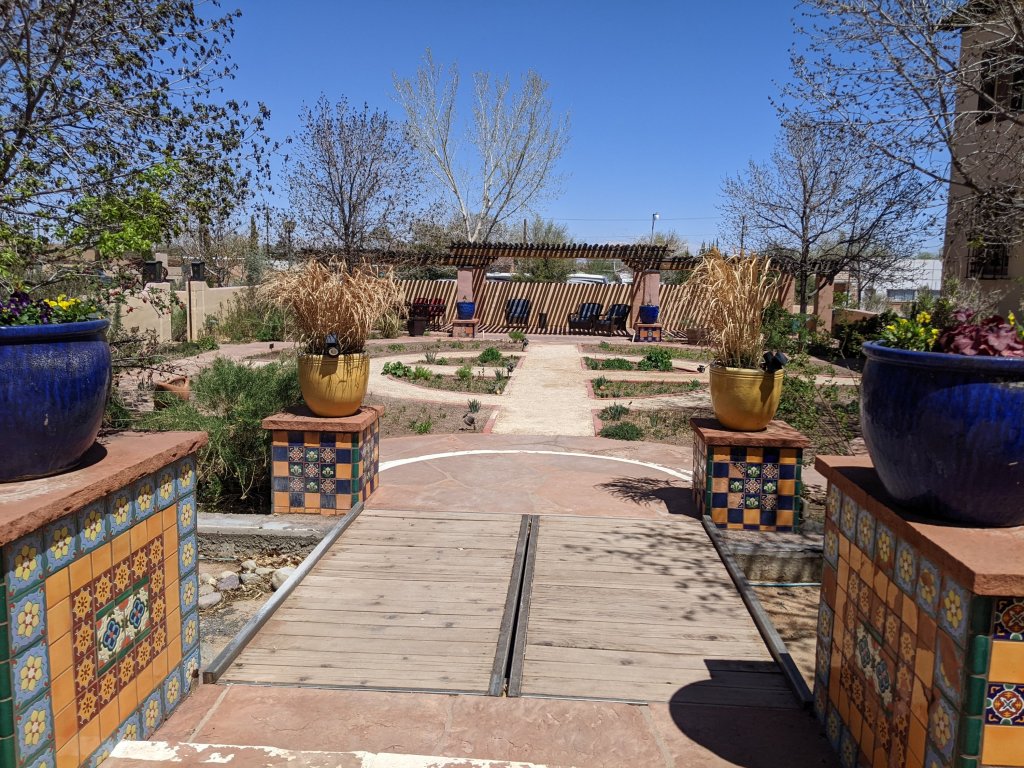
La Posada was designed by one of the first women architects, Mary Colter. Like Gaudi and Frank Lloyd Wright, she wasn’t a registered architect, so she wasn’t the architect of record on the blueprints, but she did the design for this and many other buildings in the Southwest. She also designed the lovely gardens with all their quiet conversation spaces.
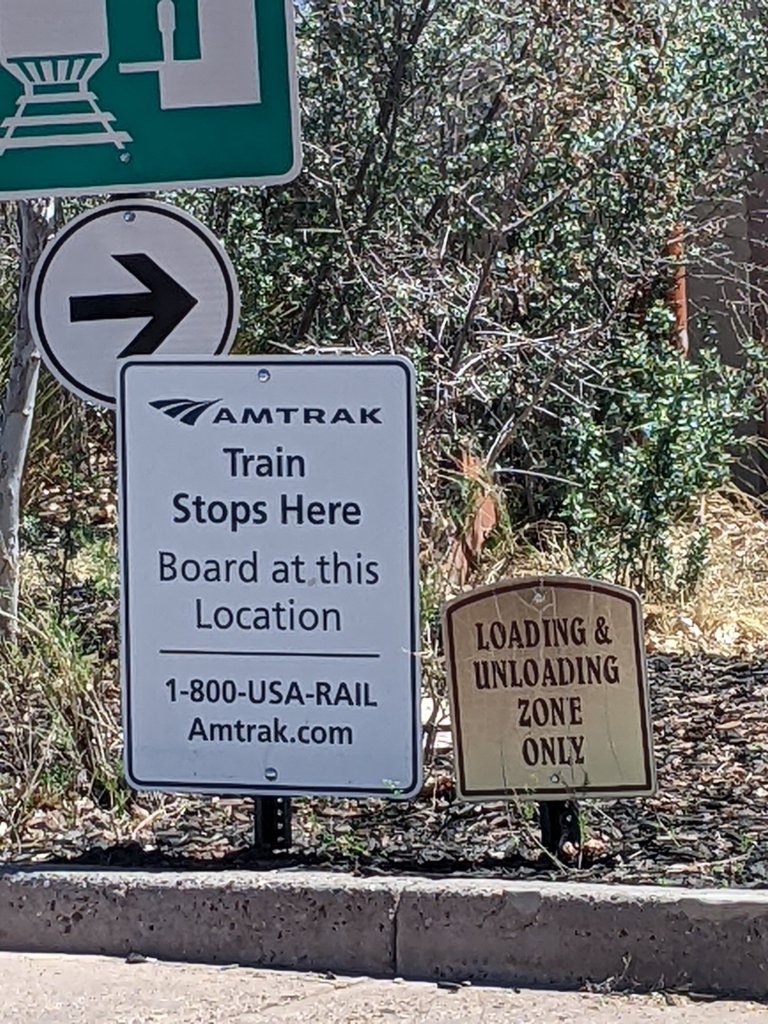
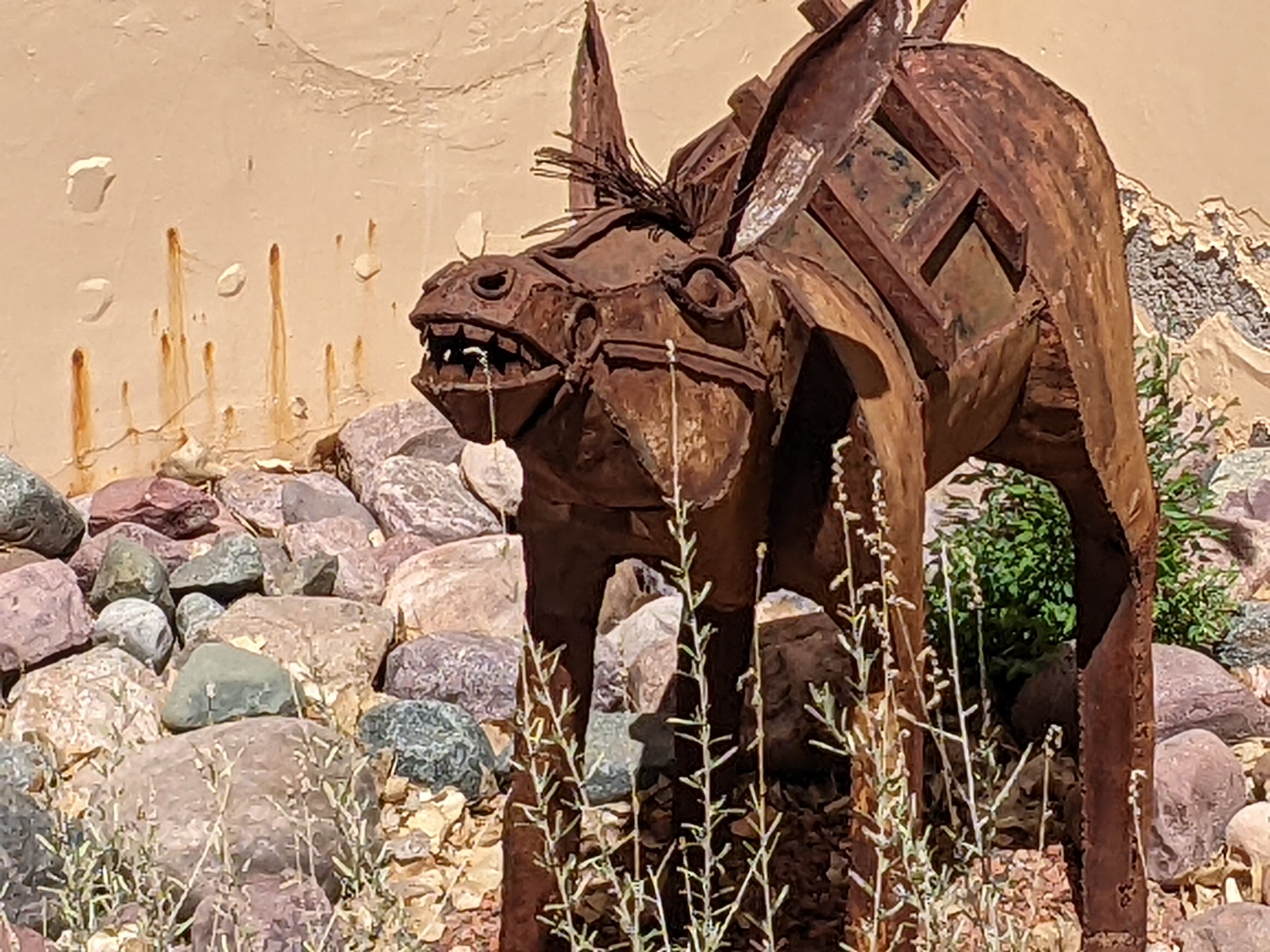
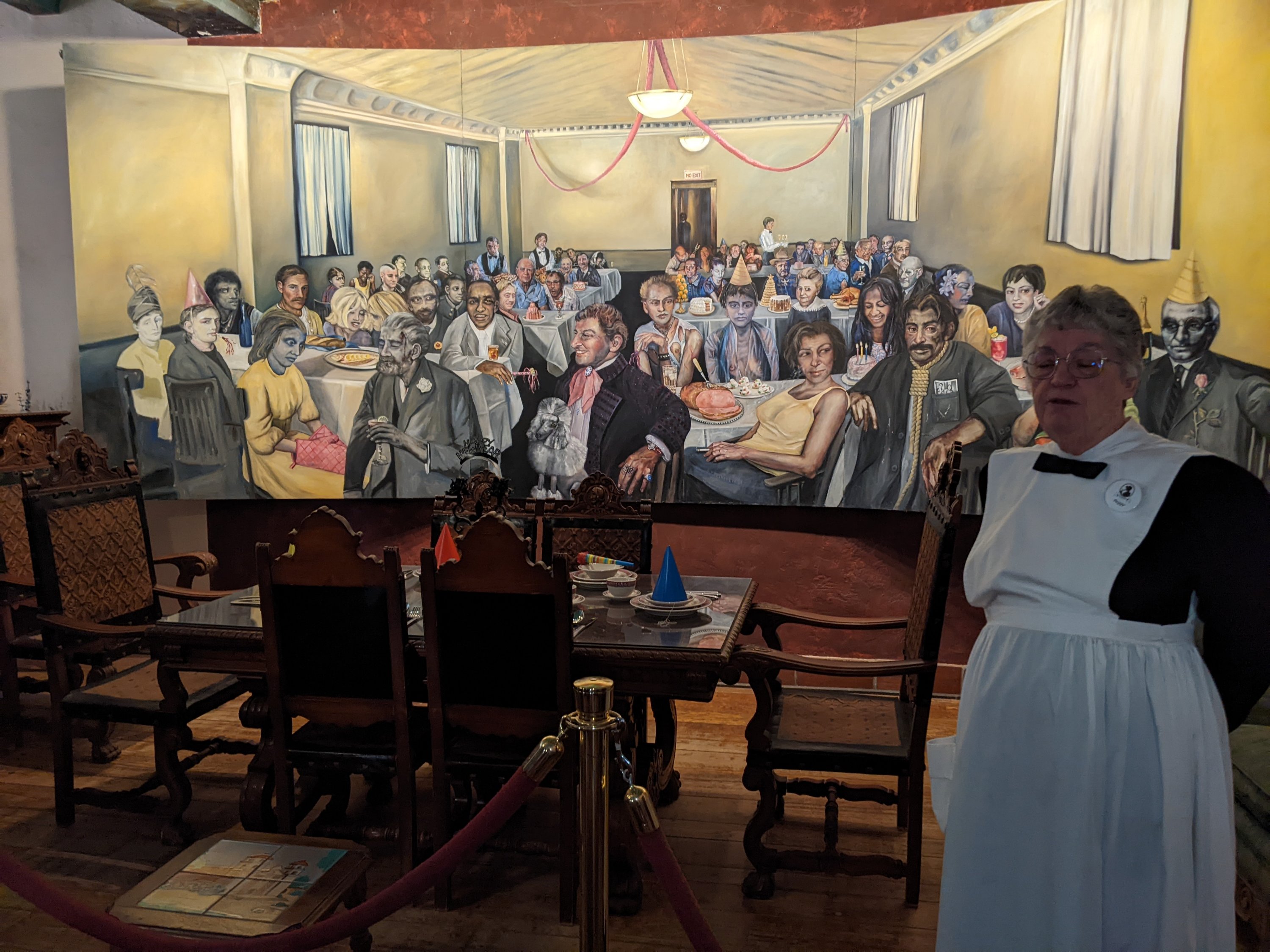
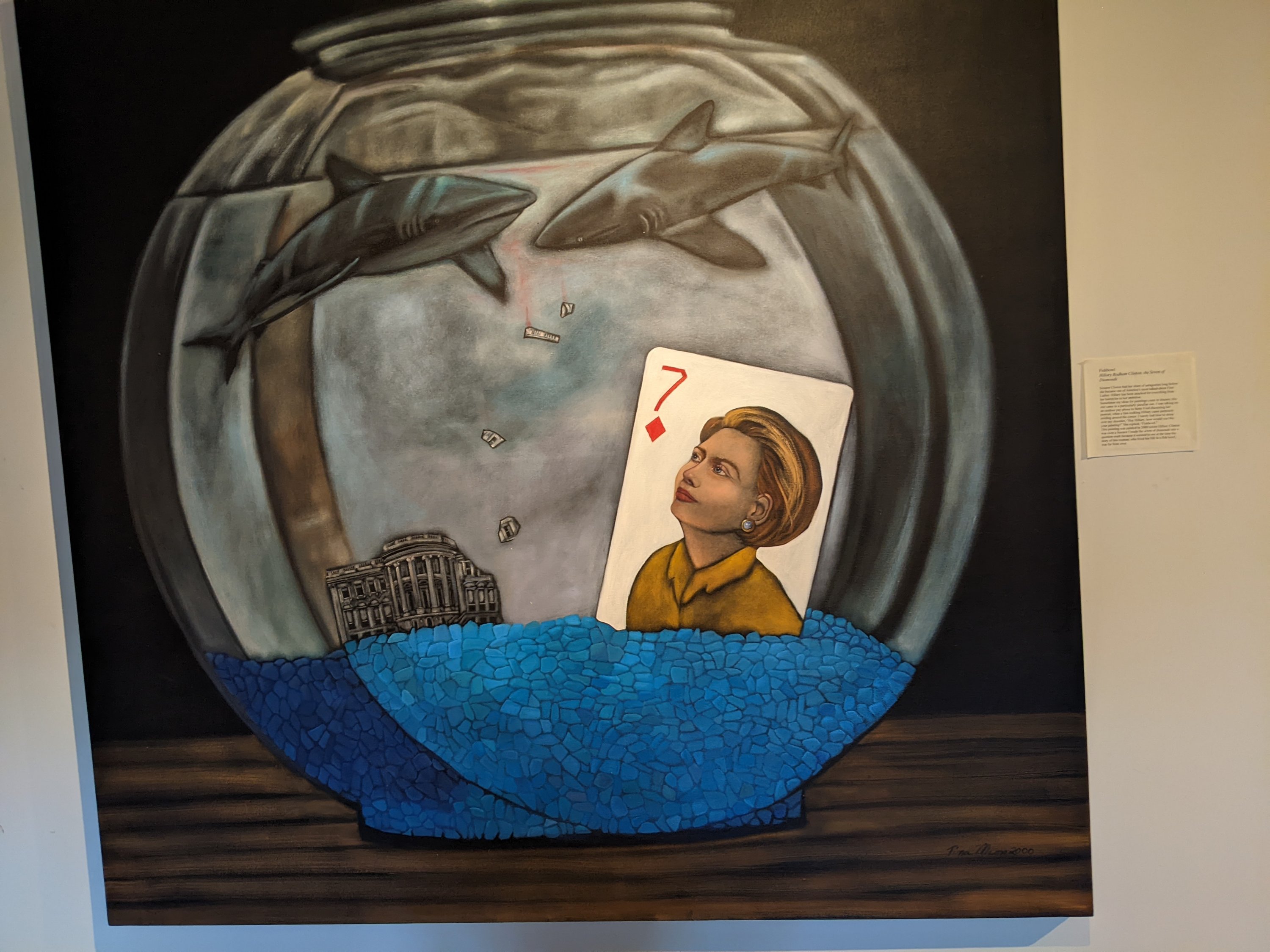
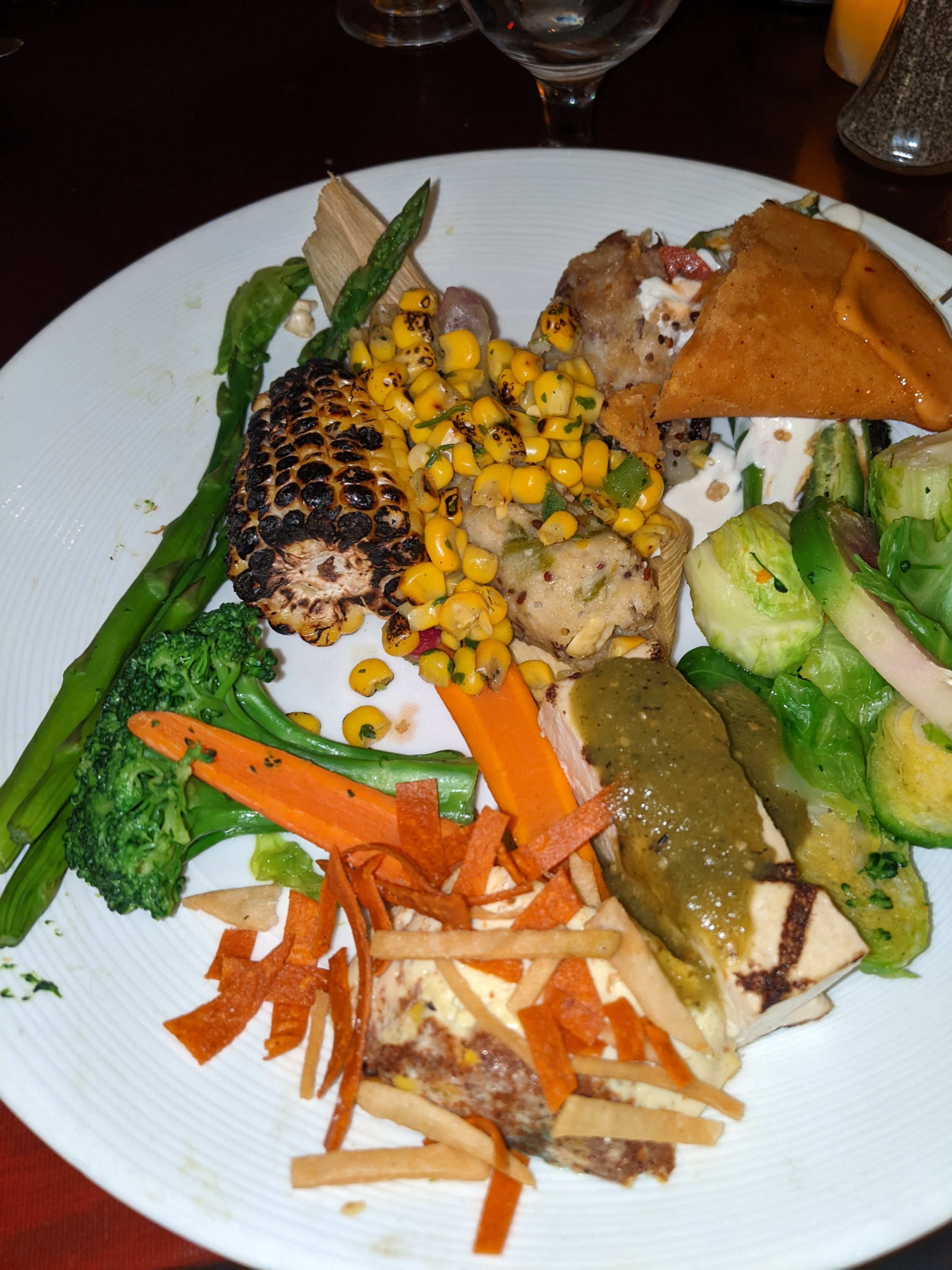
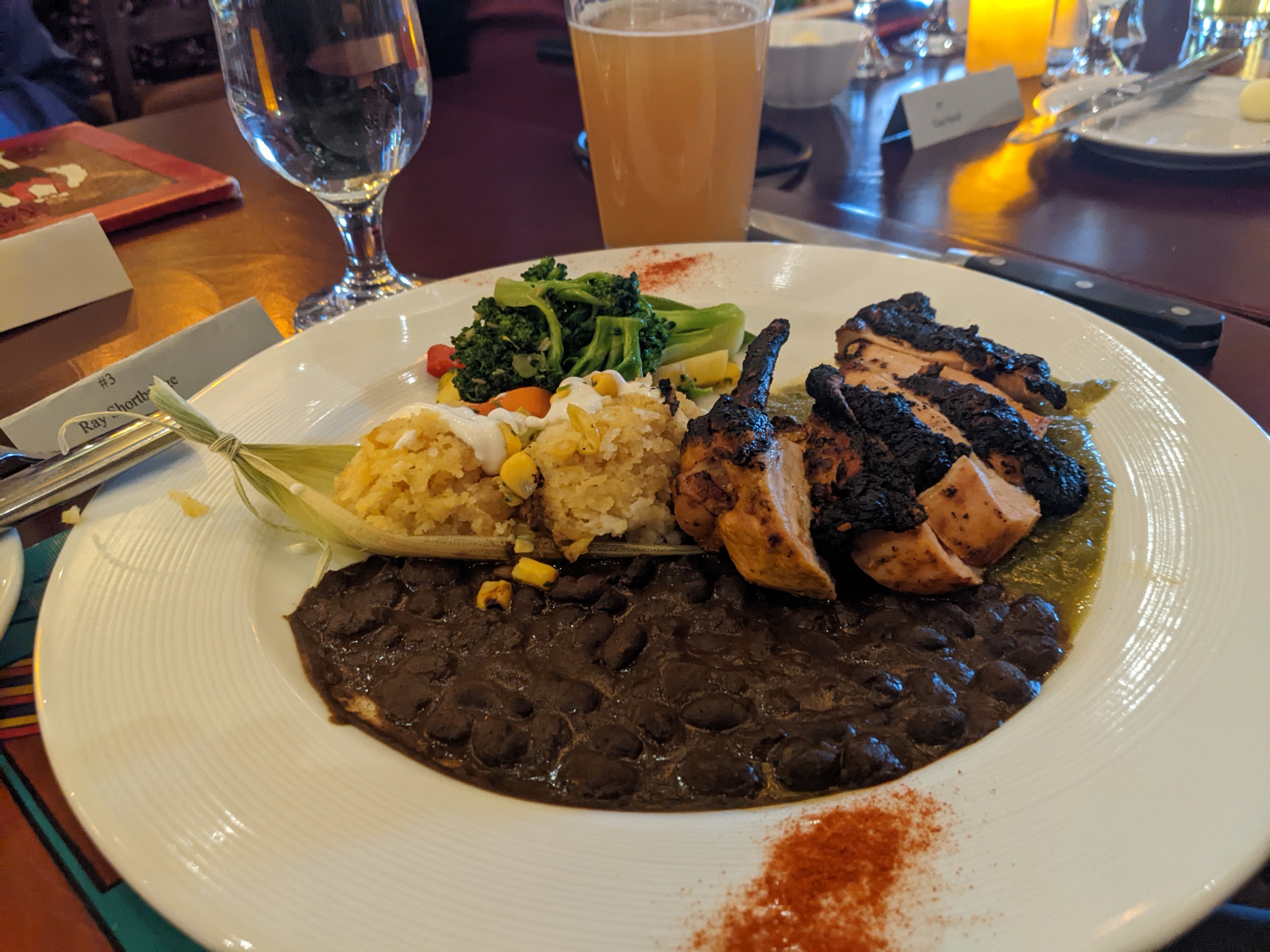
One of many garden seating areasSigns make it clear that the hotel is the official boarding site for AmtrakThe sign for the hotelAnother view of la PosadaBurro art in the gardensMore garden seatingPeggy from the Winslow Harvey girls gave an amazing presentation about la Posada and the Harvey girls. She’s an extraordinary storyteller and is available for group tours at just $5/person. Call Peggy Nelson at 928-289-4160 or 928-587-2287 to arrange a group tour. It’s well worth it.Peggy took us on a tour of the paintings, including this suicide painting by hotel co-owner Tina Mion. Her paintings are exquisitely done but not necessarily themes you’d want for your house.Another Tina Mion paintingTina’s description of the paintingThe turquoise dining room. The panels to the right are stained glass Santos.A wickedly good dessert souffleHalf of a vegetarian platter (we split it, and it was plenty)A chicken dish
An absolutely incredible corn/bean soup. The ladies are part of the group from the Wheels tour.
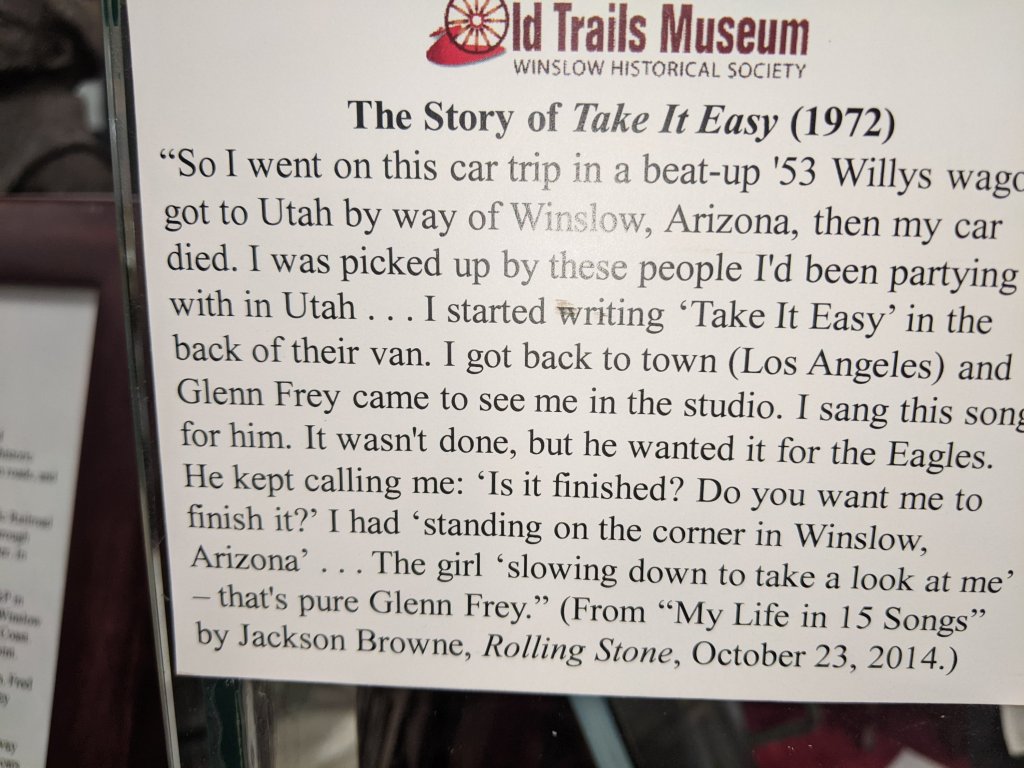
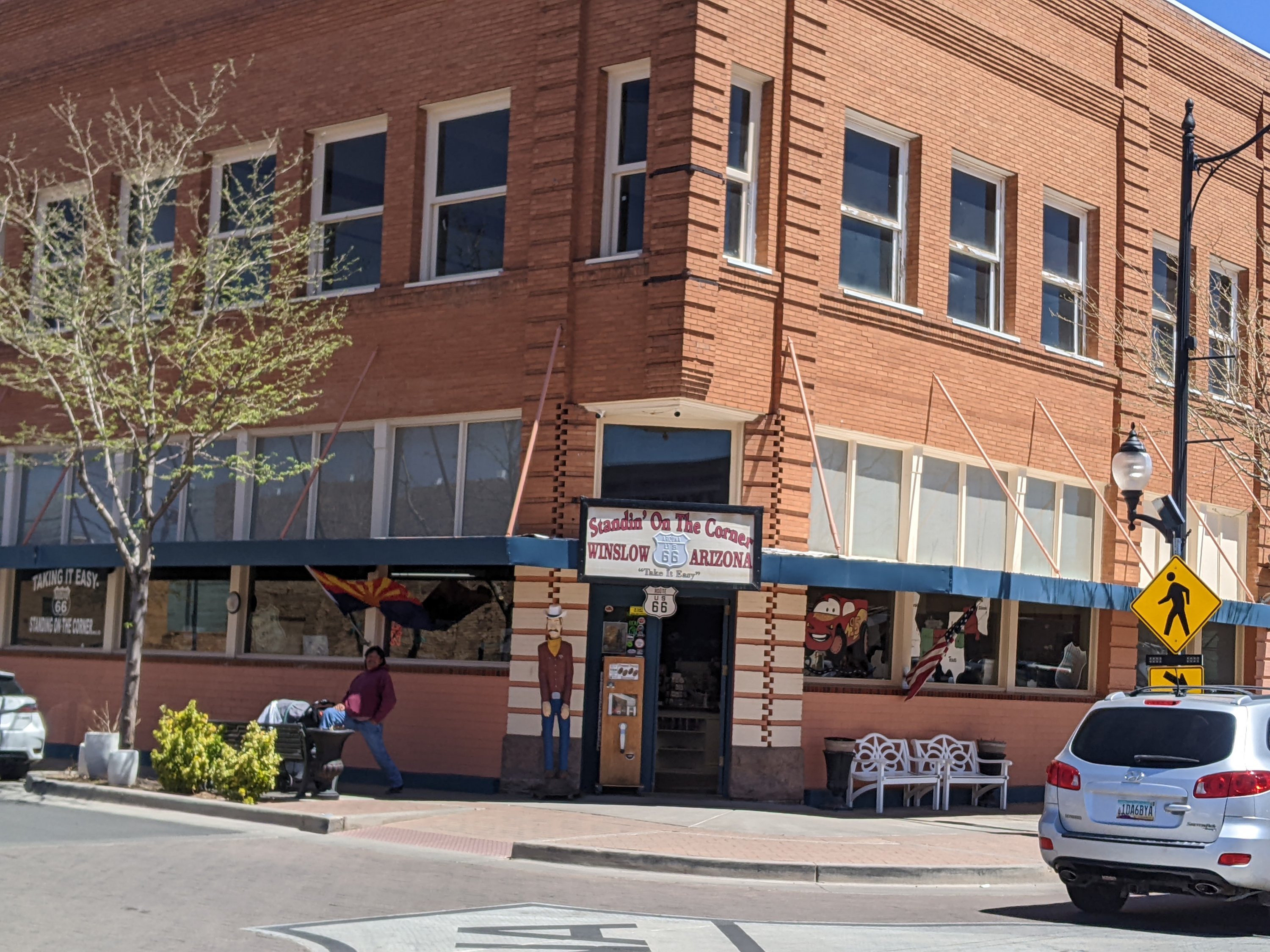
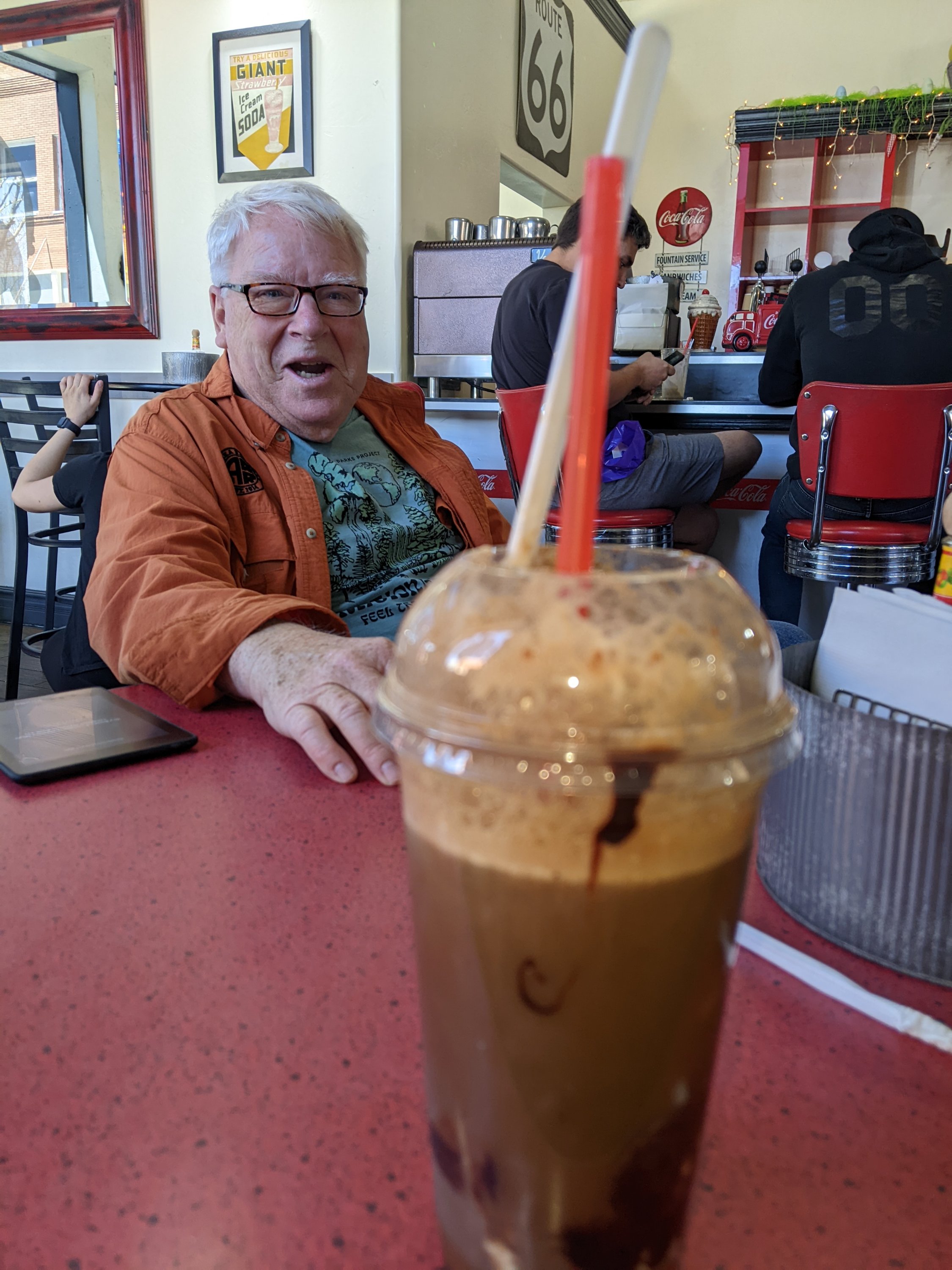
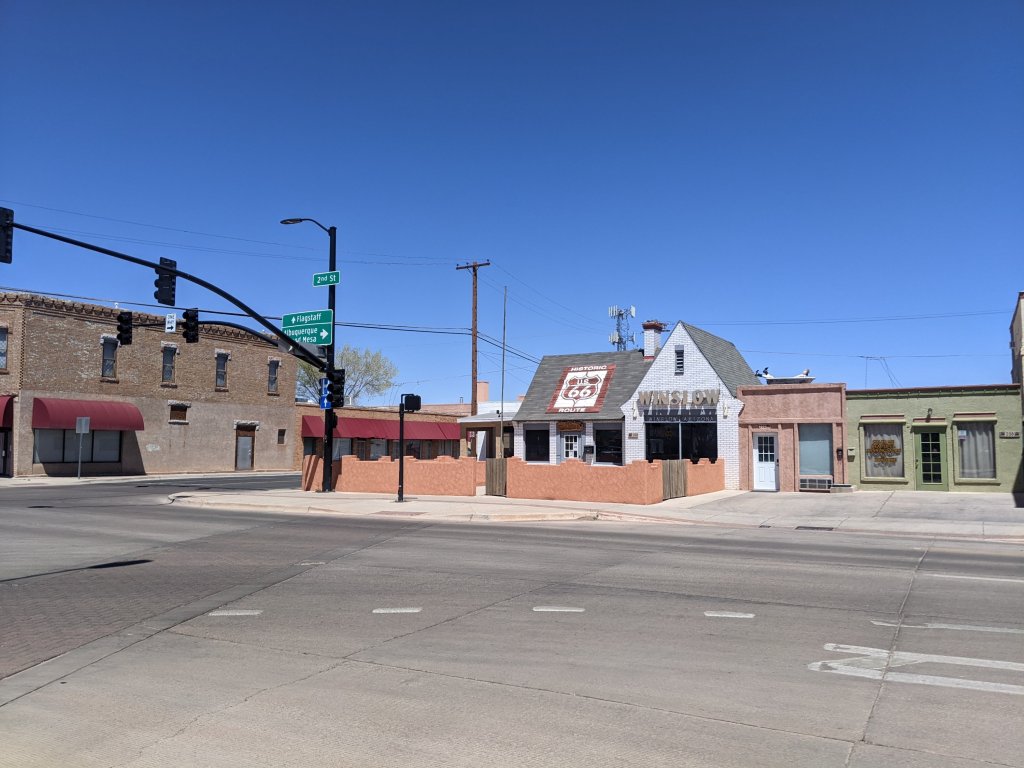
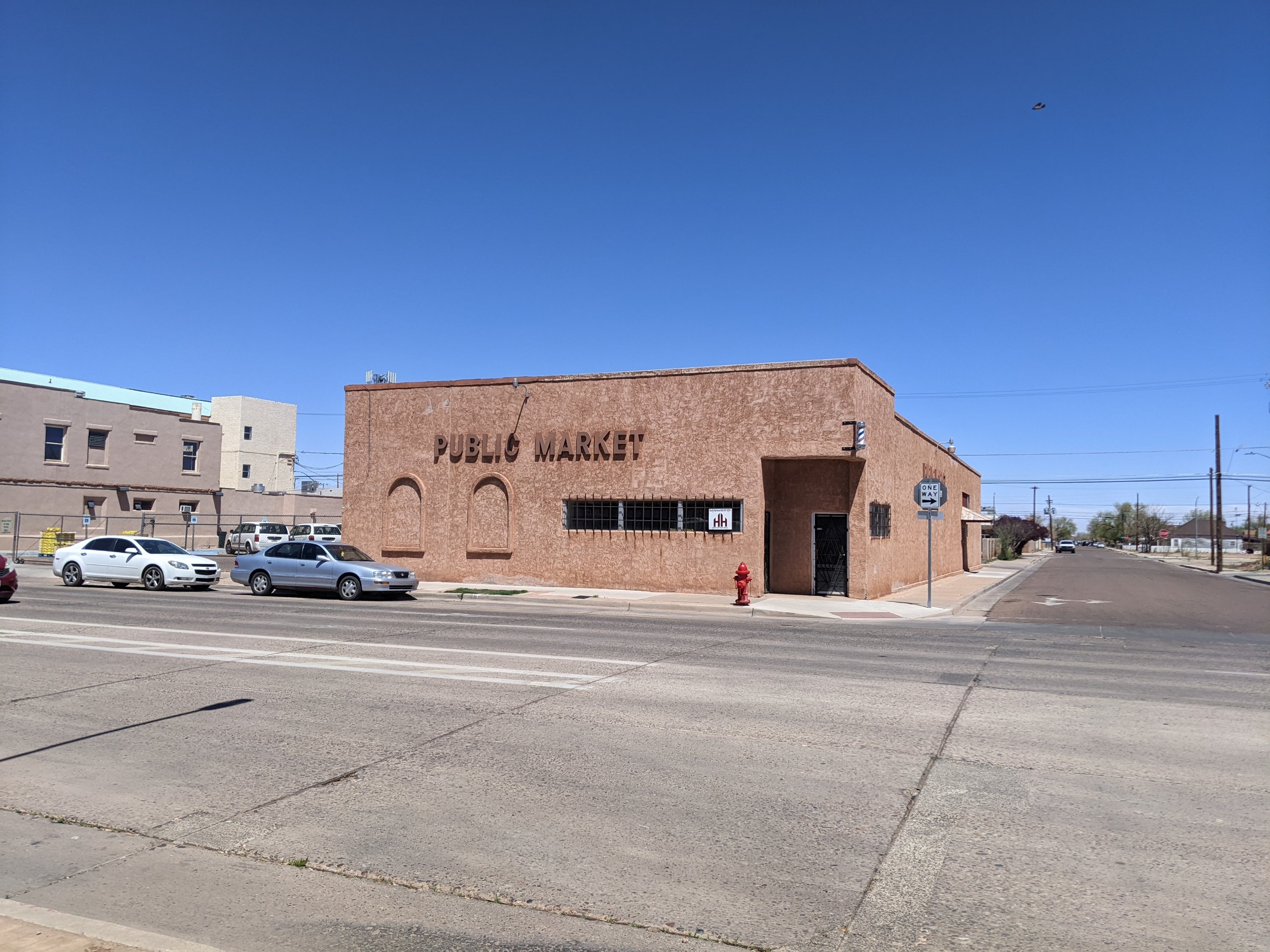
Winslow is known for the song Take it Easy by the Eagles. It includes the line “standing on the corner in Winslow, AZ”.Ray and I stopped at a soda and sandwich stop in Winslow. This is a black cow, a root beer float with chocolate syrup. Prices were very reasonable.Street scene from Winslow. Winslow is on old route 66, one of the most famous roadways in AmericaThe local market
Recently, I was in New York City for two weeks visiting a new grandbaby. Since it was an unexpected trip, I had a lot of unfinished business back in Albuquerque.
New baby makes unexpected travel a pleasure
Fortunately, I was able to track my mail with the USPS informed delivery service. It let me see what was arriving each day, so if I needed to follow up on something,I could have my husband open it, PDF it, and email it. If you don’t already have this service, you should definitely sign up. If mail is predicted, but doesn’t arrive, a quick check mark alerts the USPS to the problem.































 Travels with Owen