Bosque Critters

Guest post by Ray Shortridge

The Bosque, a Spanish word for a forest, is about a one mile wide stretch of trees and underbrush, dominated by cottonwoods, on both sides of the Rio Grande River in New Mexico. The Bosque stretches some two hundred miles north to south along the middle reach of the river. The ecology of the Bosque is both interesting and daunting.

In Albuquerque, a state park interpretive center and multi-use trails (hiking, jogging, cycling, and horseback riding) are maintained by several public agencies. The trails meander for miles along both sides of the river, enabling people to experience nature virtually in their own backyards. The Rio Grande provides life giving water to a narrow strip of the high desert, and many species of critters inhabit the Bosque, as well as the river itself.

Around dawn, Owen (the namesake for this blog) rouses me to take him to the Bosque for a three to four mile walk.

Owen. Ready to explore

Along the way, over the years, we have encountered a number of critters, sometimes startling Owen into flight/fight mode, but more often, causing mere disinterest. Many of our encounters with small birds flitting about the underbrush or even larger ones seeking fish in the river or the irrigation ditches, for example, have little relevance for a canine. And Owen is a canine par excellence.

A heron surveying his kingdom
A peregtine falcon watching for prey

Owen pays little attention to beavers or muskrats swimming largely under water in an irrigation acequia.

Swimming beaver is safe from Owen.

However, once we came across a beaver on shore returning to its lodge a bit late from browsing on bushes in the moonlight, and Owen woofed at the poor critter and chased it until it plopped into an acequia and splashed him with water from a thump of its tail.

On another occasion, we followed a porcupine down one of the trails. Leashing a curious Owen to spare us a vet bill to remove quills, took some time, so the beast waddled off into the brush a distance.

We’re far enough away to be safe from the porcupine’s tail.

We have seen bobcat paw prints but have yet to spot one. A neighborhood website recently reported a bobcat wandering around, about a mile from the Bosque. A friend near the mountains reported that a female bobcat frequently peered through her patio door to terrify her domestic cats. Definitely, bobcats have a sense of humor, of a predatory sort.

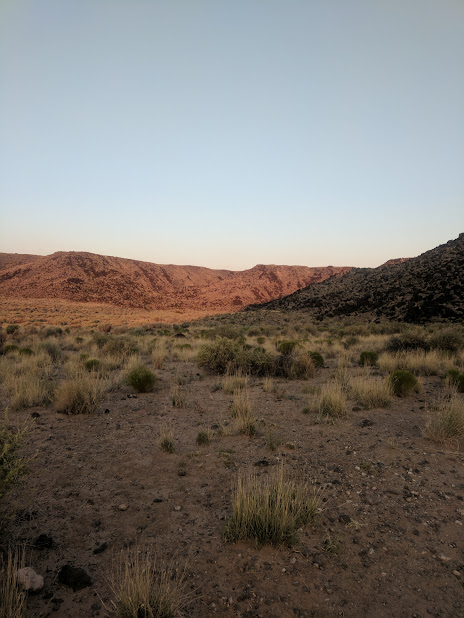
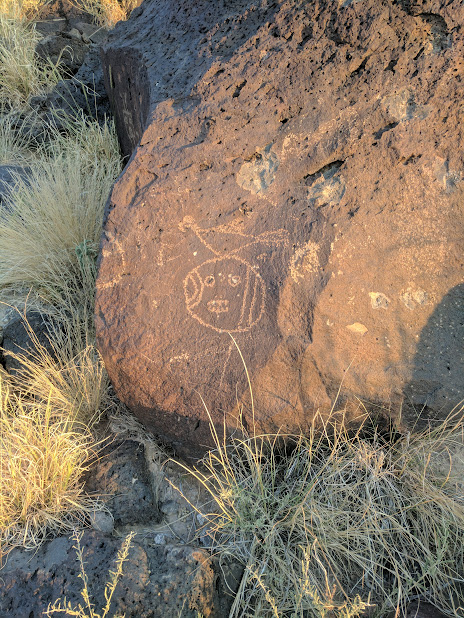
Reportedly, here are reptiles in the bosque, mostly turtles (full disclosure: this turtle picture was taken at the Duck Pond on the UNM campus and that of the serpent at the nearby Petroglyphs National Monument.)

Turtles in the sun
The snake is too close for comfort

Cougar and black bears live in the mountain ranges on the east side of the length of the Bosque, and they travel through it as they move from one hunting range to another. Neither Owen nor I have spotted them, their spoor, or their scat. However, we have spotted the distinctive scat of coyotes. Once we spotted nine in a group, perhaps a couple of breeding pairs with yearlings and pups, heading north along the other side of the drainage ditch.

Coyotes are curious and have shadowed me and Owen on a number of occasions for a mile or more along the trails.

The Bosque is a migratory flyover route, and greater and lesser sandhill cranes migrate in from the Arctic tundra in the late fall and stay over until early spring. And, of course ducks and geese dwell in the waters of the river and the irrigation acequia.

Cranes having a grain party
Ducks enjoying a water break

Of course, the roadrunner is an interesting bird to watch, year around. It is so beloved, New Mexico uses its image as the logo for our light rail, the Railrunner.

Finally, one might encounter something mystical in the Bosque. This unicorn type beast is a whimsy of a quirky artistic soul, one of many choosing to live in Albuquerque.

Which of the Bosque beasts would you most like to encounter?

Slick Souvenirs

One of the more challenging aspects of travel is finding appropriate souvenirs for all the friends, family, pets, friends of family, and others back home. On my most recent trip to Japan, I spent over $100 just on postcards alone. Granted, Japanese postcards are some of the most beautiful cards on the planet, but some of my friends wanted more. What’s a budget constrained traveler to do?

One option is to buy a pack of something and break it up into smaller gifts. In this case, I found sets of Japanese magnets, and separated them into little packages wrapped in origami paper containing one magnet each. After all, everyone’s fridge is covered in magnets. Your friend probably doesn’t need 10 more, but one is a nice memento.

This divide and conquer tactic works with lots of things–decorative chopsticks often come in sets of 10, local candies often come in sets of bars, and so on. One souvenir we didn’t get but wished we had was Japanese Kit Kat bars. They come in flavors unique to Japan: green tea, wasabi, chocolate banana, grape, sweet corn and more. If you’re still in Japan, Don Quijote, a super discount store probably has the most impressive selection of Japanese Kit Kats as well as lots of other fun souvenir ideas. (Printed dish towels are another favorite item for some of my more culinary friends. )If you’re back in the states and leaving a Japanese Kit Kat, try Amazon, Ebay, or one of the many Japanese candy subscription boxes available.

If you’re traveling somewhere where cute postcards are few and far between, try Touchnote, an app that allows you to turn your smartphone pics into postcards, greeting cards, and other cool stuff.

I used this cute picture below for several postcards. The app let me write a message, choosing a font for my message. I then addressed the postcards and Touchnote let me know when the had been mailed.

The app is most affordable if you buy a bunch of credits so you can send 20 or more postcards. Each can be a different picture and message or you can mass produce them if you have a bad case of jet lag. Another option is to get their professional membership which gives you one credit per month and lets you even customise the stamp.

So what is your favorite souvenir to give or receive? Have you ever received a totally off the wall souvenir. Or had a strange reaction to a souvenir?

For example. Our daughter taught English in China. She brought me back the Mao Zedong picture that most residents there hung on their rear view mirror. So I hung it on mine. Several weeks later, a lady races after me in a parking lot, pounding on my car hood for me to stop. “How dare you display that in your car. He’s a communist.” True. And a dead communist at that. But I had it in my car because it was a gift from my daughter, and every time I looked at it, I thought of her bravely conquering challenges in a land so foreign that our demons were their heroes.

Perhaps travel cannot prevent bigotry, but by demonstrating that all peoples cry, laugh, eat, worry, and die, it can introduce the idea that if we try and understand each other, we may even become friends” – Maya Angelou gav

Balloons Over the Bosque

Guest blog by Ray Shortridge.

The rift valley of the Rio Grande del Norte makes Albuquerque an addictive destination for hot air balloonists. Every fall, Albuquerque hosts the International Balloon Fiesta and balloonists come from all over the world to show off their ballooning skills. An ideal ballooning environment is caused by the Sandia Mountain Range shading the valley for a couple of hours after dawn.

This keeps the cool night air from rapidly warming up, thereby prolonging the buoyancy of the hot air balloon. Balloonists launching at daybreak can enjoy a lengthy ride viewing the Rio Grande, the river’s bosque (the longest cottonwood canopy in world), the lights of an awakening city, and the mountains.

Balloonists inflate the balloons by using fans to blow hot air generated by liquid propane gas into the envelope or bag. At night, during Balloon Fiesta, owners often tether their balloons to the ground with the burners lit, which makes a dramatic sight and is known as a “Ballon Glow”.

People often hire commercial balloonists such as Rainbow Ryders to take them up to enjoy the heady experience of unpowered flight. Often this is followed by a champagne toast. If you’re up for this adventure, make sure to wear a hat. Those burners are hot! In fall, winter, or spring, wear layers The early morning air at full altitude may be cool but it will likely warm up during your ride.

The balloon on the left seemed to follow me down a trail in the bosque, reminding me of the cult British TV show, The Prisoner.

When the balloonist ignites the propane burner to reheat the air in the bag, it sounds like a dragon is approaching. The roar can be a bit unsettling because one can hear it before before the balloon comes into view over a ridge line of copse of trees. A bevy of balloons make a great roar

Balloonists like to hover over the river. The waterfowl don’t seem to mind.

Thousands of balloonists from all over the world will once again rendezvous in Albuquerque this October for nine days and two weekends. It’s a spectacle worth seeing. Have you seen the new special shapes? They rock.

Holy Fortune for Hire

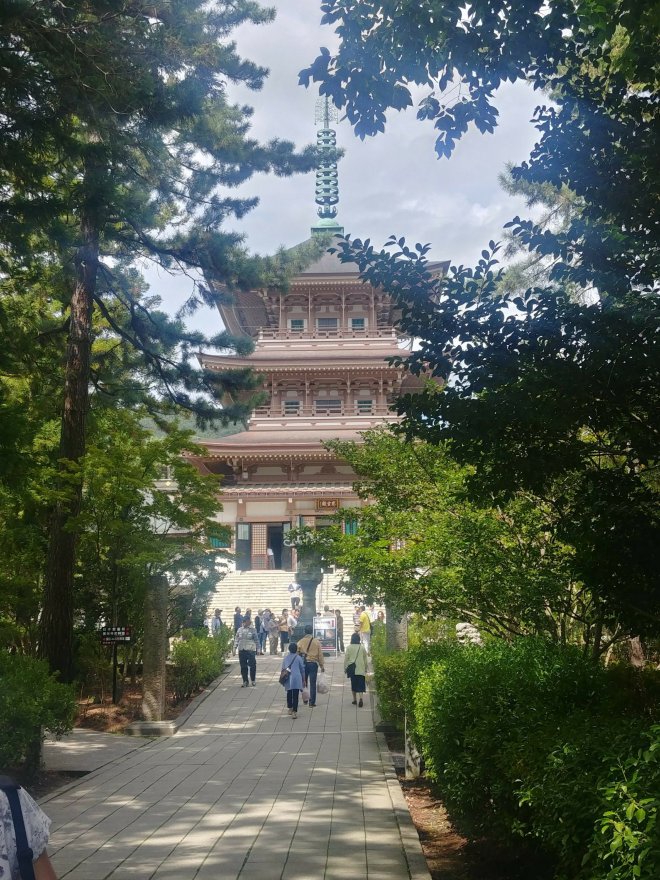
The Torri gates of Kyoto are a well loved Shinto shrine. The beautiful vermillian gates line the hills in a seemingly never ending parade of requests for the gods to bless companies and families. This Fushimi Inari Taisha (伏見稲荷大社) shrine sells the beautiful gates for anywhere between $4,000 USD (400,000 yen) for a small gate far up the hill to $13,000 USD (1,300,000 yen) for a large one closer in.

The names of the donor companies are inscribed in black ink on the side.

A fun animal statue at the shrine. Foxes are more common but pug dogs coexist.
Before praying, ring the bell to be sure the gods are listening

The earliest structures existed around 711 on a nearby hill but were relocated later. Since 1499, this shrine has accepted prayers to the god of grains. Only later, did it expand to prayers for business success. The vermilion color represents the sun.

10,000 gates stand together like trees in a forest

A fox statue protecting the grains.

Another fox with a key in his mouth
A map to the Kyoto gates shows how extensive they are
Visitors can buy miniature paper gates and hang them here with their prayers

For hale and hearty visitors, a walk up the hiking trails among the gates quickly takes you away from the crowds and provides beautiful views of Kyoto. While Kyoto is the main temple, there are sub-shrines around Japan, including one in Tokyo.

Busses are an Affordable Passport to Japan.

Guest blog by Ray Shortridge

Public busses are a convenient way to move about large Japanese cities. Their routes have stops near most of the sites that you would want to visit. Better yet, the busses are scrupulously clean and comfortable to ride in. In general, they are full but not unbearably crowded. Rush hour can be another matter so claustrophobic tourists should definitely avoid public transit during peak travel hours.

The fare is paid with a plastic IC card that is purchased from a ticket machine at a railroad station. The machines have an English option for operations.

One of the ticket machines
Various types of IC cards

The initial cost is a refundable deposit of 500 yen plus whatever amount you wish to credit to the card, typically another 1,500 yen. Using the card saves you from the inconvenience of buying a ticket every time you want to take a bus (or a train that honors the card.)

To use the card, tap it against the panel at the front of the bus near the driver when exiting the bus. In most cities, enter the bus from the side door and exit through the front. Note: because one pays as one exits, getting off the back door is considered theft. Don’t do it.

Touring Japan by bus, can be manageable and pleasurable. Better yet, it is extremely affordable.

Find the Doggie in the Garden

These spidery flowers are celebrated with their own festival

Among all the hubbub of Japan’s big cities, the bits of green here and there make it calmer and more enjoyable

A beautiful flower along the way
Houses and shops find ways to include nature
Flowers brightened our walks

Doggy all dressed up in a kimona and carrying his own flowers
A Zen garden at one of the shrines we visited
Real life bonsai
And a flower to finish off the day and the post

Japanese Convenience

Guest blog by Ray Shortridge

A sample convenience store meal. These sandwiches are delicious but oddly, always served on white bread with the crusts removed.

When working in Cleveland during a summer break from college, I purchased milk and sundries from a nearby Lawson’s convenience store. Lawson stores are no longer found in the continental US, but to my surprise, they abound in Japan. Nowadays, 7-Eleven stores in the US are owned by a Japanese company, and, along with Family Mart, compete with Lawsons.

All told, there are more than 50,000 convenience stores in Japan. And they are convenient, abounding on commercial streets and in railroad stations and offering an ever changing array of snacks, sandwiches, ice cream, fruit and soda beverages, cigarettes, cold beer, candy, and international ATMs. Many ATMs throughout Japan won’t work with foreign ATM cards. Fortunately, this is an area where Japanese 7-11 stores shine. Google maps or a 7-11 finder app can help you find the 7-11 nearest you.

While ATMs at Family Mart, Lawson, and others may not support international cards, they offer many of the same useful services for foreigners as 7-11 stores including: currency exchange, free Wi-Fi, and ability to use credit cards for purchases.

Moreover, one can top off public transportation cards there and access the internet on Wi-Fi. Japanese convenience stores are truly a phenomenon.

Platinum pen convertor easy fix

I love my Japanese made Platinum pens but I had a couple of their convertors that were terribly balky and hard to twist. Here’s an easy fix. You’ll need some silicon grease, and that’s all. Please be careful to only put the grease on the convertor piston above the ink seal. Make sure you wash your hands extremely well before touching the nib, feed, etc. If you do that, you’ll find this very easy.

Silicon grease. This one is from my twsbi kit


The metal section removed from convertor but the pen is inked. Not good!

Unless you want an inky mess, do not try this on an inked pen. Did I learn that from experience? What do you think? Gently take the convertor apart, trying to remember how it goes together (I’ll review it, but it makes it easier if you try to remember.) I crank the piston all the way up to the top, as far away from the nib as possible. Then I take off the metal housing (3). At this point, you can just grease the extended piston (1), and put it back together. But sometimes the top two pieces (2 and 4) pop out. Don’t panic! It’s ok. You’ll actually have a better functioning convertor if you grease 2 and 4 where they meet.

So if they did come out, just take part 2 and push the ribbed part (to the right in this photo) up through the larger opening in the metal housing (3) until it extends out the smaller opening. Then pop #4 on top of part two (where it’s inside the housing.) I’ve never noticed a right side to part 4, but just in case I’ve been extremely lucky, just flip it if the first side doesn’t work.

Now hold the combo of 2, 3, and 4 horizontally, and screw it over the piston. It helps to do all this horizontally so parts don’t shift but you may find another orientation works better for you. Your convertor should now work smoothly (unless something else is wrong, like a bent piston or missing piece.)

Congratulations! You’re now a Platinum pen convertor repair rock star.

Buy Anything Imaginable in Tokyo’s Market

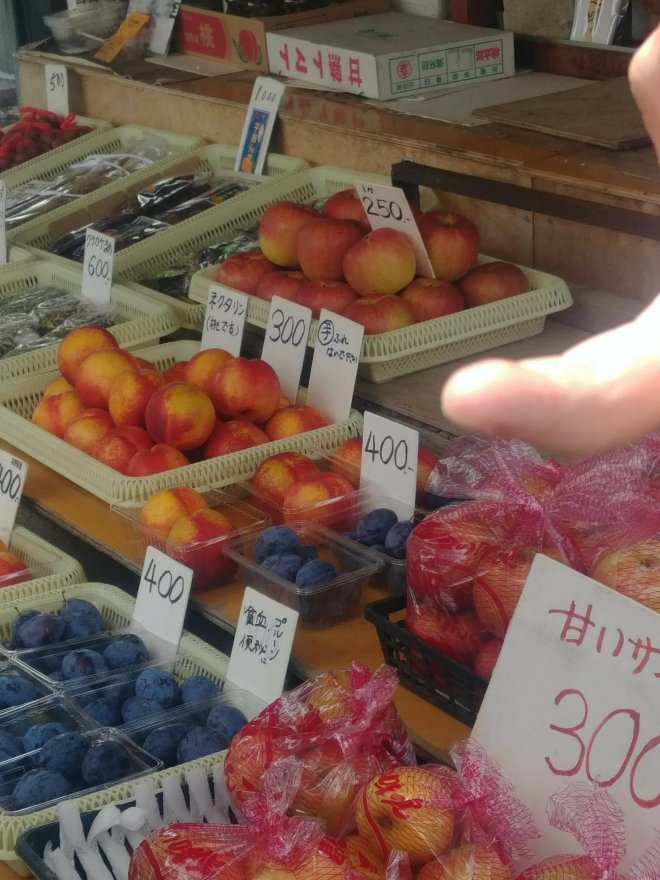
All my friends have been wondering “where are the market pictures?” Well here they are. This is the retail market ( as opposed to the wholesale fish market that is more famous and is moving soon.) I’ll add an occasional caption, but the pictures speak for themselves. Enjoy a quick walk through the market. This is a small fraction of the sites. It is huge!

The ceiling is colorful

These capsule stations were everywhere for kids. The content varied.

Getting Around in Japan — You Can Do it without Japanese


Guest blog by Ray Shortridge


Train Boards have enough information for English speakers

A commonly held view is that one has to be fluent in Japanese to get around in Japan. After our couple of weeks there, we felt confident that could navigate the train system to travel between cities and towns across the country and commuter trains within urban areas. Here’s why.

The flagship (to mix the metaphor) of Japanese Rail (JR) is the world renowned bullet train and connects the major cities in Japan.

JR owns and operates about 70% of rail mileage in Japan and provides local and express service.

Several private railroad lines complement JR’s service by providing commuter trains throughout the larger metro areas. (For an in-depth look at the railroad system, click on this link.)

Finding the train one wants in the station is easy. An large electric sign in the entrance hall provides the train number and destination in English, as well as Japanese, and the tracks are designated by arabic numerals.

Directional signage within the building are also in English, as well as Japanese.

At the track, the updated arrival and departure signs are in English.

The ticket indicates the number for the car in which you are seated,and markings on the platform show where the doors on the car are located. The trains stop exactly at the door markings. Passengers line up here and enter in an orderly fashion.

Sample tickets and a rail pass
Train car door markings. Note: the yellow raised strips help blind passengers find their trains.

Japan is an orderly society and respects queues, so cutting into a line or jumping one’s place is unacceptable. The passenger cars are spacious, tidy, and comfortable.

JR is in the process of implementing wifi service and outlets for ac/dc adapters on the bullet trains.

The commuter trains (and busses) in Tokyo and other metro areas use an electronic pass that is tapped against a reading device, rather than a ticket. There are several versions. The one we used is a Pasmo card which can also be used to purchase things like drinks from vending machines and items in some stores. Tickets can be purchased at machines in the station, and JR also issues passes for multiple trips.

The Japanese train network is extensive. Wikipedia provides an excellent overview.

Fortunately, once a tourist has used a particular type of train once, venturing forth again was straight forward and enjoyable. Foreigners should try to avoid peak travel times for local trains, however, to avoid uncomfortably crowded cars when train pushers are required.