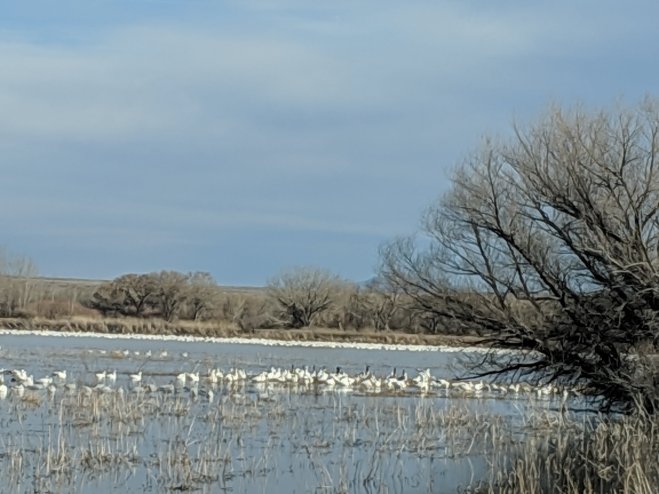
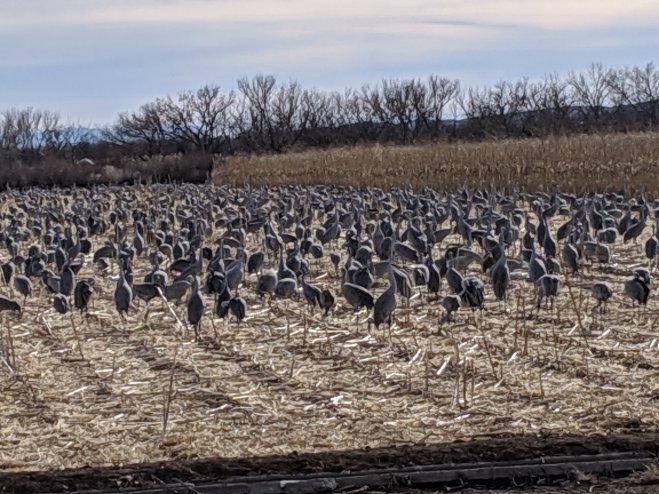
Recently, we visited Bosque del Apache to see the snow geese and sandhill crane migrations. The ideal time to visit is at sunrise in mid November, so one can see the cranes vortex up to the sky at dawn, and when the cranes and geese are at peak numbers. Still, even in January, there were still a lot of beautiful birds to see.
Sandhill cranes enjoying a leftover grain party
The preserve leaves plenty of grain in the fields for the birds. They seem appreciative, dancing and chortling in big groups.
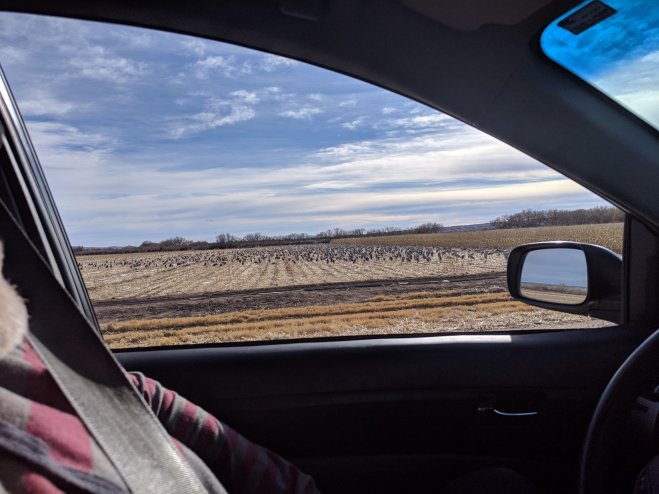
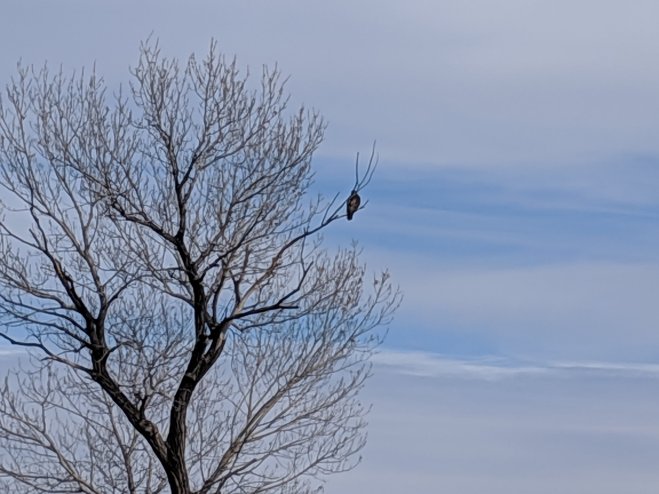
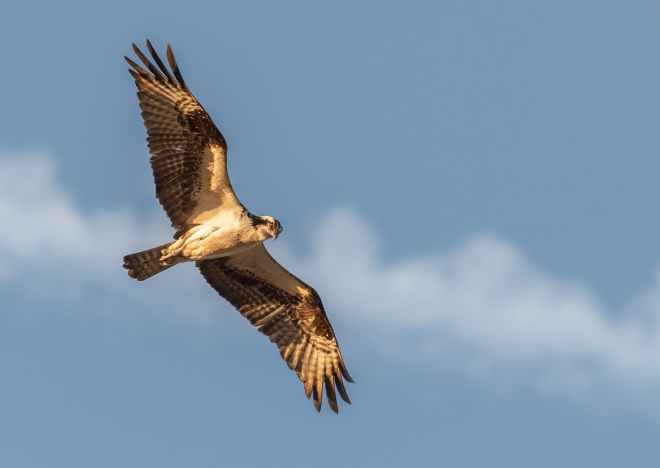
A different view gives an idea of how many birds are there, even on an “off day”We saw lots of hawks and eaglesAs usual, the skies were bright against the gold’s of the terrain
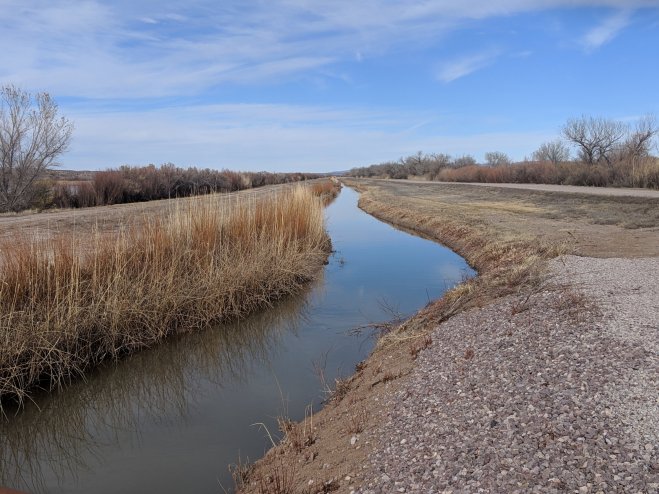
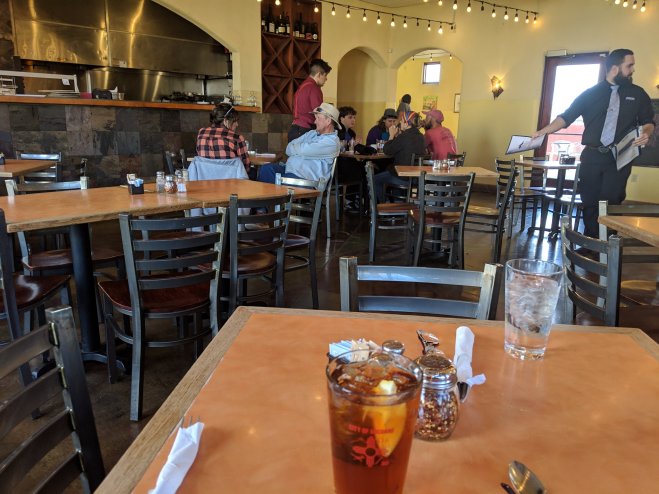
We stopped at Socorro Brewing in Socorro on the way back. Unfortunately, the new owners hadn’t gotten their new beer and wine license yet, so no IPAs for us, but the food us great, and the license should arrive soon.
We walked through the old city quarter (referred to as “Altsdtadt” on the city’s indispensable directional signage) in Koblenz, Heidelberg, Cologne, and Trier.
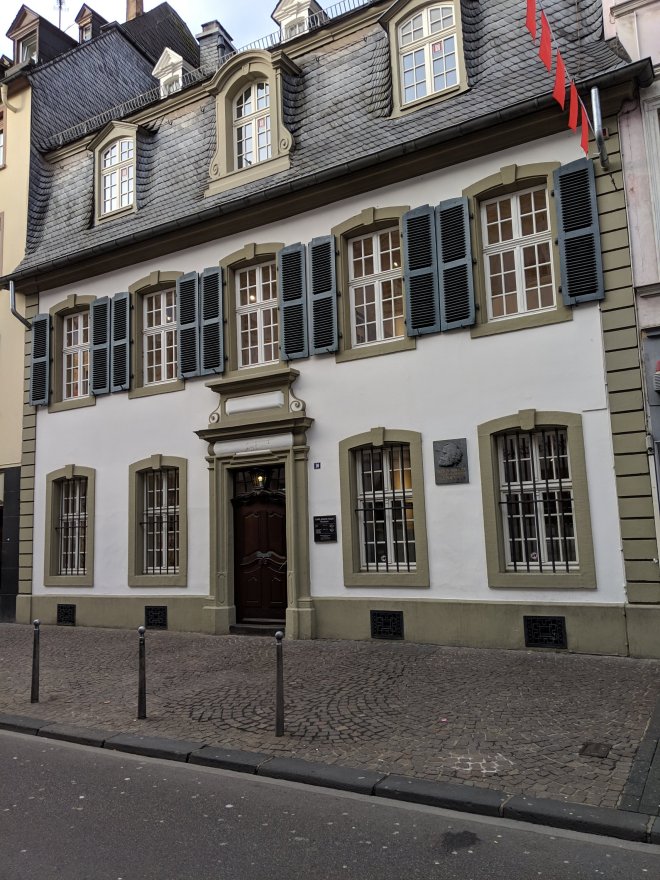
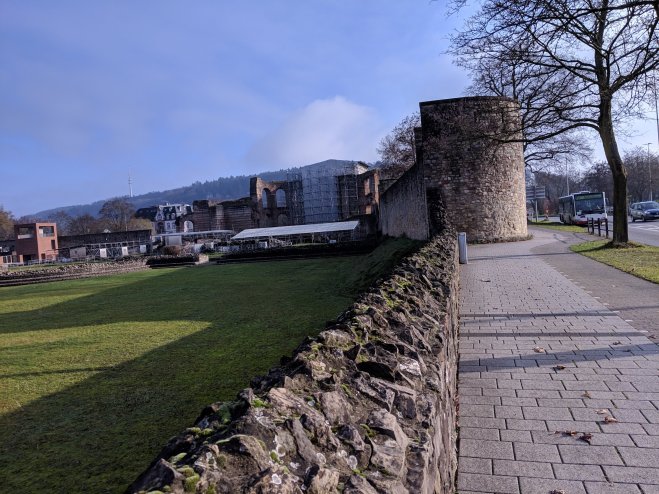
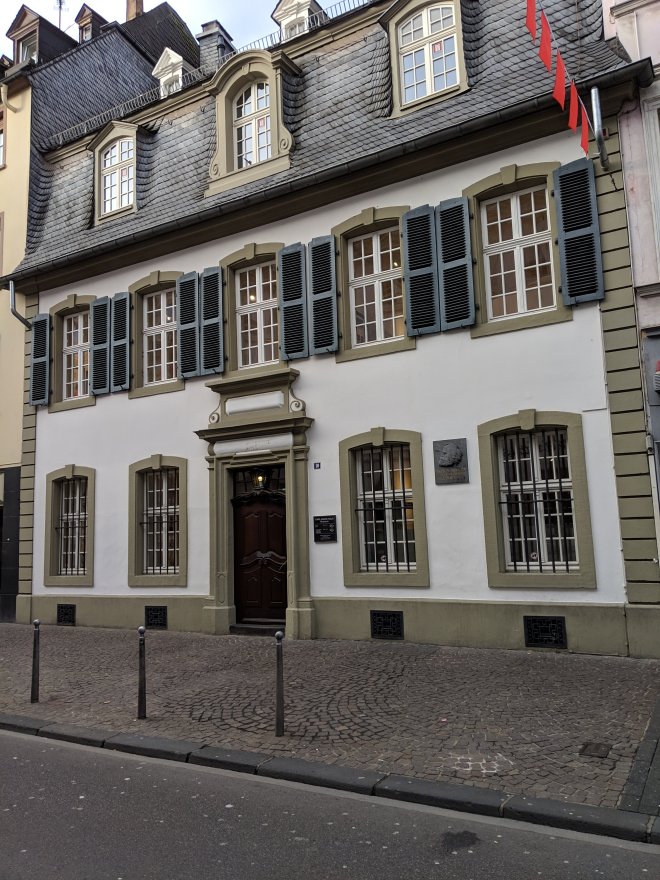
Finding a landmark that we wanted to visit was a challenge. For example, in Trier, after viewing the imperial Roman baths, we searched for Karl Marx’s birthplace.
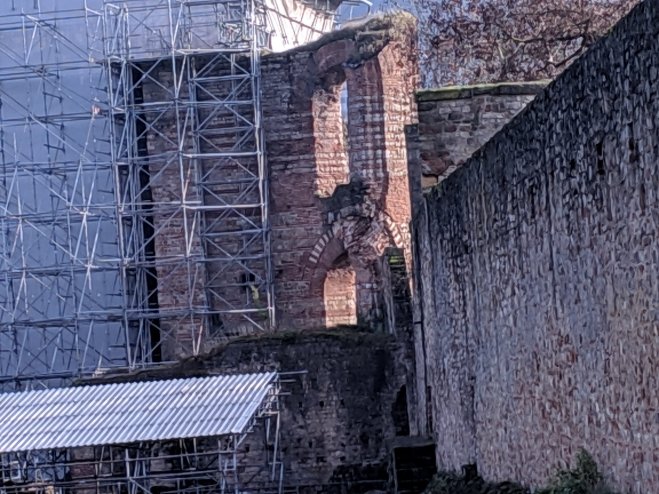
Karl Marx houseAncient Roman bath site
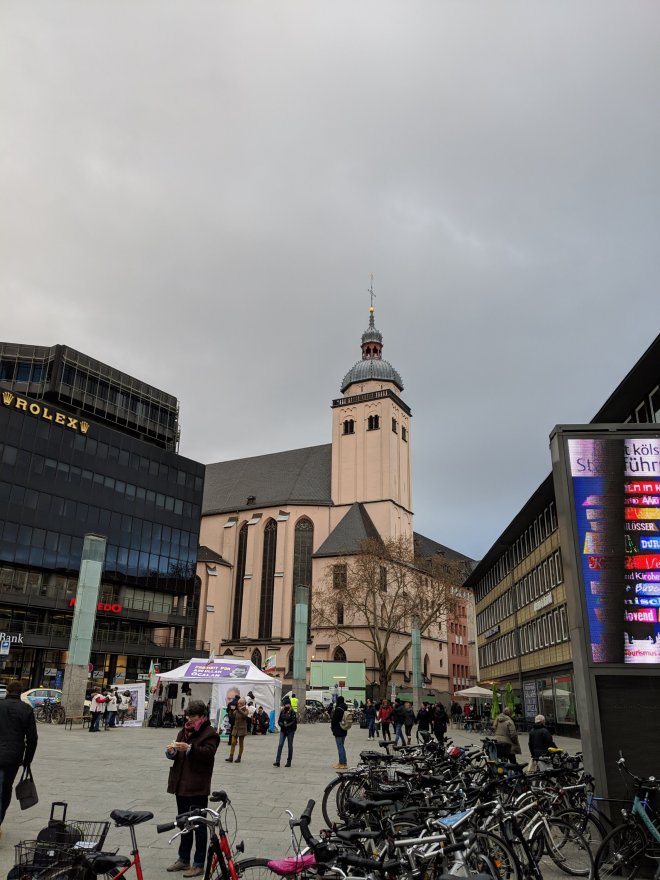
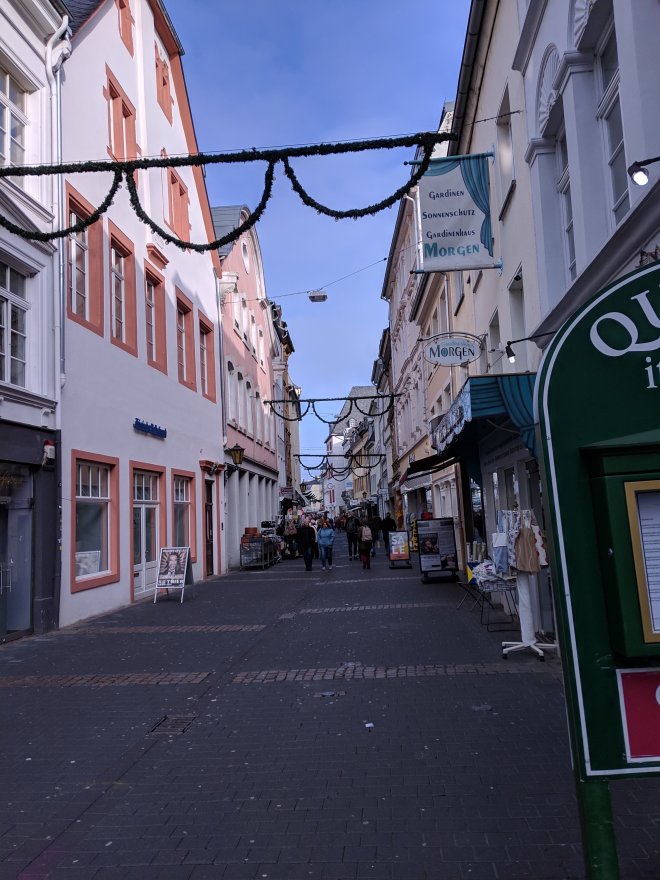
We enjoyed wandering through the streets, admiring the architecture, and quaint squares, like this one.
However, figuring out which of several narrow byways to take out of the square was difficult. Our Android GPS kept finding alternate routes, so we’d wander one way or another and, according to the GPS, were always a mere 500 meters from Marx’s house. Frequently, we’d find ourselves re-entering a square via the portal of another street.
That the skies were overcast and frequently drizzling didn’t help the GPS, either.
The main streets in German Altstadt quarters are favored locations for upscale shops and restrict auto traffic so that pedestrians can wander about shopping without worrying about cars and buses.
During the Christmas season, holiday lights are strung over the streets…
and temporary holiday markets fill the Altstadt squares offering stocking stuffers, wurst, beer, and mulled wine for folks strolling through the quarter…
and carnival style rides for the kids.
Local shops add glitter to their windows. Germans love chocolate stores, and so did we.
Cologne re-built its Alstadt after it was leveled during World War 2 bombing raids preserving the medieval byways and replicating the architecture. (Similarly, after the Great Fire of London in 1666, Christopher Wren’s plan to straighten the streets into something more grid-like with wide major thoroughfares failed to be adopted because property owners feared losing bits of their land in the process.)
Rural villages retain their medieval streetscape, but their small size make navigating much simpler than the urban Altstaedter.
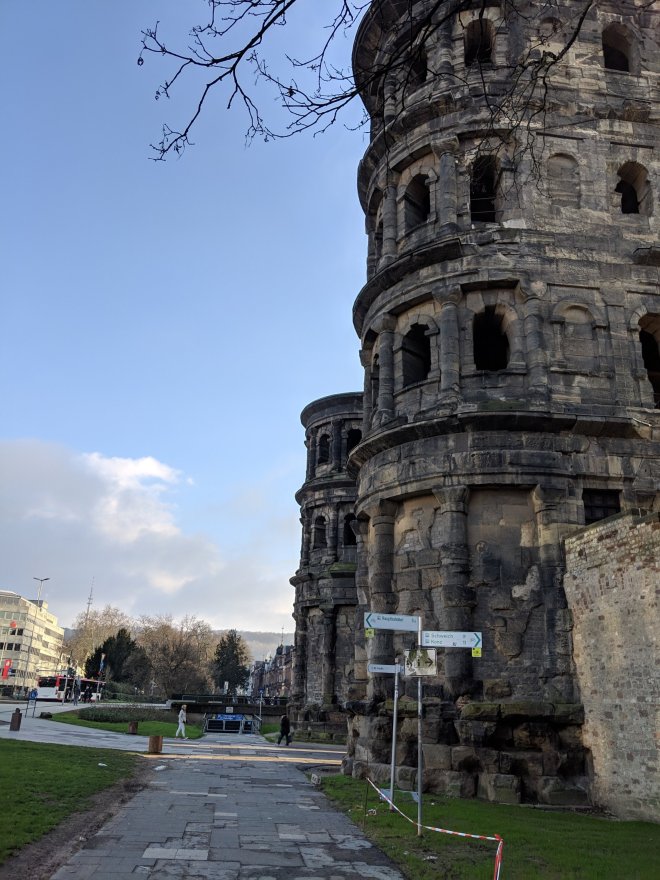
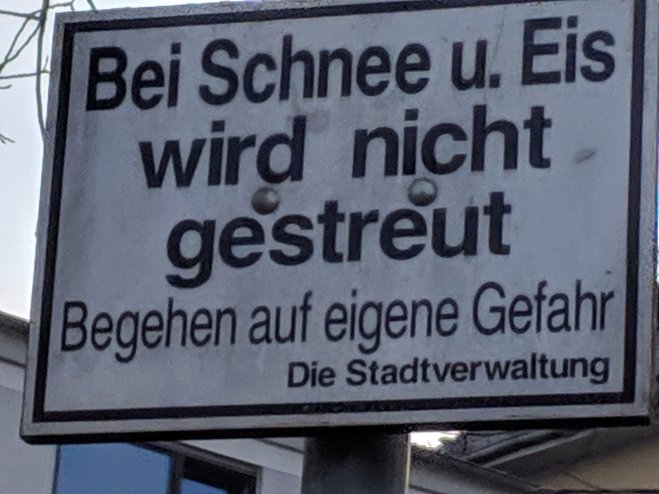
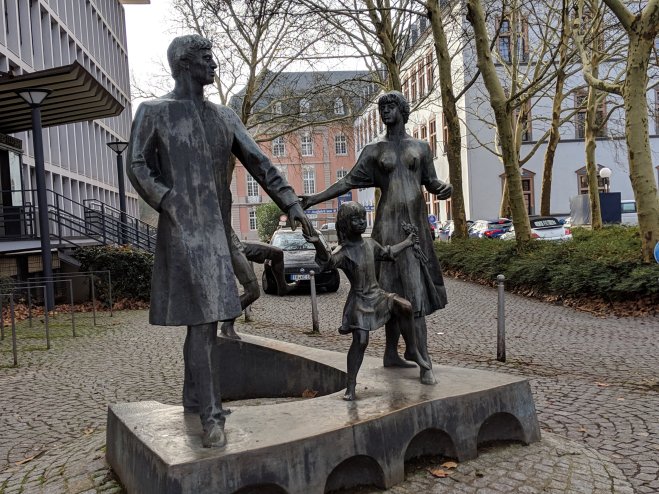
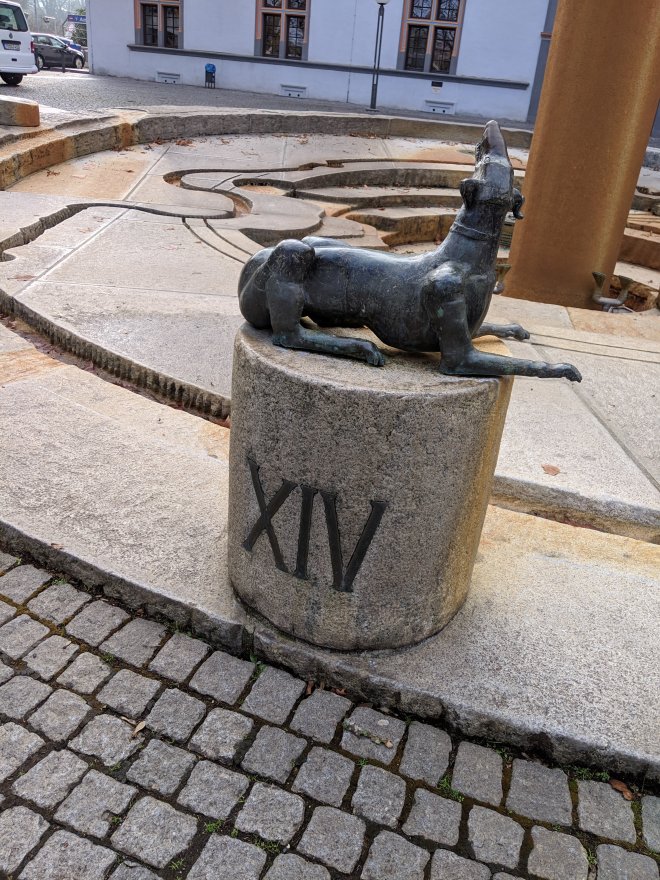
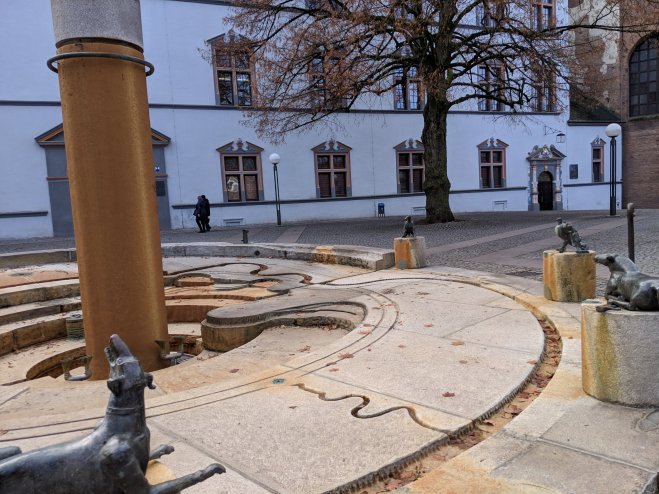
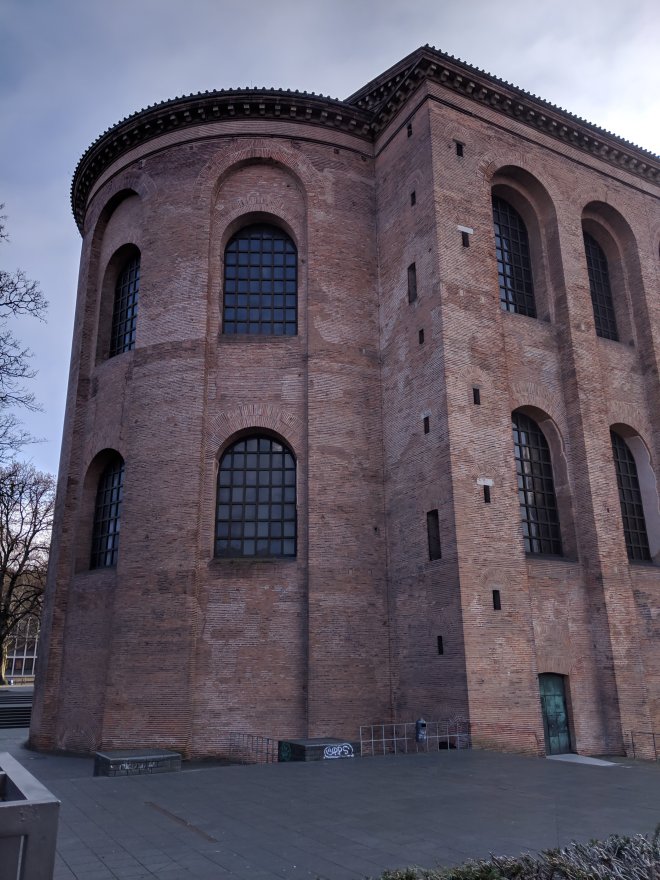
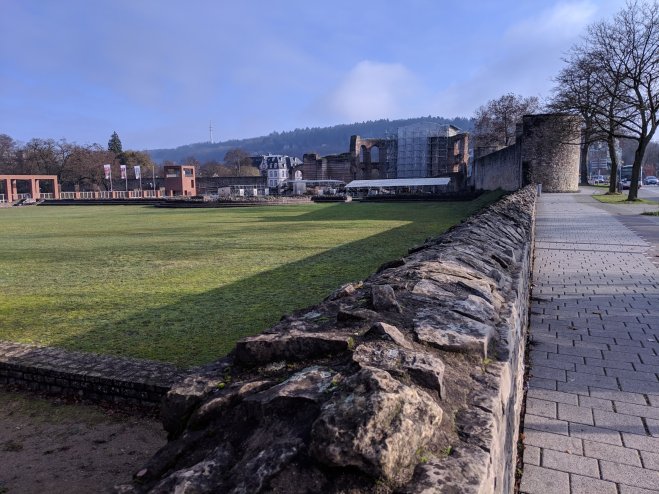
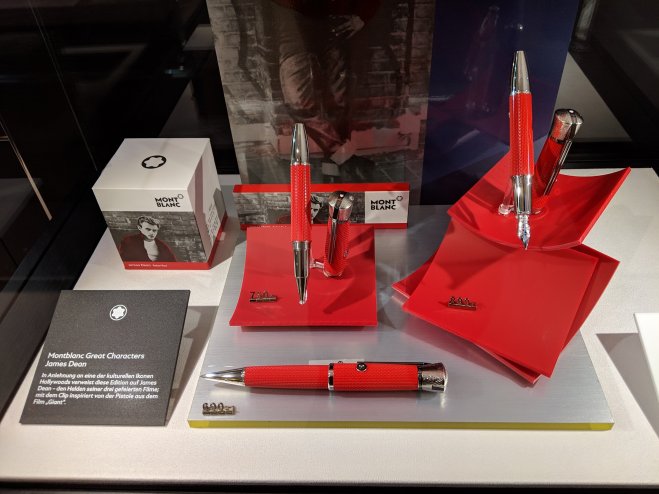
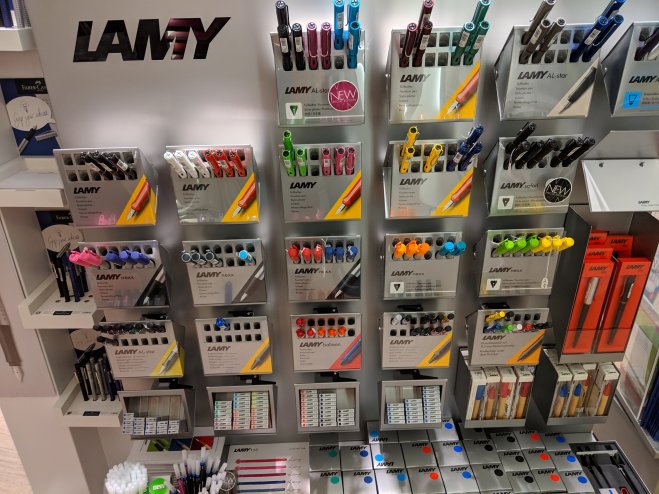
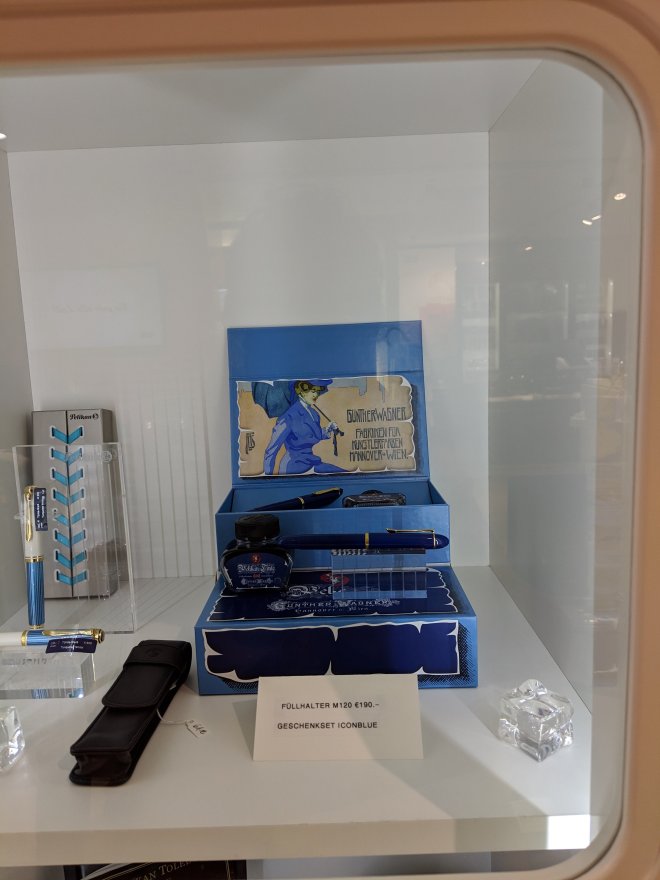
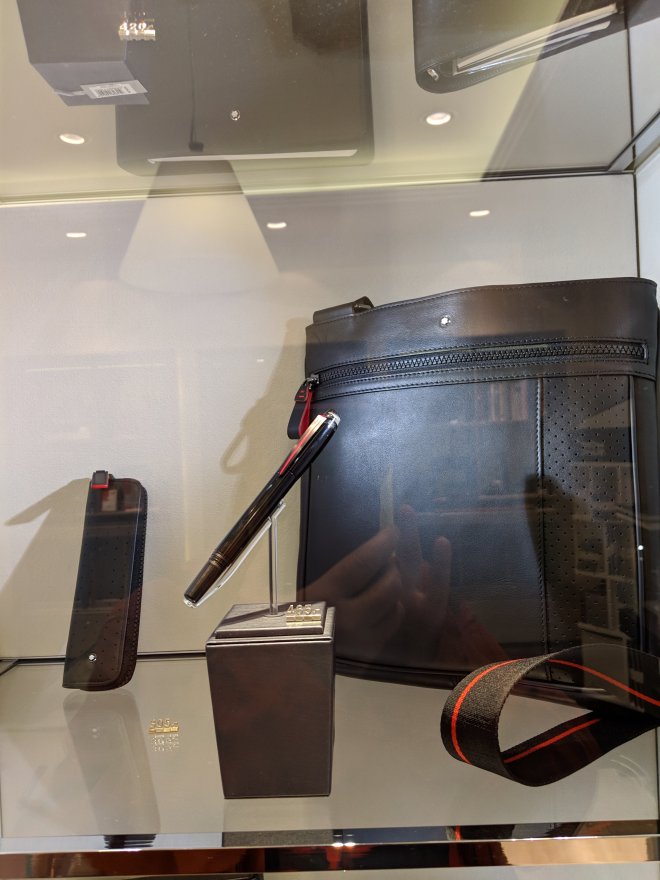
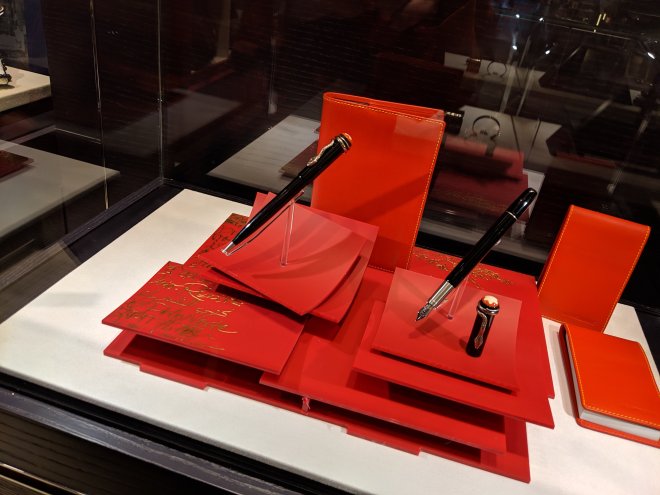
A not-so-reassuring sign in Trier that they don’t do snow removal so one should walk at their own risk.There was a lot of lovely public art everywhereOne of the cool figures surrounding a sundial near the basilica.The sundial with carvings and figuresBasilica in Trier commissioned by Emperor Constantine I at the beginning of the fourth centur AD. Now it is used as the Church of the RedeemerThe imperial baths (kaisertherman) were constructed in the 4th century ADClose up of maintenance on the bathsPorta Nigra gate, the largest Roman gate north of the Alps, built in about AD 170The house where Karl Marx was born is now a museum of his life and the birth of communismStreets were lovely and festiveWe stumbled across a great pen shop in Trier!James Dean Mont Blanc pensAll the colors of the Lamy’s
The first time we saw a note saying free room we were startled before realizing they actually meant room available.
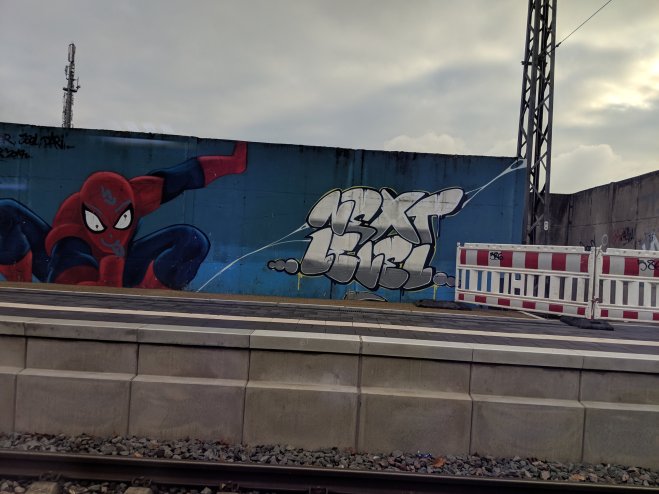
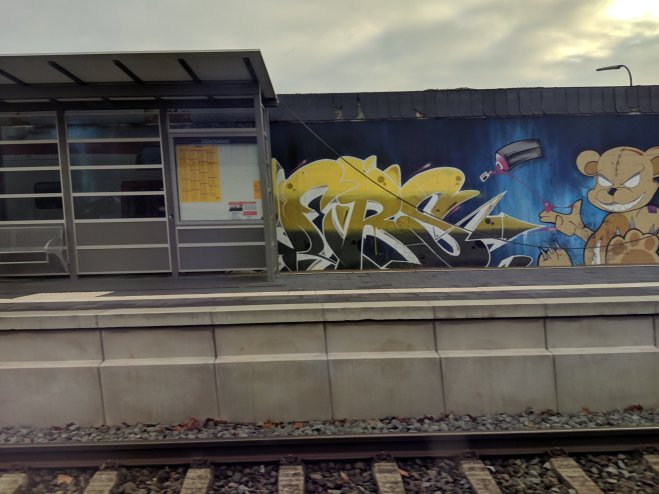
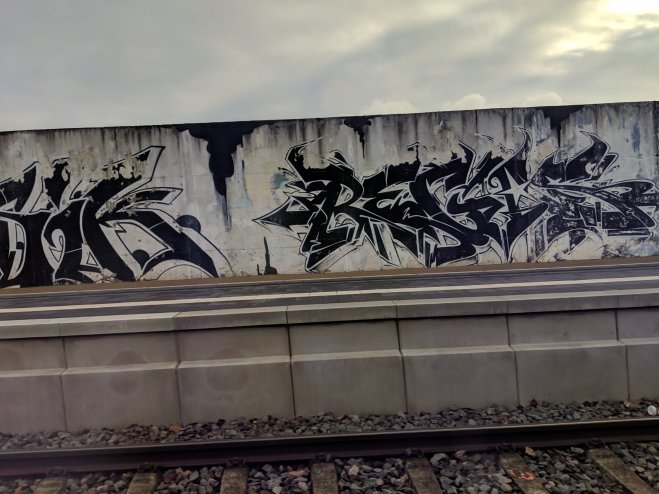
Tagging and graffiti are popular in Germany, particularly in Berlin. Here are railroad siding tags
A full discussion of when graffiti is art and when it is merely tagging is linked.
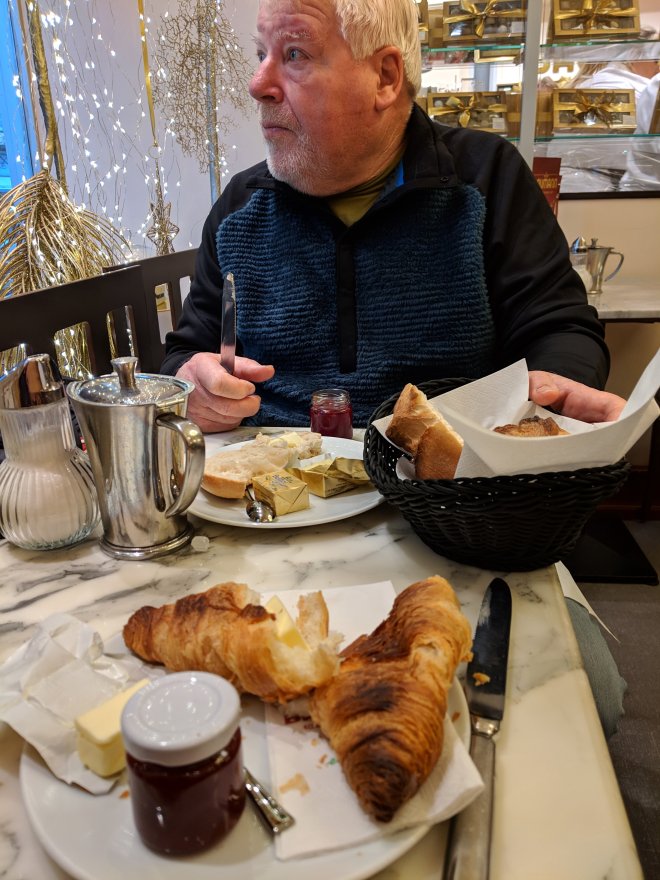
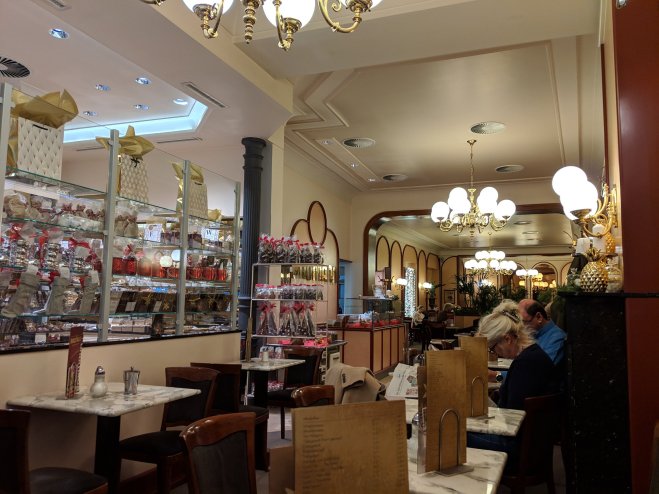
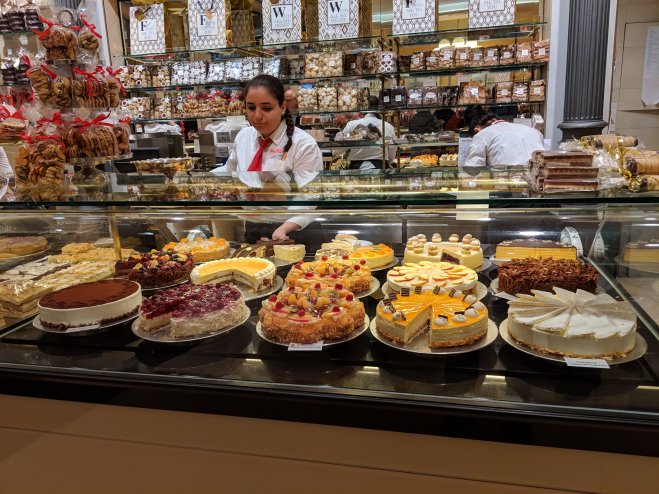
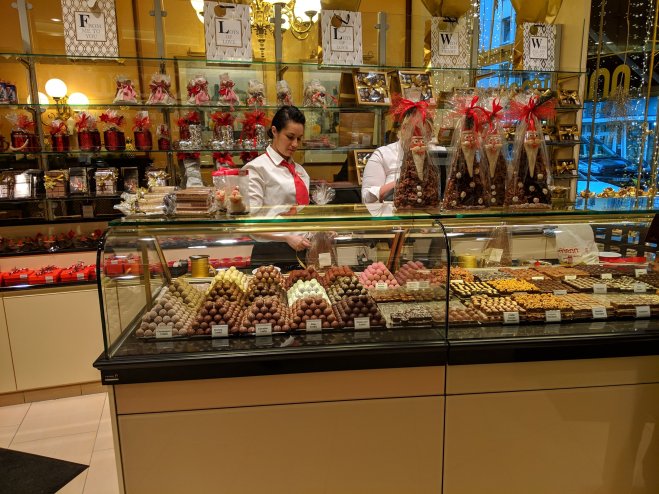
Ray and I overslept and missed breakfast at our hotel. So we compensated by rolls and coffee at a nearby candy/cafe shop and cafe. The marmalade was great and the rolls were incredible. My coffee was a hot chocolate with espresso, drizzled with chocolate. The shop was a chocolate lover’s delight.
Lots of truffles in boxes, fancy pineapple shaped boxes, and moreThose cakes we’re enough to make one hungry even if you’d just eatenTruffles, truffles, and more truffles
As part of the Christmas celebration, they made an ice rink with these little pelikans to help beginning skaters
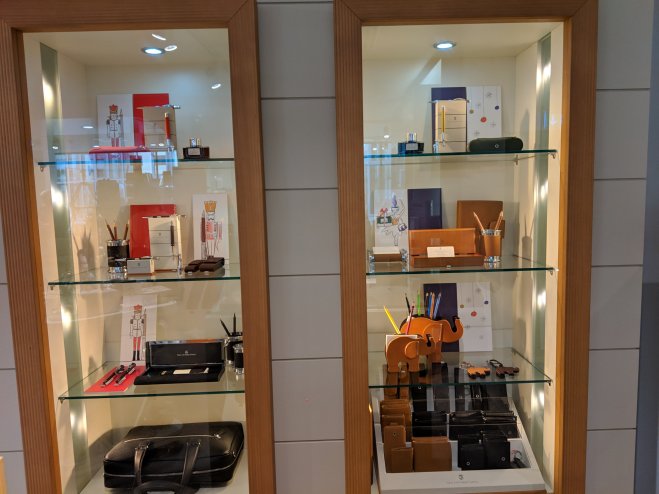
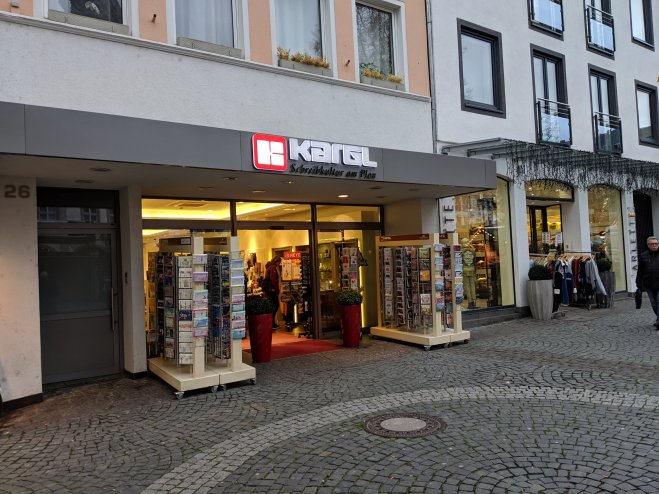
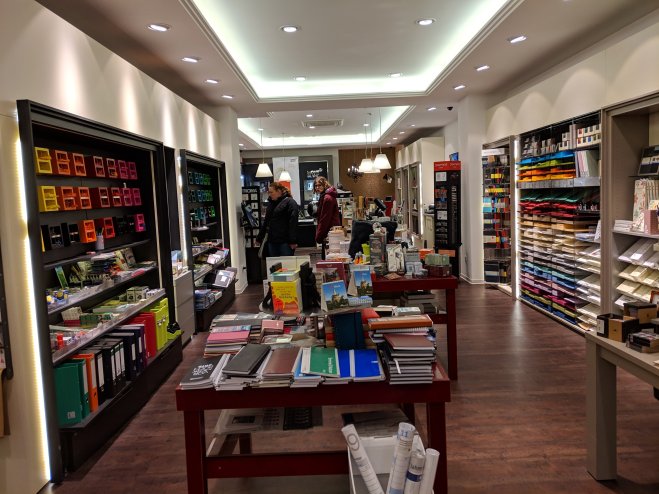
More Christmas picturesThe pen and stationery storeReally nice staff. Pens were primarily Mont Blanc, Caran d’ache, Lamy, and Parker
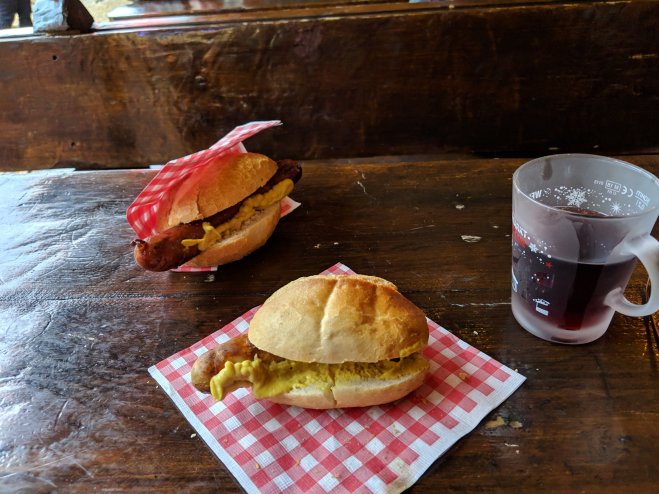
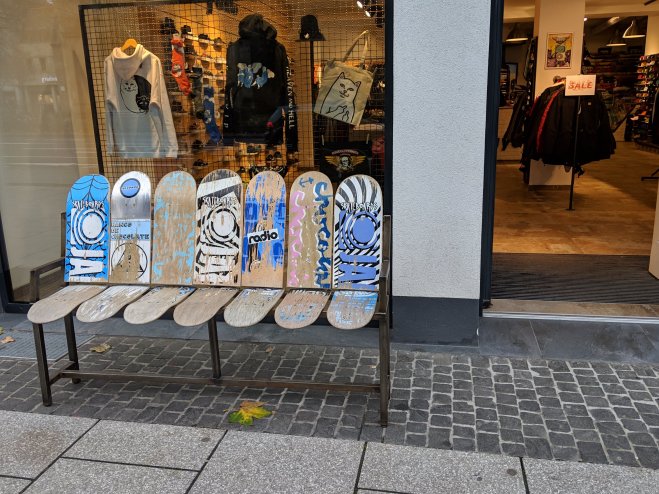
Street food sausages and glühwein (hot mulled wine)A bench made out of skateboards
We went back to the hotel for a while, and then, because it was raining pretty hard, went to an Italian restaurant a few doors down for pizza and beer. Their door had a master card logo on it but when we went to pay, they said no credit cards. Fortunately, we had euros. And the pizza was excellent.
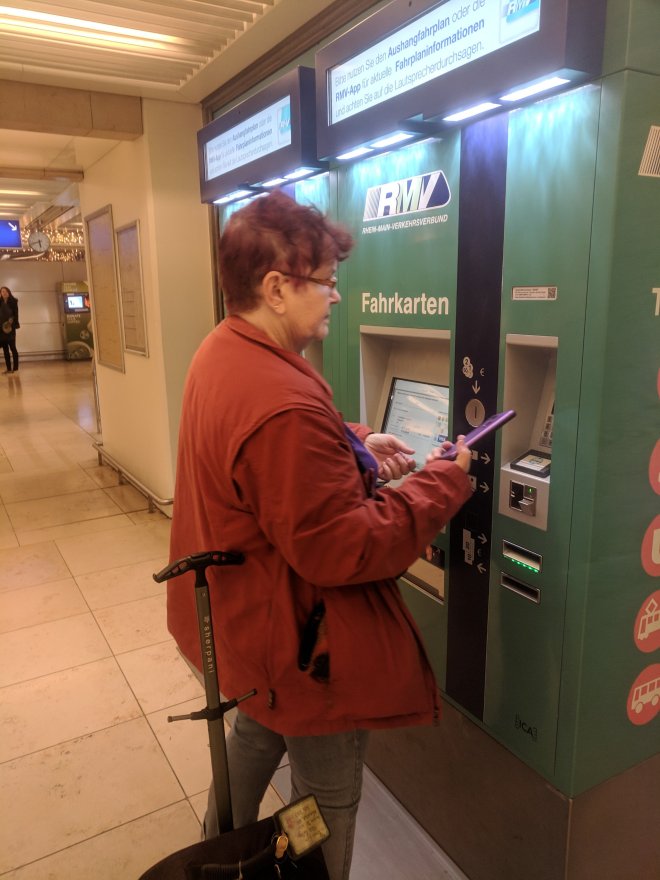
Lufthansa air was a class act. Also my seat mate and one of the stewards helped us practice our German. I didn’t manage to sleep on the plane, but despite that, we managed to successfully use the ticket machine and get the first train to Koblenz. It literally arrived as we walked to the platform.
Me looking silly on flight
Using the rail ticket machine. Google pay didn’t work there.
The rail machine had flags representing about 8 different languages so we really didn’t have to use the German screens but we did anyway.
One complication: the departure board didn’t show Koblenz. Fortunately, Google navigate did and with Google fi coverage we were able to find the correct train at the correct platform, and more importantly, get off at the correct station. On the train ride, it was still dark, as our plane arrived at 5 am, so we were able to see the Christmas lights in passing towns and reflected on the Rhein river.
It was still dark when we arrived in Koblenz but we bumbled our way to our lovely hotel, Hotel Brenner. This lovely family owned hotel showed us the best of European hospitality. If we had shown up early to an American hotel, they would check our bags and tell us to come back much later. Instead, this hotel graciously rushed to get our room cleaned, and allowed us to check in early.
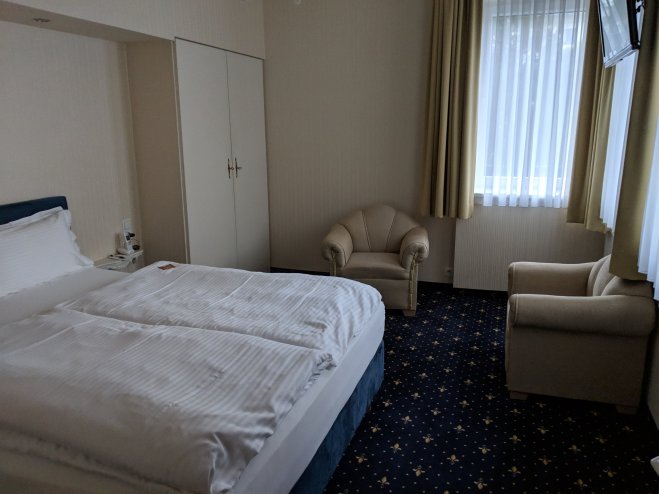
After out tight quarters in Boston, we were thrilled to have this lovely, large room. The beds had little packets of Haribo gummy bear candies on them. I swore I was not going to sleep but I took a nap. Later, the manager offered us an even larger room since we were going to be here so long, but we said we were happy with this one.
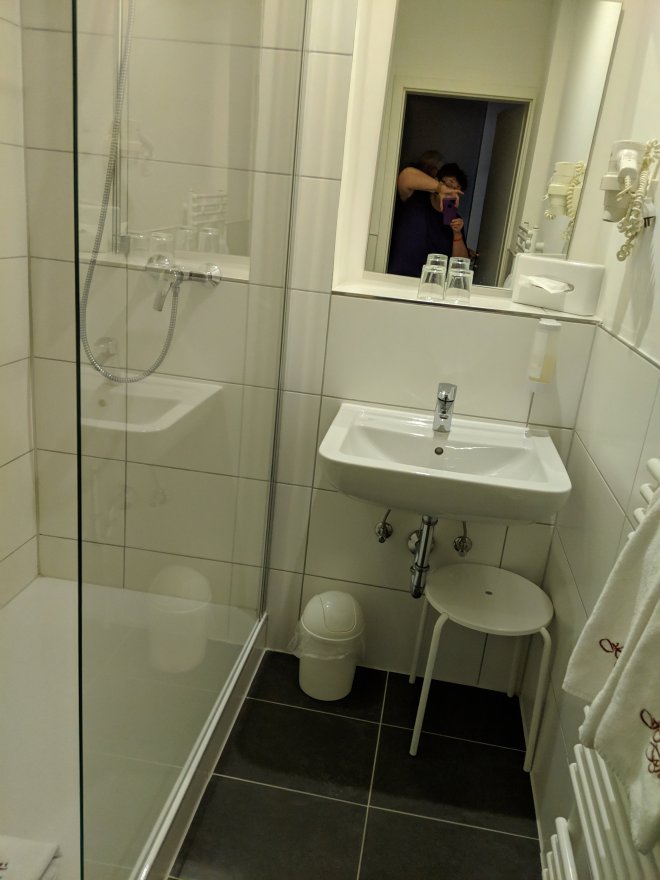
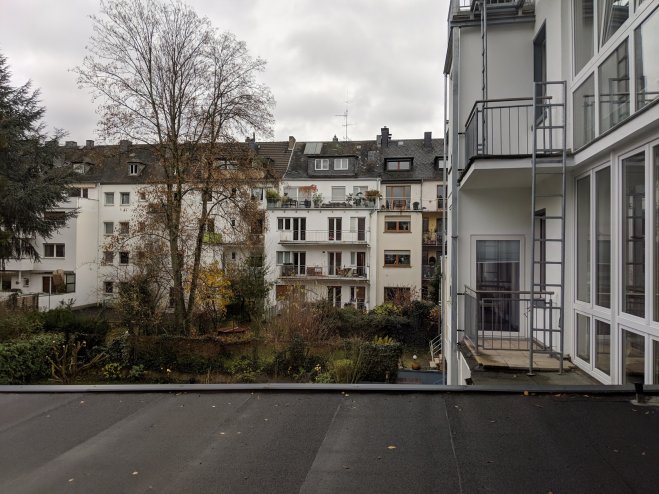
A cute little dressing table and coffee serviceThe shower room. There’s a separate toilet room.View from our room
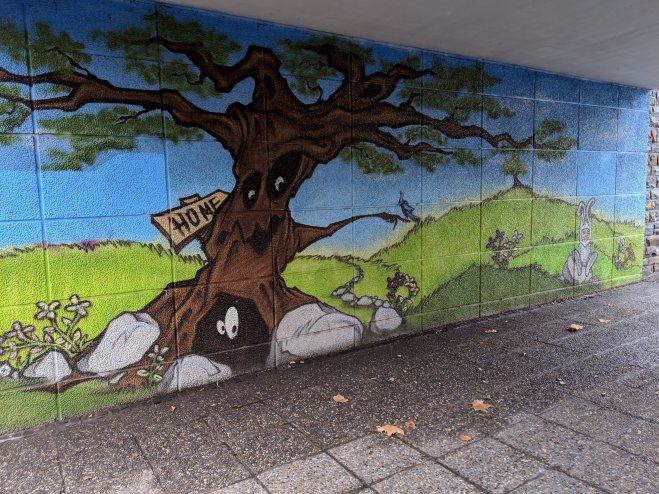
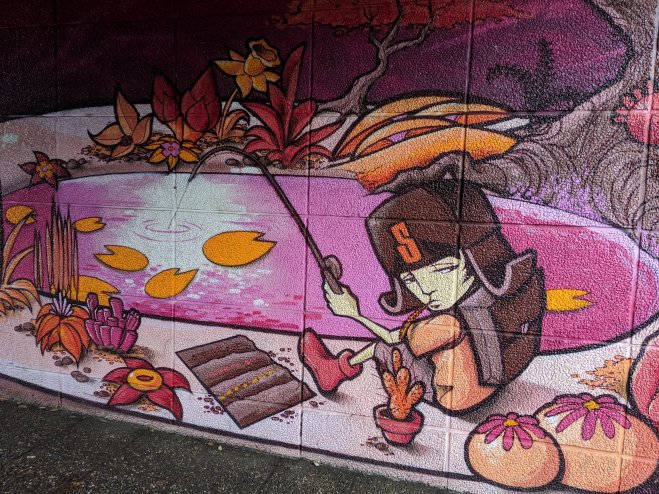
After my nap, we went for a walk. It had rained earlier but was warm and cloudy this afternoon. Very pleasant. A pedestrian/bike underpass had these cute murals.
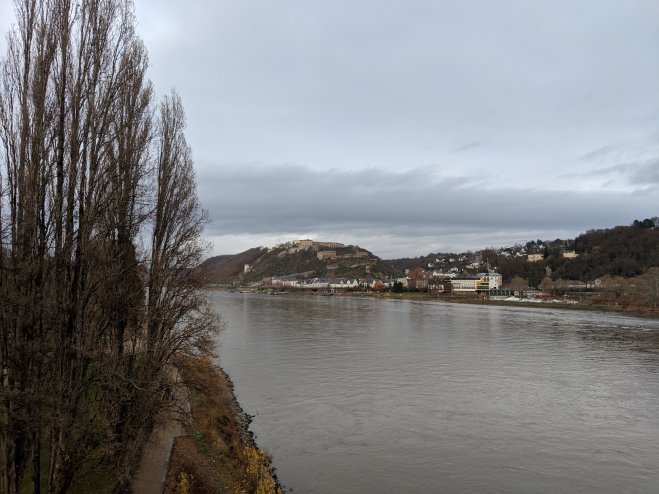
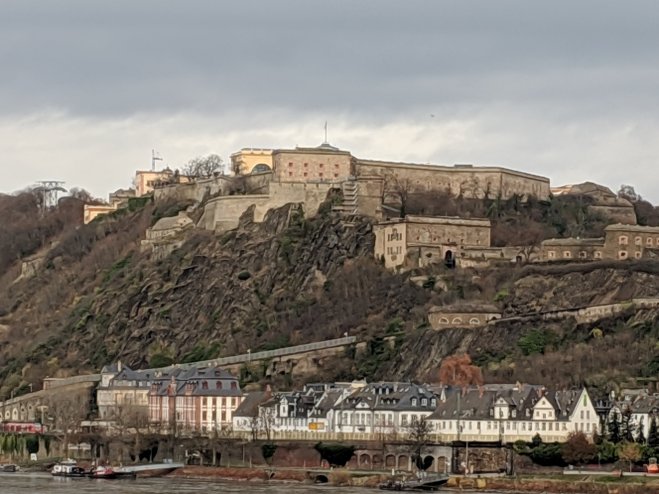
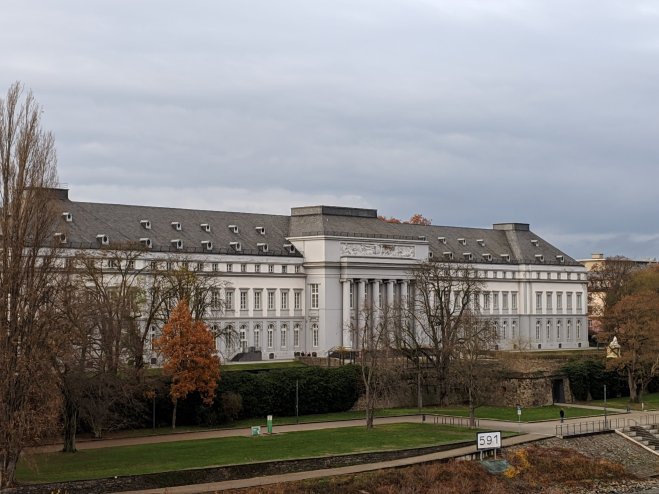
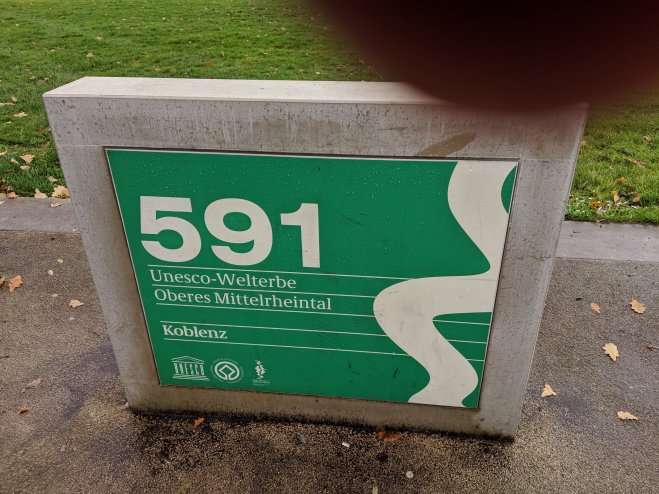
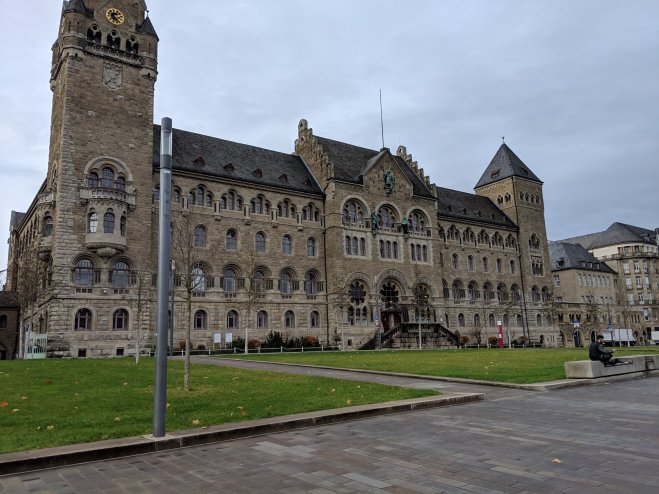
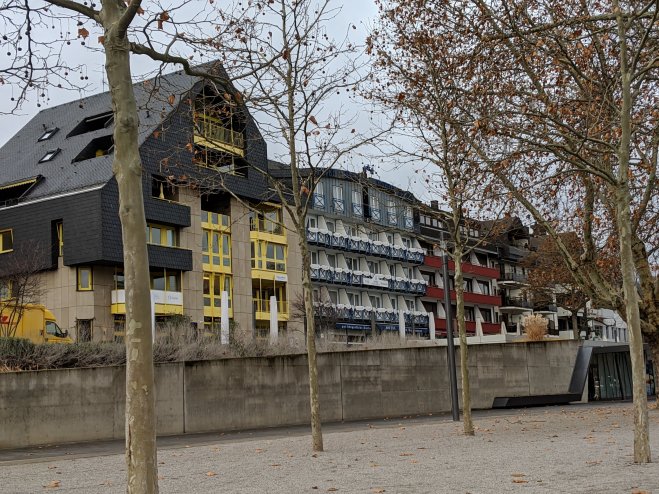
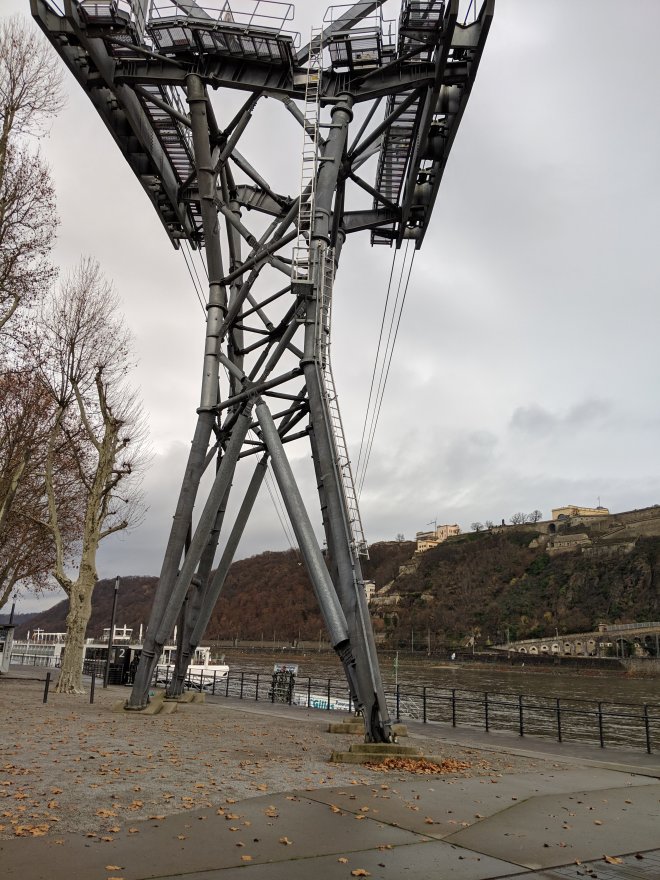
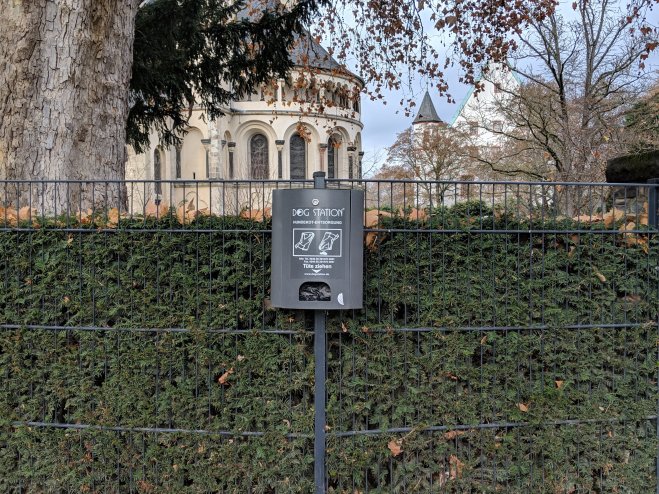
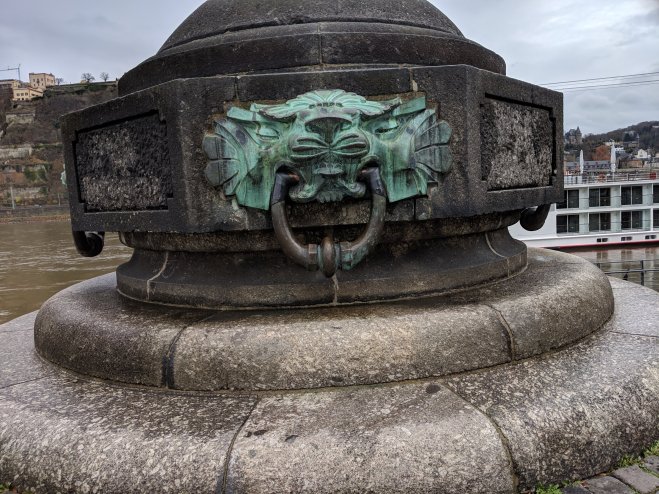
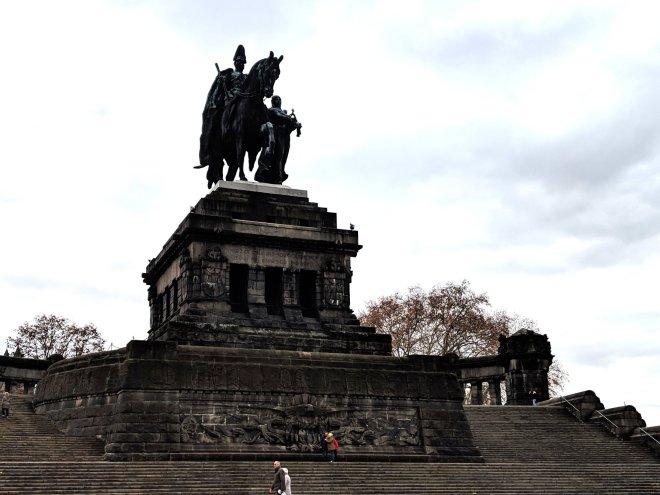
The RheinFortress at EhrenbreitsteinSchloss Koblenz (Koblenz castle)The Rhein river area in Koblenz is a UNESCO sitePreussisches Regierunggebaude (Prussian Government building)Cute restaurants and apartments with Riverside viewsCable cars only run on weekends off seasonCable car trestleDoggy bag stationBeautiful out of season blooming treeThe Viking ship we saw was much bigger than I had imagined. It looked like the cabins had great views.A strange lion image at the Ecke
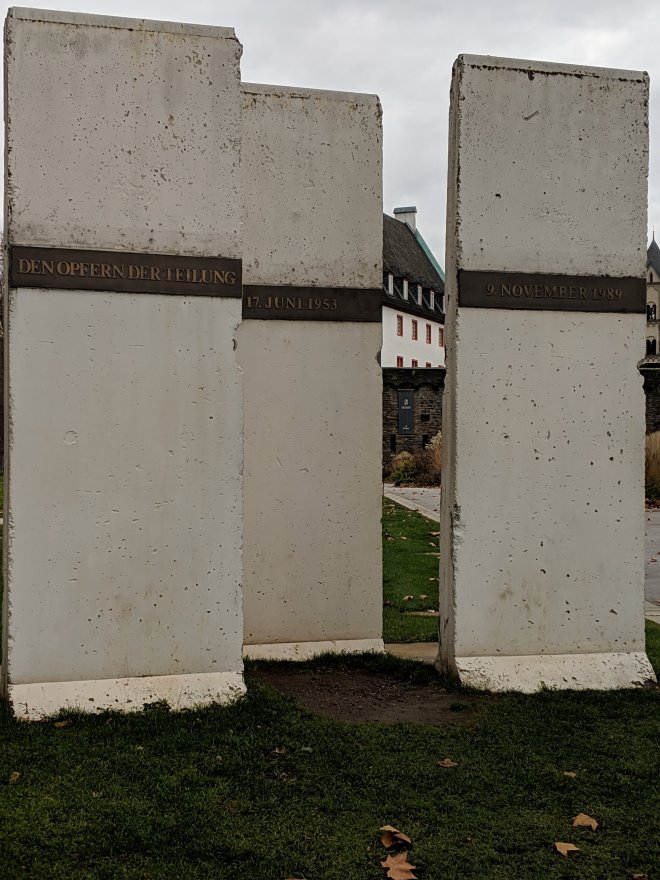
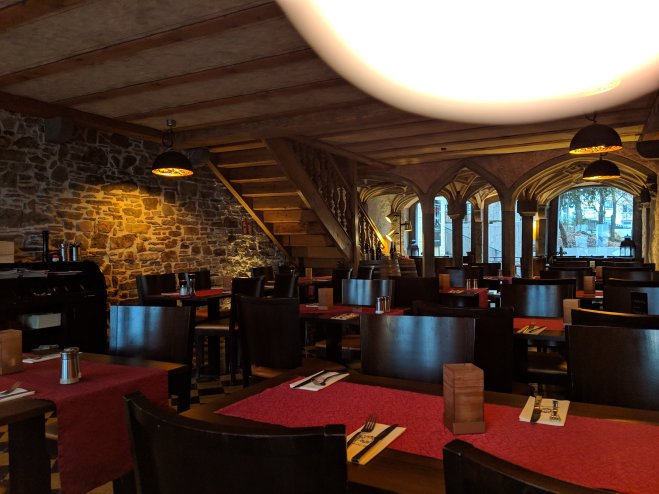
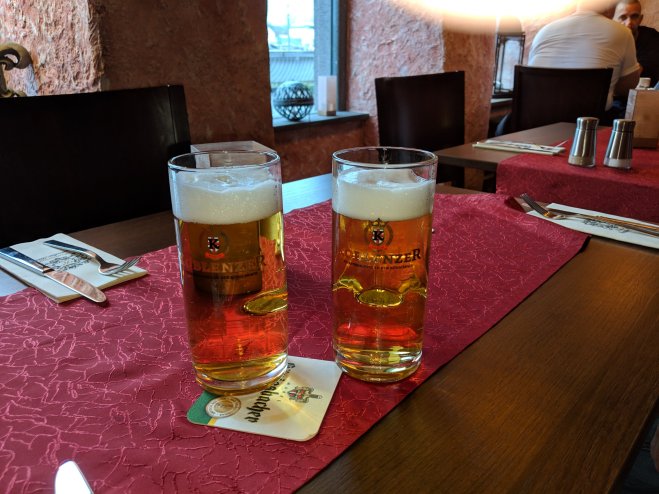
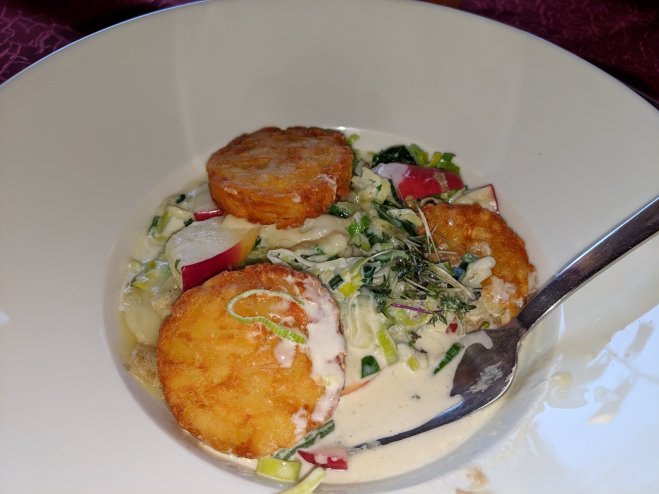
Pieces of Berlin WallDeutche Kaiser, our restaurant for the afternoon.The local beer, Koblenzer, is quite goodRay had schnitzel with mushroomsI had a vegetarian dish with apples, potatoes, and greens
We did quite a bit more but jet lag is claiming me again so I’ll tell you about zinterclaus tomorrow.
Almost anytime someone goes to Boston, they do the same things. And those are great things: the Freedom Trail, Chinatown, Little Italy, and the JFK library. There are good reasons that these are popular Boston activities and if you haven’t already done them, I highly recommend them. But, if you’ve been to Boston before and are looking for some fun, different activities, here are some to try.
For a different breakfast experience, we went to Clover, a plant based restaurant. Their cranberry, apple, maple oatmeal is awesome, as is their hibiscus iced tea. Ray also liked his veggie sandwich and coffee.
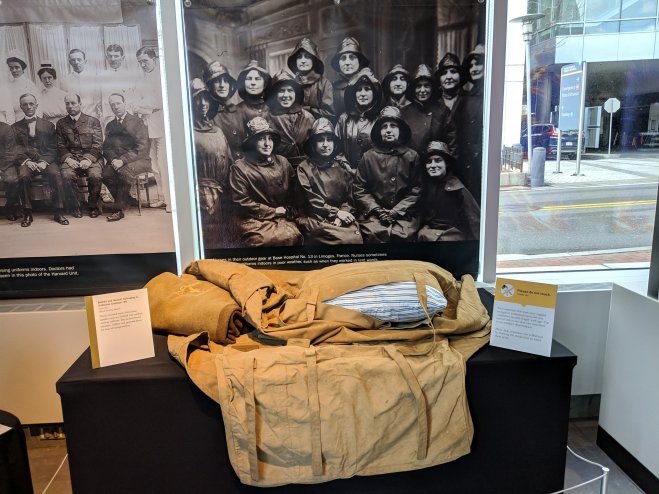
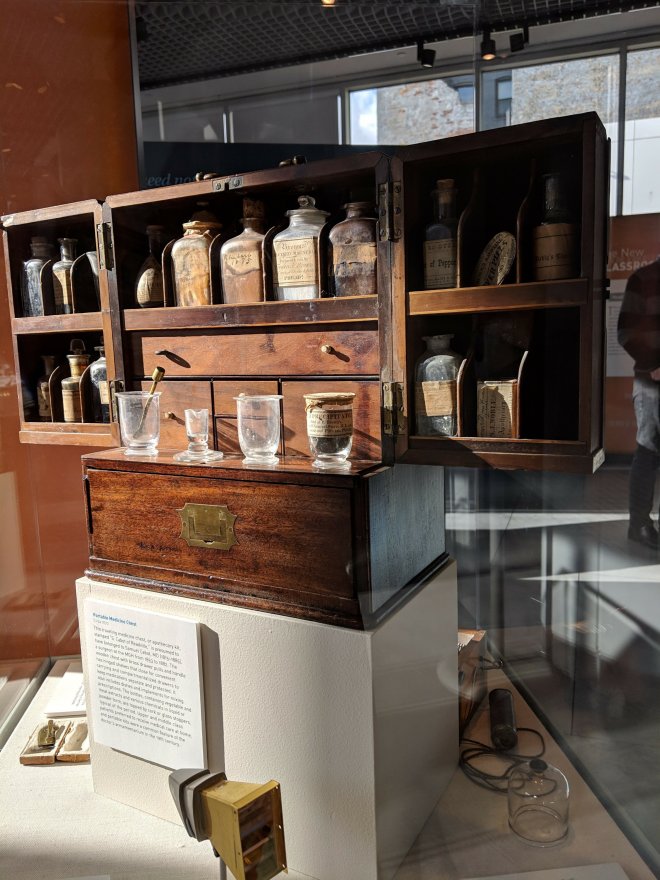
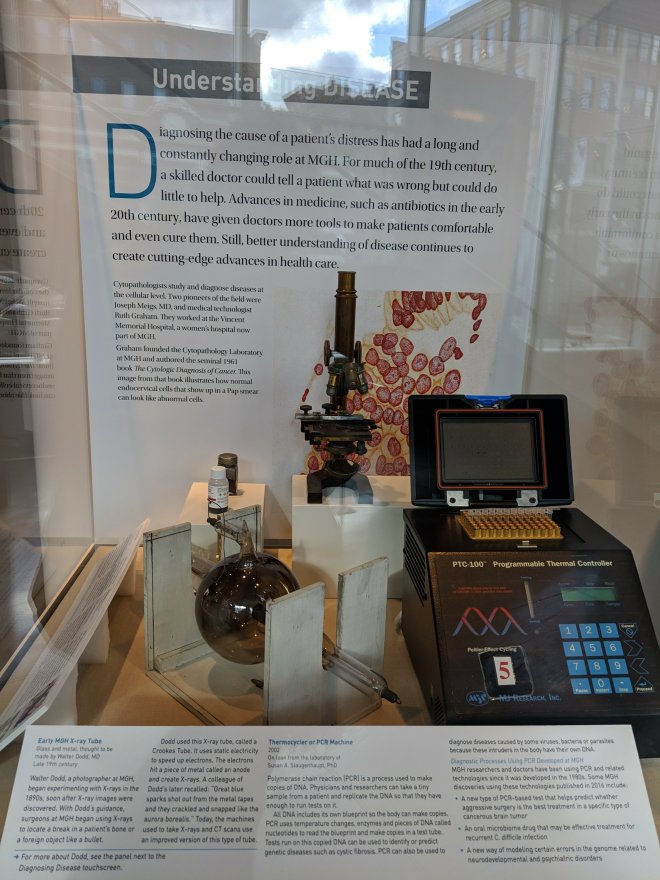
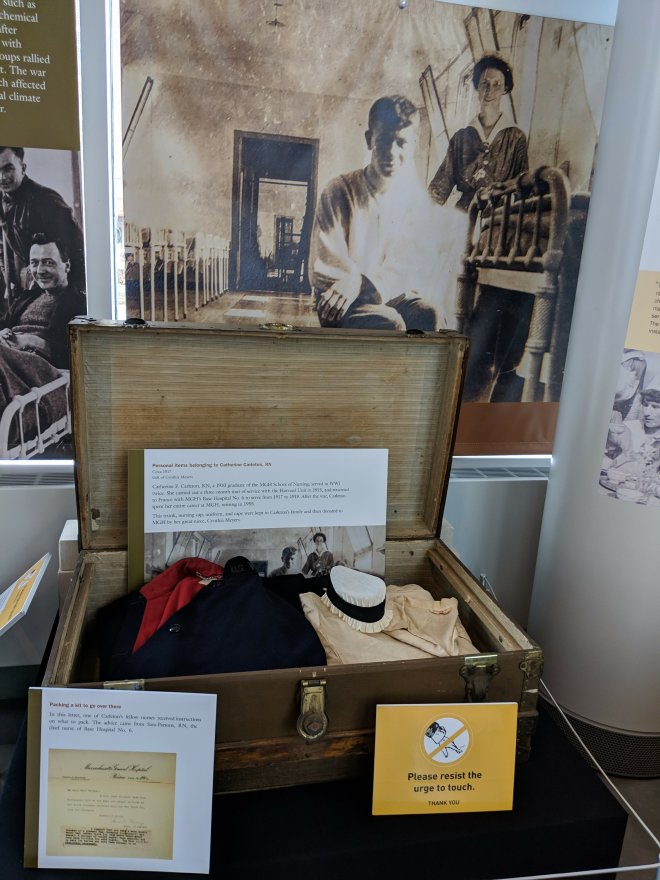
For a free museum that’s slightly on the geeky side, go to Massachusetts General Hospital. Their Museum of Medical History and Innovation will make you extremely grateful to be living in modern times. Here are a few highlights.
Many displays highlighted WWI medicine, like these sleeping bags used by WWI nurses.A traveling pharmacy from when physicians made house calls.Diagnosis has improved dramatically thanks to new tools.
One of my favorite exhibits (not shown, sorry) allows one to try and diagnose three patients using results from modern screening tests.
A sample trunk filled with a nursing jacket and bonnet. Considering what those WWI nurses endured, they deserved more serious hats than these little pill boxes.
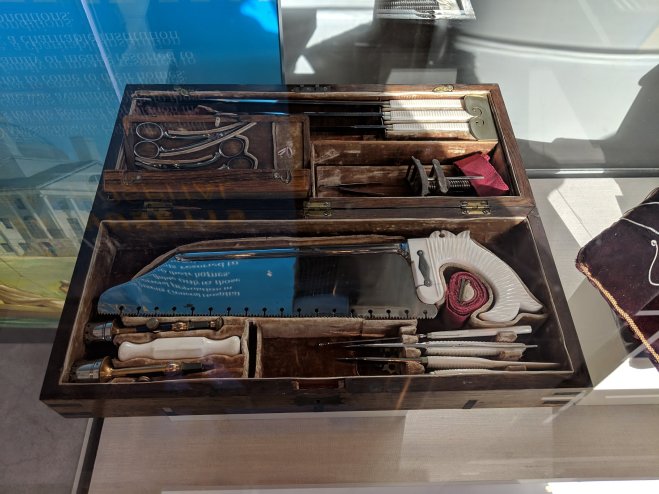
Surgical tools from the 1800s. They would not have been this clean, either. The relationship between sterile surgery and survival had not yet been established.
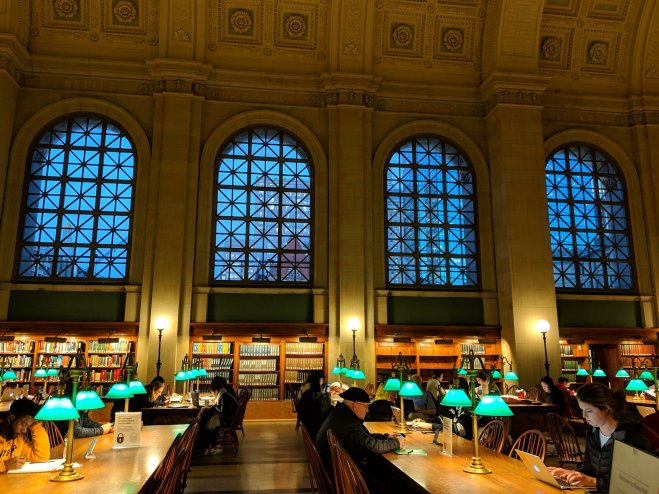
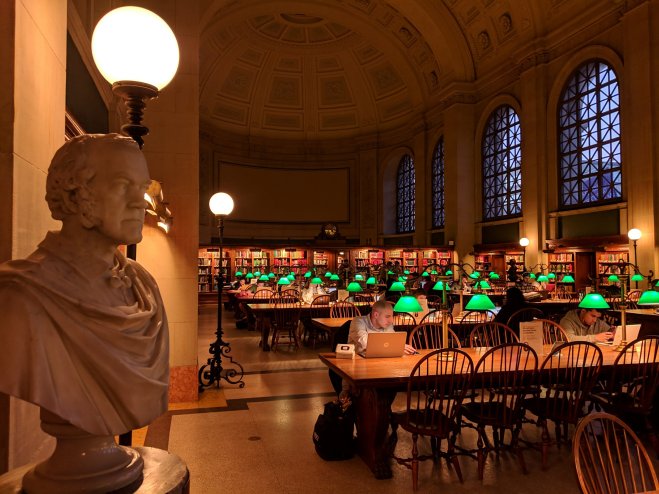
Another fun but unexpected destination is the main library. The library has two buildings, the McKim building, a classical building with notable murals, including some by John Singer Sargeant.
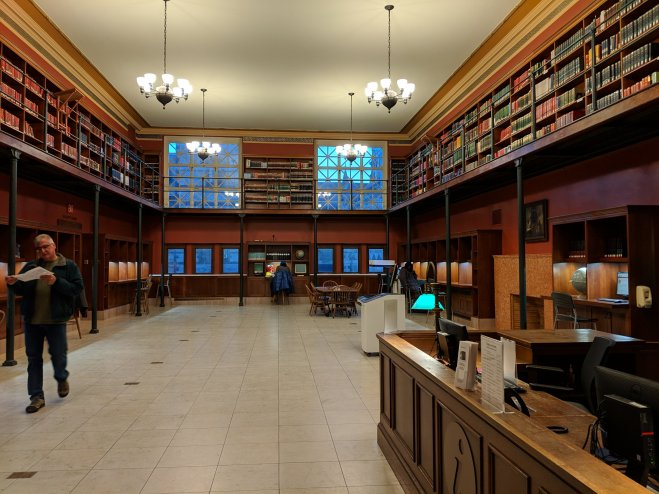
The newer building, the Johnson building, is thoroughly modern, and boasts the latest in library services innovations for Boston residents.
Exterior of the old library building
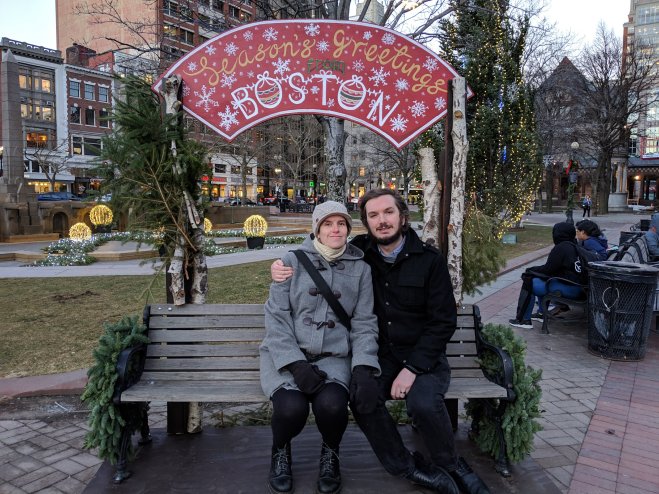
A fun photo opportunity to take a pic of my son and his wife
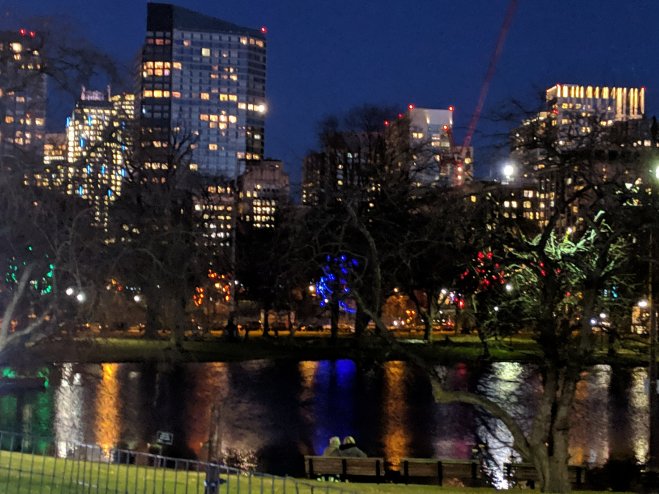
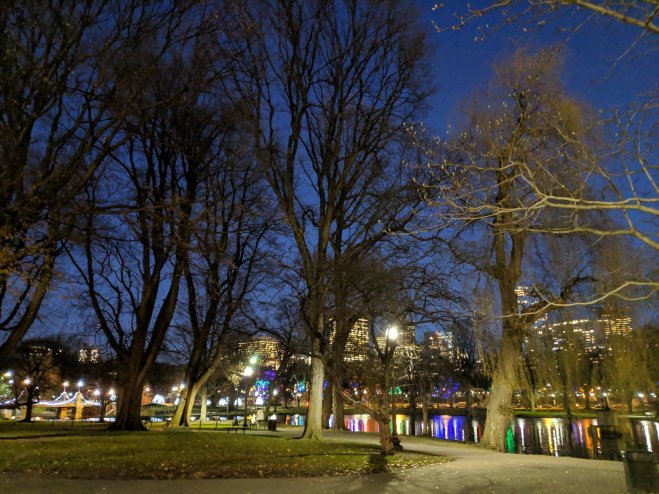
Walking back, we were able to enjoy the Christmas lights in the Commons.
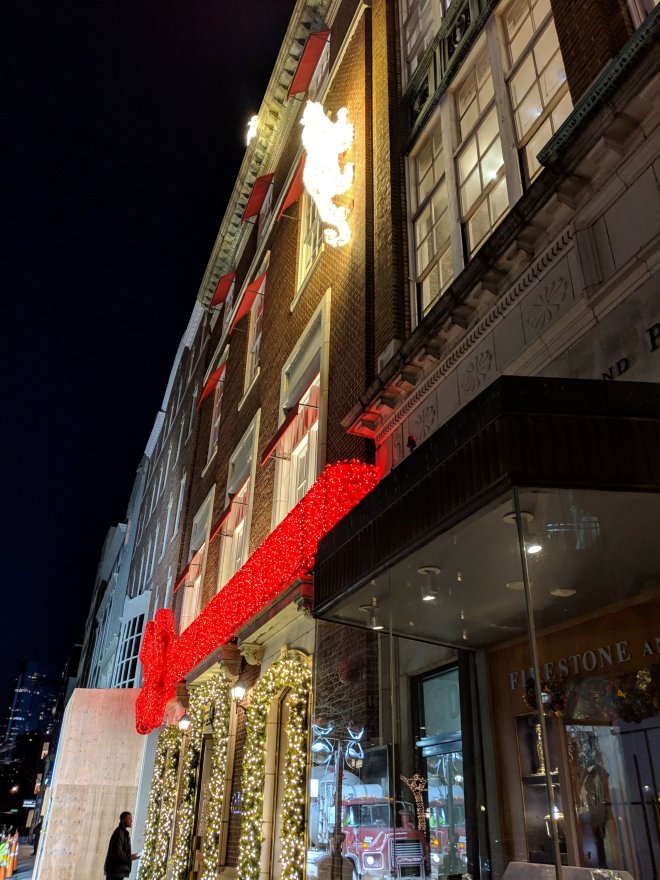
The Cartier cat is actually across from the commons but too cool to omit!
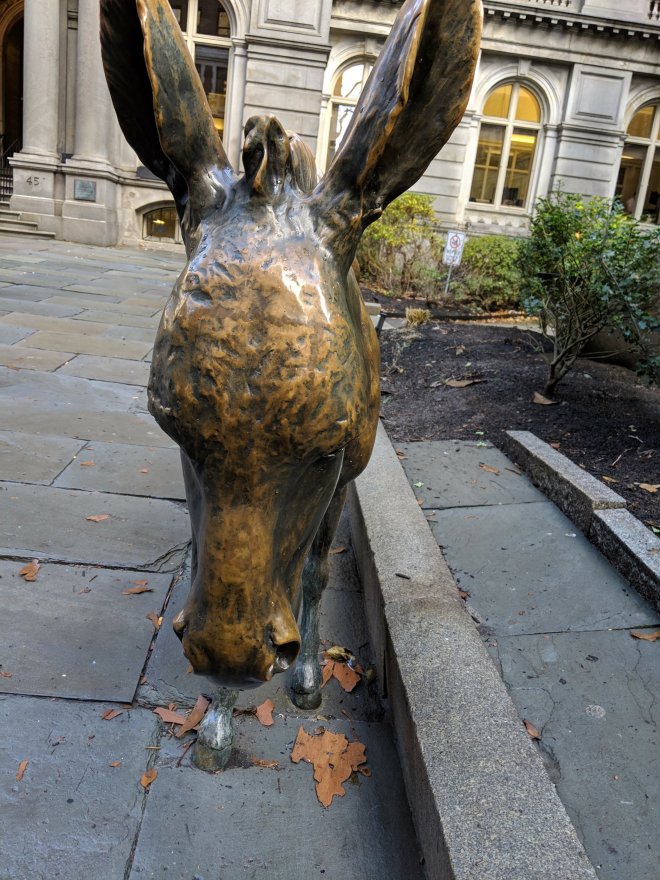
Finally, make a quick visit to see the adorable burro statue in front of the old city hall (now Ruth Chris). Believe it or not, placing this staue here was controversial as it was Italian and had nothing to do with the American Revolution to justify it being on the Freedom Trail. But finally, it found its place there, delighting all the children who visit. The bright spots on the statue testify to the many children who have petted the little burro.
Have you ever wondered what happens to seeing eye dogs when they have to retire?
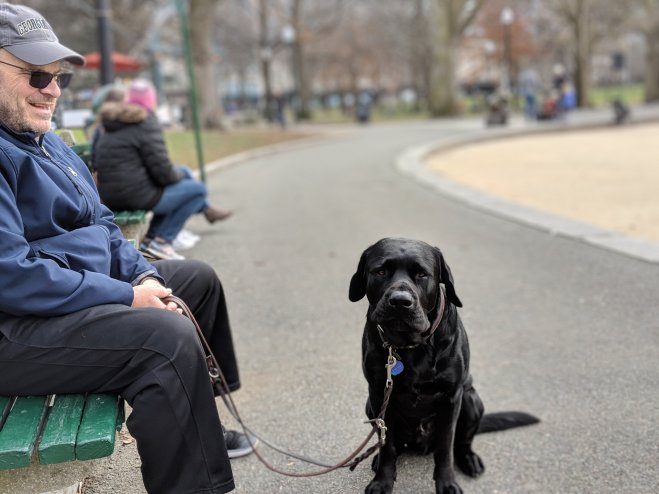
We met a sweet retired seeing eye dog in the park near our Boston hotel so we discovered the answer. The puppy breeder gets first dibs on adopting the retired dog. Many breeders do adopt retired dogs as it’s hard not to get attached in the 14 to 28 months before the dogs start training. And of course, these dogs are exceptionally well trained so they make great pets.
I got to pet Maxie but only after giving her the signal that it was ok to come over. What a wonderful dog!
If you’re interested in adopting a retired guide dog or a dog that couldn’t complete the grueling training (but would still make a great pet), you can apply here.
Owen’s job around the homestead is security, and he takes it seriously. No trash/mail/delivery truck goes unnoticed and un-barked at. The sound of their jaengines arouse him to race through the house to the front gate, grumblings in his basset-derived chest. But, Owen also keeps the ground squirrels from raiding our green chile patch.
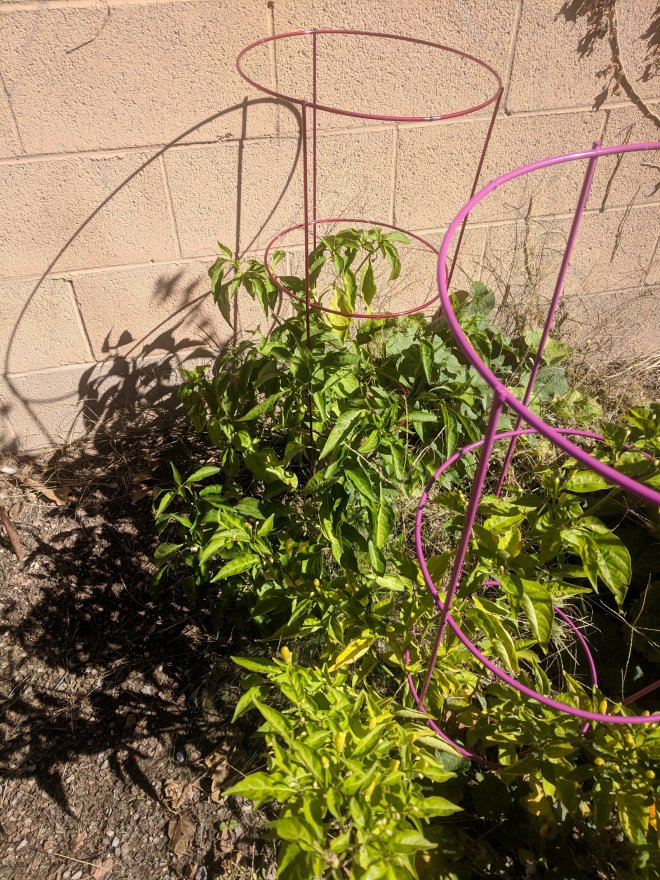
We set aside a small part of the backyard for flowers and a few New Mexico green chile plants. The rest is a place for indigenous flora and fauna of the high Chihuahua Desert to play out the roles prescribed by nature. New Mexico is renowned for its green chiles that the locals use to season stews, and add zest to other recipes.
The chiles from the area around the farm town of Hatch in the Mesilla region on the lower Rio Grande River have trademarked their product.
However, Hispanic farm communities throughout the state claim unique properties to their chiles and preserve the seeds that have been passed down since the Spanish introduced chiles into New Mexico centuries ago. LINK
And not just the Hispanics are aficionados of the chile. A Jemez Pueblo friend gave me a chile that had been passed down in his family since the mid-18th century.
The peppers from those seeds rated 10 (maximum hot) on the chile heat scale. Chefs around the state compete for the blue ribbon at the state fair that is awarded to the best green chile cheeseburger. Owen loves green chile cheesburgers.
Locals buy their stash of green chiles at supermarrkets, road side stands, and at the farm. In early fall, the air is filled the scent of chiles being roasted in store parking lots and roadside stands.
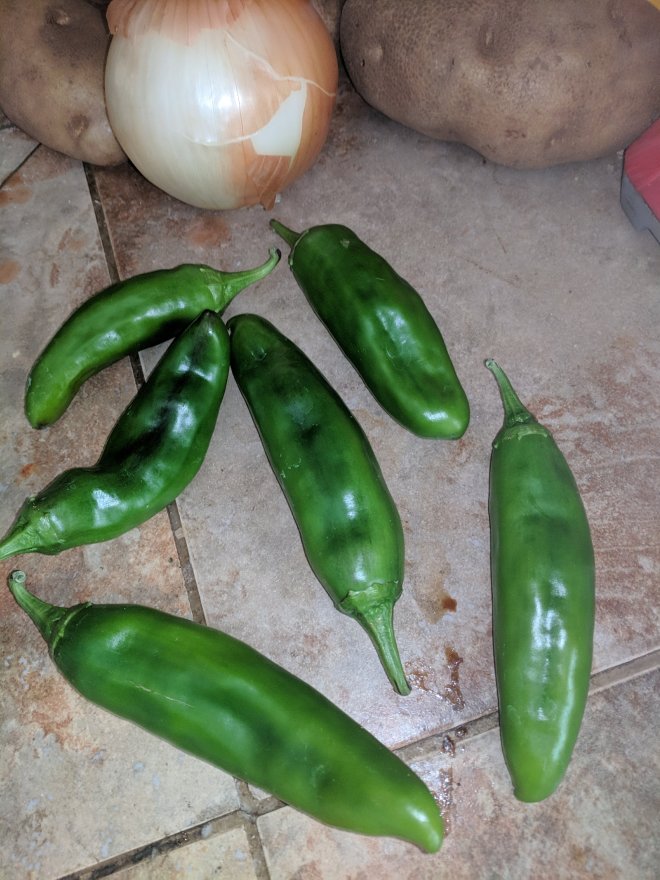
We harvested a few chiles from the three plants in our garden.
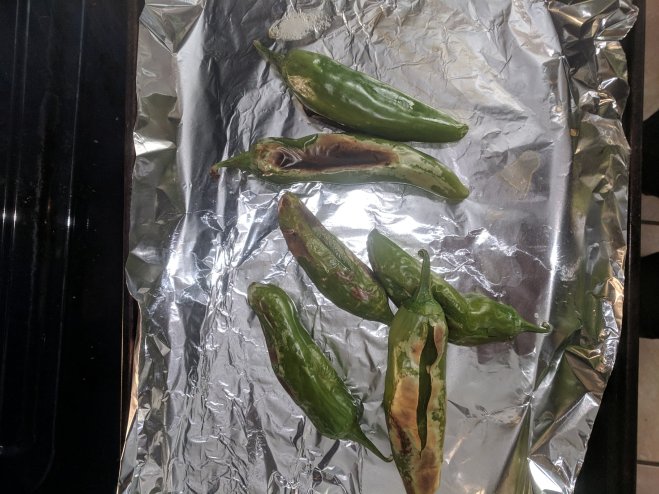
We popped them under the broiler.
Turned them every few minutes, and out they came, ready to be peeled, de-seeded, and ready to be added to home made green chile stew.
Owen finds the chiles uninteresting as a diet item, but the green chile cheeseburgers are a hit with him.
Our approach to our backyard garden was to minimize our toil and, because we live in the high Chihuahua Desert, water. Our solution was to establish a backyard habitat populated with plants indigenous to this desert country. Two types of cacti were already thriving — a claret cup and a cholla.
We planted a few more specimens. This one is an early bloomer.
This claret cup cactus is nestling with a sage brush plant.
We added small agave of various types, and, over the years, they have flourished and created a fence of agave.
Salutary neglect along with Nature has produced a habitat in which lizards, bugs, birds, pollinators, and the occasional coyote make their living.
One of our favorite visitors is the roadrunner, a member of the cuckoo family.
Roadie hunts lizards, bugs, nestlings; an opportunistic feeder. Roadie also hops onto our patio and peers through our sliding glass door. It’s as though he knows he’s safe behind the glass, and it appears he enjoys tormenting the cats and dog. “Roadie” is in Owen’s canine vocabulary, along with “mail truck” and “trash truck.” When we call out “Roadie!” Owen races to the patio door growling.
Roadie, our name for whatever individual hunts lizards and bugs in the habitat
Birds that live in the neighborhood and those that migrate through find our backyard habitat easy pickings.
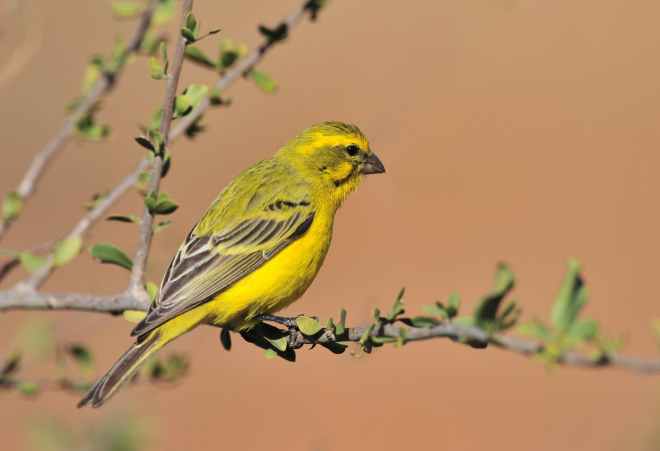
All year round, various finches (gold, house, and who knows what) hang out in a desert willow tree and empty the feeder of nijer thistle seed in a day and a half, to the delight of our nearby bird feed storekeeper.
During the winter, we add a feeder with seeds for the canyon wrens and curved bill thrashers who hang out all year.
Pigeons and doves mop up the seeds that the more interesting (to us) birds dribble onto the ground. As do the ground squirrels. In the spring, a wide variety of hummingbirds migrate to New Mexico, so we put out a feeder with sugar water. We miss them when they migrate south at the end of September.
They are aggressive little guys. They buzz one another in aerial combat and even dive bomb us when we’re sitting on the patio. We discovered one of their nests, a tiny cup, on a branch of our apricot tree.
Upon occasion, the multiple birds in the habitat swish away, none to be seen. A hawk, usually a red tail but sometimes a Cooper’s) descends and perches in the desert willow, wondering why it was shunned.
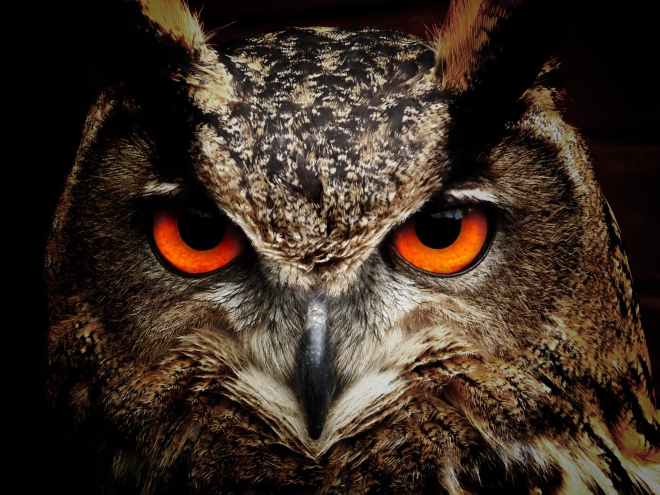
Great horned owls frequent the Ponderosa pines in the front yard. They hoot in the wee hours before dawn and deposit pellets that provide clues to their diet.
Of course, the local cuckoo darts around the habitat during warmer months.
During the winter, the road runner descends into the Rio Grande Bosque. But, like the hummingbird, returns to our habitat in the spring.




















.jpg&h=330&w=330&cropbox=1&cropboxhpos=center)







 Travels with Owen